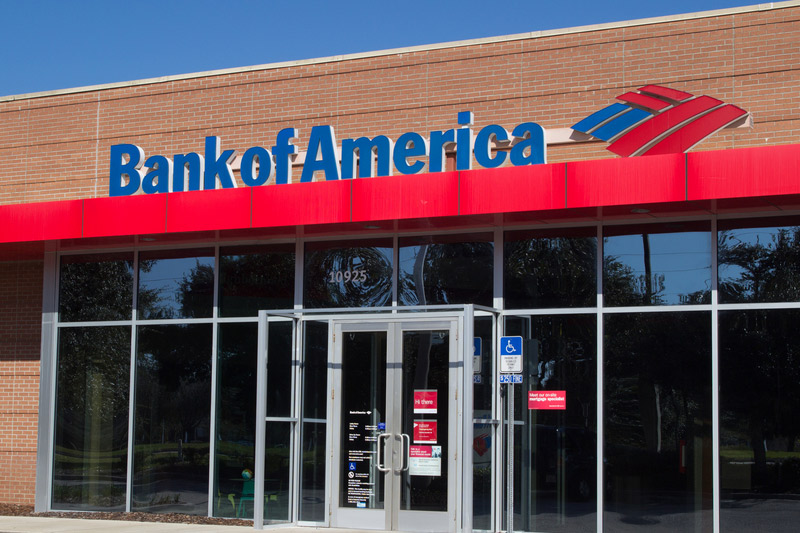
Bernard A. Mensah sold 94,000 BAC shares on March 12, 2026 for $4,412,642 at $46.915–$46.965; he now directly owns 170,184 shares and BAC trades at $46.72 (down 14.6% YTD). Bank of America reported first-quarter trends with net interest income up at least 7% YoY, double-digit wealth management fee growth, investment banking revenue +10% and markets revenue up low-double-digits; U.S. credit card spending rose 3.8% YoY in Feb but fell 5.4% MoM. The bank plans to redeem ¥27.8bn of 0.534% senior notes on March 18, and SpaceX is allocating IPO selling roles across Morgan Stanley/Goldman (institutions) and BofA/Citi (retail), with JPMorgan advising.
Splitting IPO responsibilities between institutional and retail channels shifts fee capture dynamics away from single-lead banks and toward firms with deep retail distribution and wealth-management cross-sell. That structural change reduces the pricing power of institutional bookrunners (trading-related flow) and increases the marginal value of client-facing brokerage networks—a tilt that should matter most in the 1–6 month window around large tech IPOs when retail demand and aftermarket dynamics set long-term fees.
Aggressive buybacks act like a synthetic gearing lever on EPS, so even modest operational growth translates into outsized EPS beats; conversely, insider liquidation often reflects personal tax/liquidity planning rather than a corporate signal, but it can amplify short-term orderflow and volatility around earnings and capital actions. A 1–3% reduction in free float from sustained repurchases typically buys 1–3% EPS accretion absent revenue change, compressing visible downside for multiple compression scenarios in the next 6–12 months.
Early signs of softening month-over-month consumer card activity are a leading indicator with a 3–12 month transmission to NII and credit-loss metrics: a persistent sequential decline (vs seasonal norms) historically precedes wider charge-offs and higher reserves. That creates an asymmetric risk for large consumer banks over the next 2–8 quarters—earnings upside from fee capture and buybacks can be quickly offset if discretionary spend rolls into slower balances and higher delinquencies.
Immediate catalysts to watch are IPO pricing and aftermarket performance (days–weeks), upcoming consumer data and card-balance prints (monthly), and Fed rate direction / deposit re-pricing (quarters). A weak IPO reception or an acceleration in card delinquencies would be the fastest trigger to rotate exposure away from retail-linked upside into credit hedges within a 1–3 month window.
AI-powered research, real-time alerts, and portfolio analytics for institutional investors.
Request DemoOverall Sentiment
mixed
Sentiment Score
0.05
Ticker Sentiment
