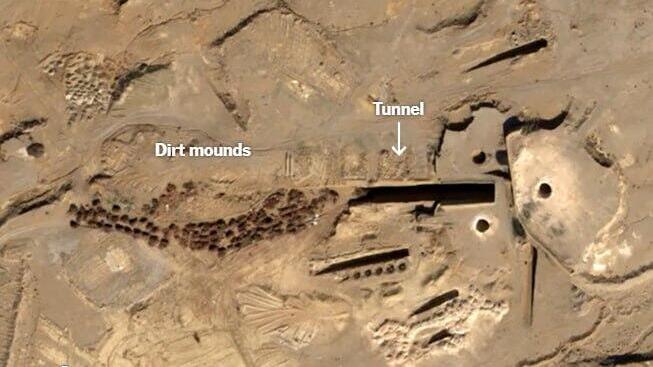
440.9 kg of uranium enriched to ~60% is believed buried at Isfahan; an Israeli security expert (Dr. Eyal Pinko) says a ground recovery operation would be extremely difficult and likely unrealistic due to radiation risks, collapsed underground structures and IRGC defenses. U.S. President Trump indicated a ground retrieval is 'something we could do later,' but the expert recommends continued satellite/intelligence monitoring and targeted strikes if activity is detected; third‑party removal or voluntary Iranian handover are seen as theoretical and unlikely. Implication: low probability of safe recovery sustains geopolitical risk and uncertainty around Iran's fissile material stockpile, potentially keeping elevated risk premia on regional defense exposure and related markets.
Operational uncertainty around buried fissile material creates a persistent intelligence premium rather than a one-time shock: governments will pay for higher-resolution, higher-cadence ISR, secure transport and forensic radiological assessment capabilities for many quarters. Expect procurement cycles to favor nimble satellite imagery suppliers, airborne ISR platforms, stand-off munition makers and specialized engineering teams that can operate in contested, CBRN‑constrained environments; that structural shift favors capex and recurring revenue profiles over big one‑off systems.
The largest market tail‑risk remains kinetic escalation from any ill‑timed recovery attempt — a single misstep could compress regional trade lanes and spike energy and insurance volatilities within days, but sustained material deterioration or successful covert recovery would instead manifest as a multi‑quarter intelligence-services spending boom. The most likely path is prolonged ambiguity: incremental strikes, elevated surveillance budgets, and demand for non‑kinetic solutions (remote sensing, forensic robotics, OCONUS technical teams) over ground invasions.
Consensus trades that buy broad “war” exposure via heavy-equipment makers are blunt; the more durable, less binary business case sits with ISR/data, secure logistics and niche engineering contractors who win recurring contracts under uncertainty. Time horizon for outsized returns is 3–12 months as procurement decisions and spot contract awards flow; downside is policy de‑escalation or diplomatic resolution that would compress the risk premium rapidly within weeks to months.
AI-powered research, real-time alerts, and portfolio analytics for institutional investors.
Request DemoOverall Sentiment
neutral
Sentiment Score
0.00
Ticker Sentiment
