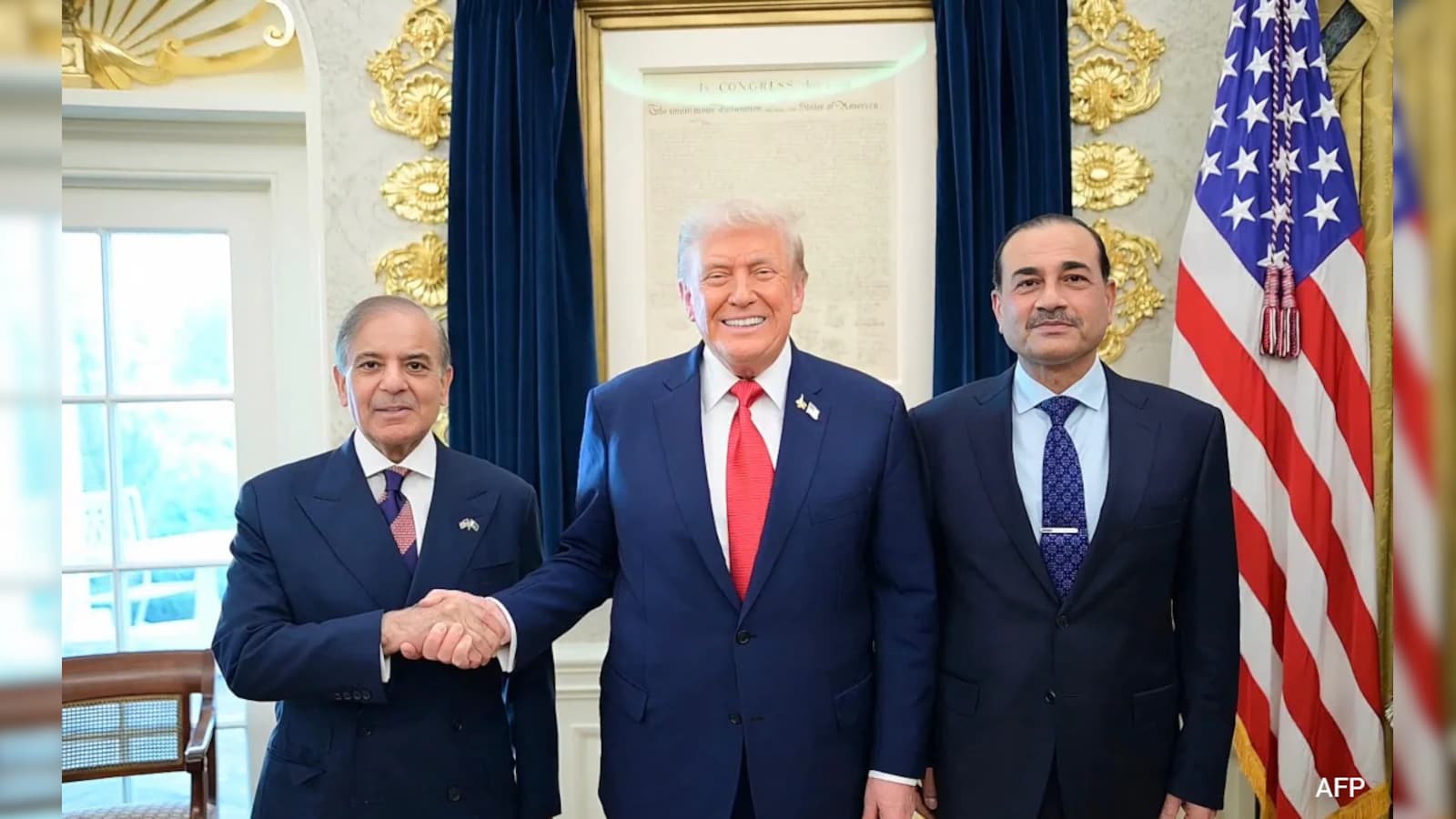
The article says Pakistan faces a renewed dilemma after Donald Trump linked a Middle East peace deal to Pakistan, Saudi Arabia and Qatar signing the Abraham Accords, putting Islamabad at risk of either U.S. displeasure or domestic backlash. Pakistan is described as wanting U.S. image restoration, financial relief and regional influence, but still unable to normalize ties with Israel without provoking unrest and possible military resistance. The piece frames the issue as a geopolitical and domestic political headwind rather than an immediate market event.
This is less about Middle East diplomacy than about Pakistan’s internal regime constraint becoming the binding variable. The market implication is that Pakistan can no longer treat US alignment as a low-cost foreign policy hedge: any move toward formalizing ties with Israel raises domestic instability risk, while refusing Washington raises the probability of a loss of goodwill, delayed financing, and less room in IMF/bilateral negotiations. That asymmetry matters because Pakistan’s external funding profile is already fragile; even a modest rise in perceived political risk can widen sovereign spreads and pressure reserve adequacy within weeks, not quarters.
The second-order effect is on Pakistan’s ability to monetize its geopolitical role. If Islamabad is excluded from the normalization/peace architecture, it loses a potential premium narrative around transit, security services, and investment intermediation. If it is included, the likely result is a short-term credibility hit that could force the state to lean harder on repression, which raises tail risk of unrest and capital outflow. In other words, both branches are negative for domestic stability; the difference is whether the pain is external financing stress or internal security stress first.
The more interesting trade is that the article likely understates how quickly this can spill into defense and banking. Any deterioration in US-Pak relations would be felt first in lenders exposed to Pakistan sovereign risk, then in contractors tied to security cooperation, and only later in broader EM sentiment. The contrarian view is that the headline is noisy and the regime will likely continue strategic ambiguity; that makes the immediate move overdone if one is trading it as a binary Israel-recognition event. The better framing is a rolling policy-risk premium that can persist for months, with sharp drawdowns only if Washington couples the ask with concrete financial conditionality.
For non-Pakistan assets, the deeper takeaway is that US leverage in the region is becoming more transactional and less durable. That increases dispersion across EM geopolitics: countries with cleaner domestic mandates and less ideological baggage can extract concessions, while Pakistan remains vulnerable to abrupt repricing whenever it is asked to perform consistency it cannot sustain. The probability-weighted outcome is continued drift, not a clean resolution, which argues for trading volatility rather than direction.
AI-powered research, real-time alerts, and portfolio analytics for institutional investors.
Request DemoOverall Sentiment
moderately negative
Sentiment Score
-0.35
Ticker Sentiment
