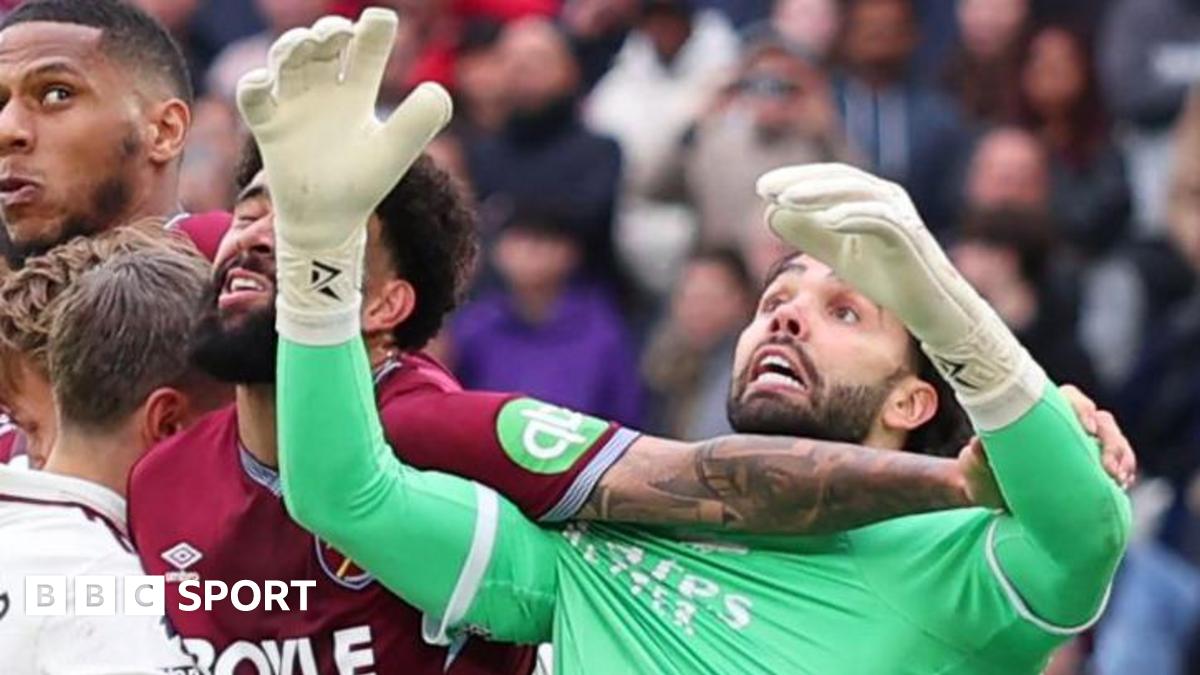
A 4 minutes 11 seconds VAR review overturned West Ham's late equalizer and preserved Arsenal's 1-0 win, leaving Arsenal five points clear of Manchester City with a game in hand and West Ham one point behind Tottenham in the relegation fight. The article focuses on the implications of referee/VAR decision-making and the Premier League's penalty-area standards rather than company-specific fundamentals. Impact is primarily on match outcomes and league narratives, not broader markets.
The investable signal is not the single call, but the institutional tolerance shift it implies. When a league accepts a high-variance, multi-minute review to resolve a game-state changing event, it effectively raises the expected value of late set-piece chaos for clubs that can manufacture box pressure and tolerate variance — while penalizing teams reliant on “officials will let it go” edge. That favors the more physical, aerial, and second-ball-heavy sides over technically cleaner but softer defenses over the next 8-12 weeks.
The second-order effect is reputational and regulatory, not just sporting. Expect a fresh cycle of lobbying for standardized contact thresholds, which usually creates temporary uncertainty: referees call tighter for a few weeks, then relax, then overcorrect again. That whipsaw tends to suppress late-game scoring efficiency and increases the value of teams with set-piece coaching and deep benches, because stoppage-time outcomes become more path-dependent and less correlated with open-play quality.
For the relegation race, the key is psychology compounding. A single overturned equalizer materially changes the risk of “must-get” points into a club's remaining schedule; once a survival candidate starts chasing results, defensive structure degrades and goal differential can gap quickly. That creates a near-term asymmetry: clubs in the bottom cluster with poor away records face a higher probability of a 2-3 match losing streak than the table suggests, especially if they begin forcing more bodies forward late.
Contrarian view: the market may be overreacting to officiating drama as a structural change. Over a full season, the biggest driver remains repeatable set-piece process, not the randomness of one call. The opportunity is to fade emotionally driven narratives and own the teams that consistently generate high-quality dead-ball chances, while being selective about shorting clubs whose underlying chance creation is intact despite one high-profile adverse ruling.
AI-powered research, real-time alerts, and portfolio analytics for institutional investors.
Request DemoOverall Sentiment
neutral
Sentiment Score
0.05
