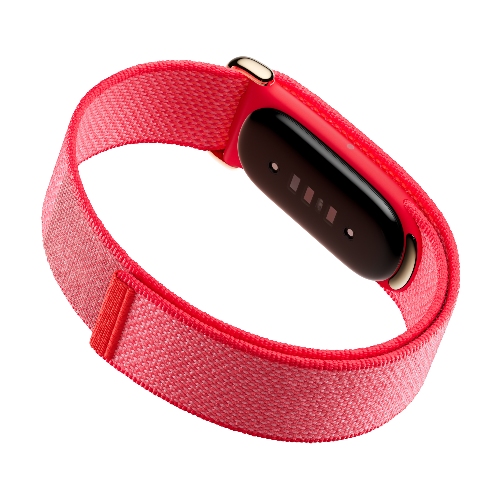
Google’s new Fitbit Air tracker is off to a favorable early start: after 48 hours, the $99 screen-less wearable is described as the most comfortable tracker tested, at just 8.3mm thick and 12g with the band attached. The article highlights a capable sensor suite, three band styles, and the new Google Health app/Health Coach AI platform, though it stops short of evaluating accuracy or long-term performance. Market impact should be limited for now, as this is an early product-impression piece rather than a hard sales or earnings update.
GOOGL is quietly extending its moat from “search + OS” into a higher-frequency health engagement loop. The strategic value here is not the tracker hardware margin; it’s the data flywheel: a low-friction, always-on wearable can lift retention across the Google health stack, increase permissioned data depth, and create a distribution advantage for AI coaching that competitors with clunkier form factors may struggle to match. If the product remains genuinely comfortable, that matters more than feature parity because adherence is the real bottleneck in passive wellness tracking.
Second-order, the launch pressures the premium wearable ecosystem more than the market may appreciate. Apple Watch is optimized for multifunction utility, but this category is about compliance and sleep continuity; if Google can own the “forget it’s on” use case at a ~$99 entry price, it can siphon demand from WHOOP-style subscriptions and from smartwatch users who increasingly reject overnight bulk. The likely winner is Google’s ecosystem leverage, while the immediate losers are subscription-first trackers that must justify recurring fees against a one-time device with enough utility to reduce churn.
The main risk is that AI coaching becomes a novelty layer rather than a habit-forming product. In health, hallucination risk is not just a UX issue; it is a trust and liability issue that can cap conversion from trial to subscription and slow enterprise/clinical adjacency over the next 6-12 months. A secondary risk is hardware commoditization: if the experience remains “good enough,” pricing pressure could force Google to subsidize the device as a customer-acquisition cost, which is fine strategically but may delay any near-term P&L contribution.
Near term, this is more about sentiment and ecosystem optionality than direct earnings. The stock reaction should be modest unless Google can prove engagement metrics, but the product improves the odds that Health/AI becomes a meaningful retention layer over 12-24 months. If early reviews continue to validate comfort and the coaching layer avoids obvious errors, this becomes a slow-burn positive for GOOGL’s consumer ecosystem narrative rather than a standalone revenue driver.
AI-powered research, real-time alerts, and portfolio analytics for institutional investors.
Request DemoOverall Sentiment
mildly positive
Sentiment Score
0.35
Ticker Sentiment
