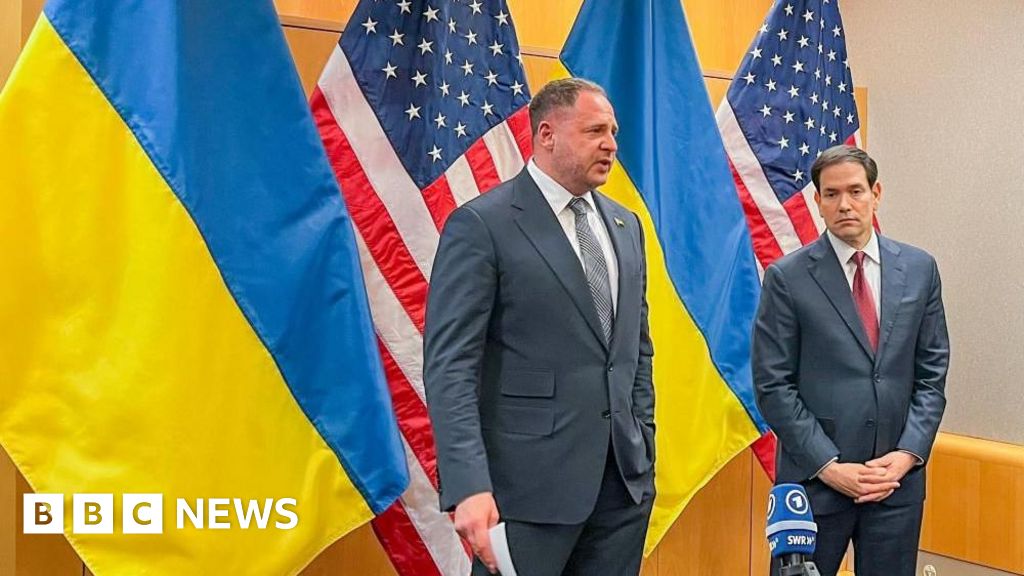
Diplomatic talks yielded an "updated and revised framework" reportedly condensed into a 19-point plan that softens earlier Kremlin-friendly terms and appears more acceptable to Kyiv: automatic veto language on future Ukrainian NATO membership and caps on troop numbers were removed, permanent Western troop basing is excluded though not absolutely banned, full amnesty for war crimes deleted, and security-guarantee language (Article 5-style protection) is referenced. The initiative follows intense U.S. pressure — including from the Trump administration and envoys linked to Putin narratives — but Moscow has shown no sign it will halt fighting without being forced, leaving a high degree of political and military uncertainty that could affect regional risk premiums and defense/energy exposures.
Market structure: The net effect is a bifurcation — defense primes (LMT, RTX, NOC; ITA ETF) and European gas/oil exporters gain durable pricing power as governments front-load procurement and pay premium for energy security; expect defense orderbook visibility to increase revenue guidance by ~5–10% for majors over 12 months. Losers include high-beta Eastern European equities, regional banks and near-term Ukrainian reconstruction plays; credit spreads for CEE sovereigns may remain +100–300bp wider absent a verified ceasefire. Cross-asset: expect immediate vols up (equity and commodity IV +20–40%), safe-haven bond flows compress core yields (-10–30bps) while FX moves favor USD and episodic RUB sell-offs (>10% spikes possible).
Risk assessment: Tail risks include rapid escalation with NATO entanglement (10–15% chance) or a major energy cutoff causing TTF/Brent +40–60% in 30 days; sanctions on key energy counterparties would amplify these moves. Time horizons: days—volatility spikes and knee-jerk flows; weeks–months—procurement contracts and budget ratifications; quarters–years—reconstruction and permanent defence baselines. Hidden deps: US domestic politics (election outcomes within 6–18 months) and Russia’s internal stability materially alter trajectories. Catalysts: battlefield offensives, formal Western security guarantees, or sudden pipeline disruptions will accelerate repricing.
Trade implications: Favor conviction longs in defense (LMT, NOC) and tactical long energy option exposure (Brent/TTF calls) while trimming EM/CEE cyclical risk; expect 6–12 month alpha from defense midday re-rating. Use pair trades (long ITA vs short EEM) to isolate geopolitical risk premia; employ options (3-month call spreads on Brent, 3-month protective puts on VGK) to manage skew and timing. Entry: size within 1–4% of portfolio, initiate within 2 weeks, re-evaluate at 3 months or on a >15% move in underlying.
Contrarian angles: Market may underprice a negotiated lull — a credible pause would compress defense multiple by 10–20% and reverse energy spikes, creating a tactical short-volatility opportunity; conversely, consensus may be underweight the probability of protracted low-intensity conflict that sustains elevated defense budgets for years. Historical parallels (2014 Crimea) show initial defense rallies can retrace if diplomacy holds; watch for unintended consequences: higher defense budgets crowd out non-defense infrastructure spending, benefiting incumbents but disadvantaging cyclical industrial suppliers.
AI-powered research, real-time alerts, and portfolio analytics for institutional investors.
Request DemoOverall Sentiment
moderately negative
Sentiment Score
-0.35
