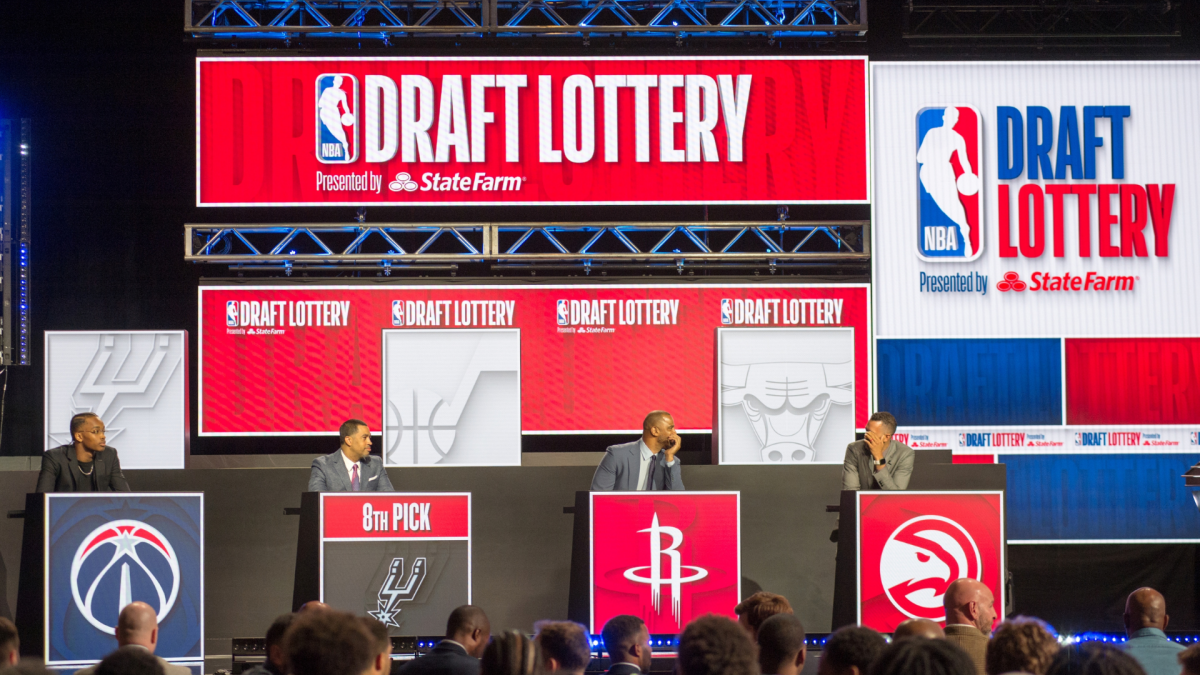
The NBA is proposing a new 16-team '3-2-1' draft lottery format starting with the 2027 draft, pending a May 28 Board of Governors vote requiring 23 of 30 votes. The change would sharply reduce odds for the three worst teams to 5.4% each for the No. 1 pick, while teams ranked 7-16 would see higher odds and all 16 picks would be drawn. The league is also considering restrictions on consecutive top picks, limits on protected trades for picks No. 12-15, and broader commissioner authority to punish perceived tanking through lottery-odds changes or draft-pick adjustments.
The real economic effect is not lower tanking so much as a reshuffling of where teams choose to be mediocre. By compressing the payoff for being worst and widening the reward for landing in the 7-16 band, the league is creating a stronger incentive to hover just outside the obvious bottom tier, which should improve late-season competitiveness among bad teams while making the middle of the standings more strategically brittle. That matters because “strategic losses” are likely to migrate from full-season losing to targeted rest management, soft injury reporting, and end-of-year rotation suppression — behaviors that are harder to police and more politically costly.
The biggest second-order winner is the NBA’s media and betting ecosystem, not the teams. A lottery that draws every pick and expands the play-in stakes increases live-event relevance deep into April/May, which supports regular-season ratings, sportsbook handle, and content inventory around games that previously had little incremental value. The biggest loser is the conventional model of rebuilding through bottoming out; front offices will likely respond by prioritizing optionality and veteran marginal wins over pure asset accumulation, which should modestly compress the volatility of franchise turnaround timelines.
The commissioner enforcement clause is the most dangerous part from an investability standpoint because it replaces a rules-based incentive structure with a discretionary regime. If the league actually starts altering odds or picks, the immediate benefit to anti-tank credibility could be offset by a long-run trust problem: market participants will assume selective enforcement, especially when prominent or large-market teams are involved. That creates a non-trivial reputational tail risk for the NBA product and for sports-adjacent wagering volumes if fans perceive outcomes as policy-driven rather than merit-based.
Contrarian view: the market may be overestimating how much this changes behavior in the aggregate. Teams with no path to contention will still find ways to optimize draft position without blatant tanking, while the true pressure point shifts to the play-in bubble, where the new incentives are more visible and harder to hide. In other words, this is more likely to reduce the optics of tanking than eliminate the strategy itself; the league may get a short-term ratings boost, but it is also setting up a new class of controversial games that could generate more enforcement disputes than it solves.
AI-powered research, real-time alerts, and portfolio analytics for institutional investors.
Request DemoOverall Sentiment
neutral
Sentiment Score
0.00
