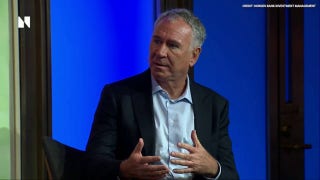
New York City is moving to impose a new annual fee on luxury second homes worth more than $5 million, and the policy has sparked a public clash with Citadel CEO Ken Griffin. Griffin called Mayor Zohran Mamdani’s video singling out his $238 million Manhattan penthouse a 'personal attack' and said he may pull a $6 billion Midtown development project from the city. The dispute underscores rising tax pressure on wealthy residents and could weigh on high-end real estate and business sentiment in New York.
The market-relevant issue is not the politics; it is the signaling effect on capital mobility. When a city frames a tax proposal as a personalized public shaming campaign, it increases the odds that high-net-worth residents and mobile businesses treat the policy as arbitrary, which can accelerate the very tax-base erosion officials are trying to prevent. That dynamic is especially dangerous for New York because a relatively small number of top households and firms fund a disproportionate share of incremental revenue, so even a modest change in retention behavior can overwhelm the expected proceeds of a luxury-tax plan.
The second-order risk is that this becomes a broader discount on NYC exposure: trophy-residential demand, high-end brokerage activity, luxury retail traffic, and even office leasing sentiment can all weaken if the city is perceived as hostile to wealth creation. The immediate economic damage is likely small, but the signaling channel can compound over months through lower deal flow and slower reinvestment decisions. In practical terms, the tax itself may matter less than the narrative that New York is willing to extract from, rather than partner with, capital.
The biggest asymmetry is timing. Politicians can score short-term populist wins, but developers and employers can delay or reroute projects quickly, while the revenue hit from migration shows up with a lag. If even one large project is paused or repriced, that creates a benchmark for other sponsors to demand higher risk premiums on NYC developments and financing, which can tighten credit conditions for the sector.
Contrarian view: the move may be overestimated as a near-term catalyst because ultra-wealthy households are sticky and the tax burden on a pied-à-terre is still small relative to total wealth. The more durable impact would come only if this rhetoric translates into a credible sequence of tax, regulation, and public-safety policies that repeatedly raise the cost of doing business. Without that follow-through, this could fade into noise after an initial headline-driven reaction.
AI-powered research, real-time alerts, and portfolio analytics for institutional investors.
Request DemoOverall Sentiment
mildly negative
Sentiment Score
-0.15
