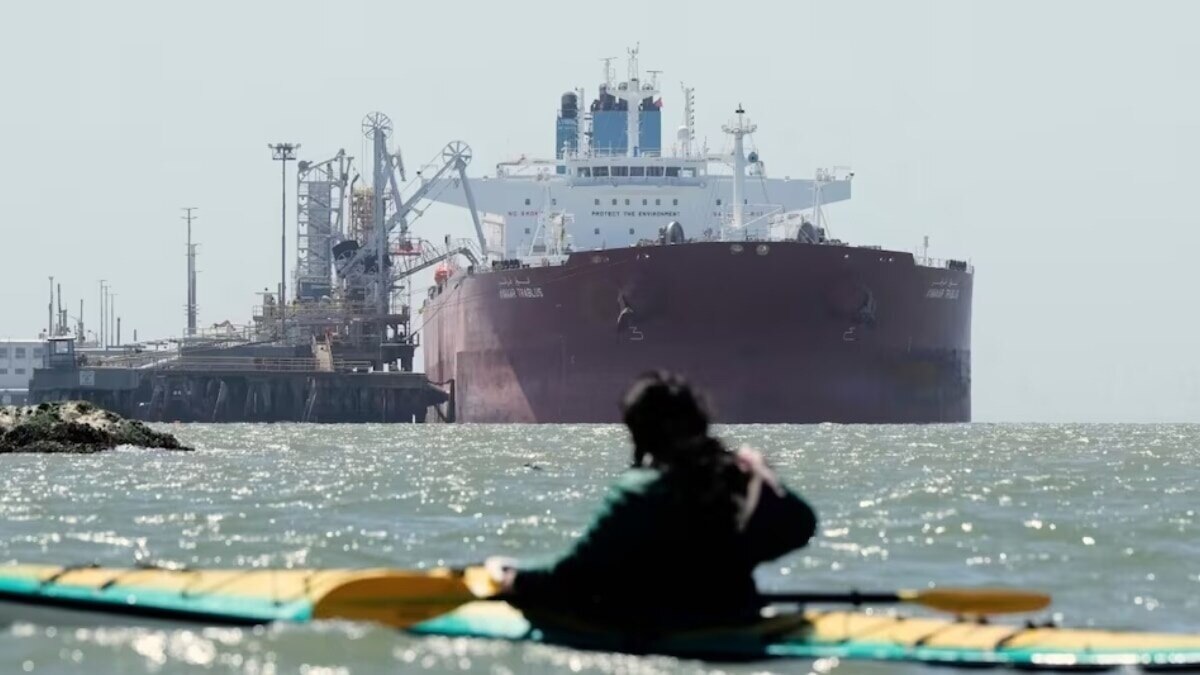
India has tightened advisories for Indian-flagged tankers in the Strait of Hormuz after two vessels were fired on by IRGC forces on April 18, with 14 Indian ships still waiting to cross and 11 already through. The Indian Navy is escorting ships after passage, and Desh Garima is expected to reach Mumbai on April 22. The move highlights elevated shipping-security risk around a key chokepoint handling about 20% of global oil flows, with potential implications for tanker routing and energy transport.
This is less an isolated shipping incident than a live demonstration that Hormuz risk has shifted from abstract tail risk to operational friction. The immediate market implication is not a straight-line oil spike, but a widening of prompt freight, insurance, and war-risk premia that can persist for days to weeks even if outright crude does not gap higher. That tends to hit refiners and shipping-dependent industries first, while upstream energy and defense names capture the asymmetry with a lag-free catalyst.
The second-order effect is that India’s routing caution effectively removes a portion of “normal” tanker throughput from the most efficient corridor, which can create localized congestion and delay without a headline closure. That matters because markets often underprice duration: a 24-72 hour delay is manageable, but a rolling 1-2 week escort requirement can tighten spot tanker availability and compress voyage economics across the Arabian Sea. Smaller operators and spot-exposed crude/product carriers are the most vulnerable because they absorb higher insurance and rerouting costs without contractual pass-through.
The contrarian angle is that a partial avoidance of the narrowest waters may actually reduce the probability of a full-blown shock by lowering target density and giving navies better control of transits. So the consensus “oil up, all shipping down” reaction may be too blunt if the lane remains technically open. The more durable trade is on volatility and insurance-sensitive assets rather than outright directional oil, unless we see evidence of spread widening, mine activity, or a second engagement that forces a broader reroute.
Catalyst-wise, the next 48 hours matter for whether the incident is treated as one-off harassment or the beginning of a pattern. If more vessels are turned back or escorted, expect prompt Brent structure to firm and tanker rates to reprice faster than equities. If the passage remains orderly, the risk premium should decay, but defense and naval-support logistics keep a bid under the theme for several sessions.
AI-powered research, real-time alerts, and portfolio analytics for institutional investors.
Request DemoOverall Sentiment
moderately negative
Sentiment Score
-0.35
