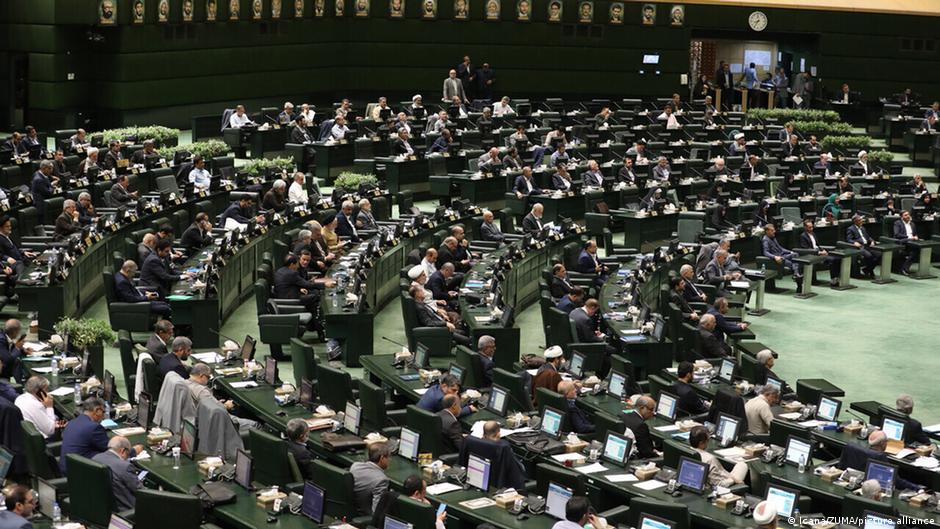
A fragile two-week Iran ceasefire is at risk as internal regime rifts deepen ahead of talks in Islamabad, while Israel-Hezbollah fire continues and the Strait of Hormuz remains only partially reopened. The article highlights a widening split between hard-liners and pragmatists, with Iran's economic limits making a longer war less sustainable but also making compromise politically difficult. Given the potential implications for Gulf shipping, global oil flows and regional stability, the story carries broad market relevance.
The market’s real variable is not the ceasefire headline; it is whether the internal coalition in Tehran can enforce discipline long enough to keep crude and shipping flows in a “managed ambiguity” state. That is usually enough to suppress volatility premia without restoring full physical normalcy, which means the first-order move is lower tail pricing in energy and freight, while the second-order move is a slower re-risking of EM carry and regional logistics if the truce holds for several weeks.
The key fragility is governance, not diplomacy. When a regime lacks a clear arbiter, tactical wins by hard-liners can paradoxically increase the probability of an accidental re-escalation because every faction has an incentive to prove relevance. That setup favors intermittent supply disruptions: short, sharp risk spikes in Brent, LNG, tanker rates, and insurance rather than a clean directional trend, with the highest convexity in names exposed to Strait of Hormuz routing and Middle East war-risk premia.
The contrarian angle is that the consensus may be underestimating the regime’s incentive to avoid a long war because fiscal strain and domestic control costs compound quickly. If the political center can credibly sell a truce as preservation rather than surrender, the path of least resistance is de-escalation, not expansion of conflict. In that case, the embedded geopolitical premium in energy may bleed out over 2-6 weeks, but the risk is asymmetric: any visible factional split or proxy spillover can snap it back in days, not months.
AI-powered research, real-time alerts, and portfolio analytics for institutional investors.
Overall Sentiment
moderately negative
Sentiment Score
-0.35
