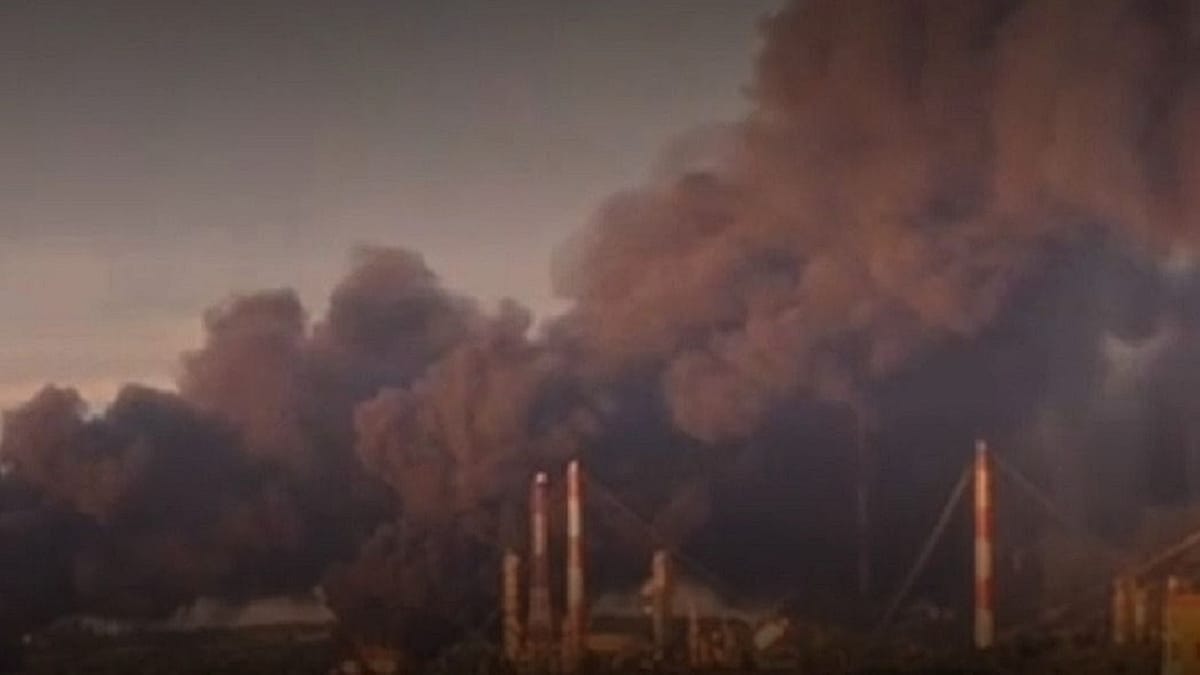
Russia launched more than 200 drones and decoys at Ukraine overnight, with 14 impacts across 11 locations, causing deaths, fires, and damage to civilian infrastructure. In response, Ukrainian drones struck Russian oil assets including the Saratov refinery, a Kirov pipeline station, and a fuel depot in Rostov, underscoring escalating risk to regional energy supply and logistics. Ukraine also denied Russia's claim that the Zaporizhzhya nuclear plant was hit, while the IAEA said it was gravely concerned.
The immediate market read is not simply “more war,” but a rising probability that Russia’s internal energy logistics remain the softest escalation channel. Repeated successful hits on refinery and pipeline nodes can force a dislocation between crude production and refined product availability: that is bearish for Russian domestic fuel supply, but paradoxically supportive for seaborne crude export revenues if Moscow prioritizes exports over local runs. The second-order winner is non-Russian refined product exporters in Europe and the Middle East, because diesel/gasoline replacement flows tighten inventories and improve crack spreads without needing a broad oil price spike.
For equities, the more durable implication is capex and operating-cost inflation in transport, agriculture, and industrial logistics across Eastern Europe and adjacent markets. Even when physical infrastructure is not directly destroyed, higher insurance, rerouting, and convoy/security costs raise delivered prices with a lag of weeks to months. Defense and air-defense suppliers benefit from the same dynamic, but the larger underappreciated beneficiary is missile-interceptor replenishment demand: each drone salvo raises the urgency of procurement, which is a multi-quarter revenue tailwind for European air-defense platforms.
The tail risk is escalation asymmetry around critical infrastructure and nuclear sites. That risk tends to compress risk appetite fastest in European cyclicals, insurers, and regional utilities, but it also creates brief entry points because markets often over-discount worst-case contamination scenarios that are politically salient but operationally unlikely. The more likely reversal catalyst is diplomatic pressure or a temporary operational lull; however, absent a ceasefire, the trend of attritional strikes on energy/logistics infrastructure should persist for months rather than days.
Contrarian view: the market may be over-focusing on headline oil-price risk and underpricing the margin benefit to downstream refiners and product traders. If Russian refining capacity remains intermittently offline, global crude may not rally proportionally because displaced barrels can still find export outlets; in that case, the cleaner trade is not long oil, but long refined-product complexity and European defense supply chains.
AI-powered research, real-time alerts, and portfolio analytics for institutional investors.
Request TrialOverall Sentiment
strongly negative
Sentiment Score
-0.55
