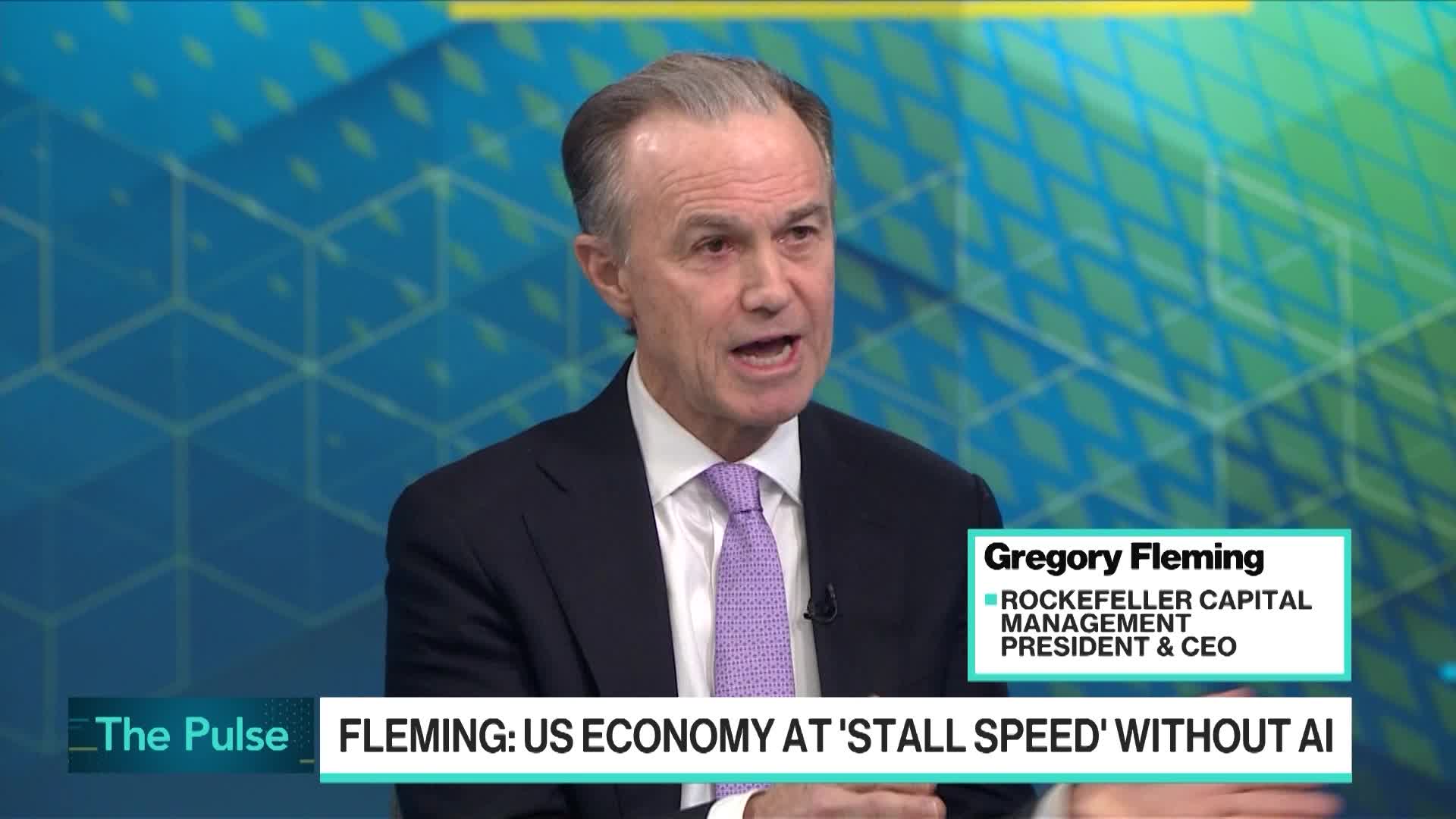
The speaker sees the US economy as resilient heading into 2026 but notes pockets of weakness—notably rate‑sensitive manufacturing and sluggish employment data (recent ADP report). They expect the Fed to cut rates imminently and to prioritize employment over inflation next year, while fiscal stimulus tied to the 2026 midterms and heavy AI-driven capex could lift growth even if inflation is tolerated slightly higher; federal deficits are cited as running materially above the administration’s 3% target (around 5–6% of GDP). Private markets are highlighted as a central allocation (roughly $15tn today, heading toward $20tn), and AI is expected to materially boost advisor productivity and corporate margins.
Winners: AI infrastructure owners (NVDA, MSFT, GOOGL, AMZN), hyperscaler cloud services and high-end semiconductor suppliers will capture incremental pricing power as corporate AI capex ramps; private-equity/private-markets managers also benefit from asset growth and fee expansion. Losers: rate-sensitive manufacturing, parts of industrials and small-cap cyclical banks face margin pressure from sluggish domestic demand and on‑shoring frictions; payroll-service cyclicals (ADP) are vulnerable to weak employment prints.
Competitive dynamics will concentrate spending into a smaller set of compute/stack providers, increasing gross margins for market leaders and making compute capacity (TSMC/NVDA stacks) a semi‑scarce input. Private markets' growth to ~$15–20T reduces liquidity in public markets, compresses public equity volatility and raises takeover/premium activity over 12–36 months.
Cross-asset: a Fed tilt toward employment-driven rate cuts in the next 1–8 weeks implies short-term front-end rate weakness (T‑bill/T‑note rally) and potential steepening of the curve; tolerance for slightly higher inflation pushes breakevens and commodities (copper, energy) up and risks a softer USD. Tail risks include stagflation (inflation >3.5% with GDP <1.5%) or a Fed pivot back to hawkish policy if CPI surprises upside, which would shock equities and lift real yields.
Catalysts & timing: immediate (days) — ADP, NFP, CPI and next Fed decision; short-term (weeks/months) — hyperscaler earnings and capex guidance; long-term (12–24 months) — sustained AI productivity gains, fiscal stimulus around 2026 midterms. Hidden dependency: AI benefit is concentrated — power, real‑estate (data centers) and supply-chain constraints can blunt the productivity boost and create localized inflation.
AI-powered research, real-time alerts, and portfolio analytics for institutional investors.
Request DemoOverall Sentiment
neutral
Sentiment Score
0.08
Ticker Sentiment
