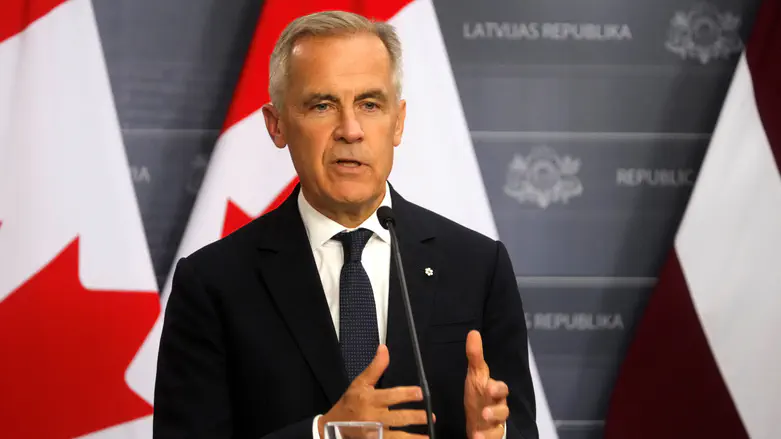
Canada escalated its response to Israel's interception of a Gaza flotilla, with Prime Minister Mark Carney calling the treatment of activists 'unacceptable,' demanding an independent investigation, and summoning the Israeli ambassador. France has also banned Israeli National Security Minister Itamar Ben Gvir from entry, while Paris, Italy, and Spain are pushing for EU sanctions. The article adds political risk around Canada-Israel relations and Carney's prior pro-Palestinian remarks, but direct market impact appears limited.
The immediate market read is not about direct sanctions risk to Israel so much as the widening of diplomatic fracture lines across North America and Europe. That matters because it increases the probability of episodic policy noise around arms sales, dual-use exports, visas, and procurement approvals rather than a clean, one-time headline shock. For defense suppliers, the second-order effect is usually valuation compression from governance overhang, not earnings downgrades, unless the rhetoric translates into formal restrictions on licensing or financing.
The more actionable consequence is for European and Canadian defense-adjacent contractors with exposure to government tenders, security services, and border/port technology. Public pressure can force slower procurement cycles and tougher compliance screens, which tends to favor large incumbents with legal capacity and diversified end markets over smaller niche vendors that rely on a single ministry or program. That said, any escalation in sanctions rhetoric also supports demand for surveillance, counter-UAS, cyber, and critical infrastructure hardening, creating a bifurcation between politically sensitive offensive systems and domestically framed security spend.
The contrarian view is that the reaction function may be more theatrical than structural. Ottawa and European capitals have incentives to signal moral distance without materially impairing strategic ties, so the market may be overpricing a durable policy shift if no actual export-control language follows. If the issue fades from headlines within 2-4 weeks, the entire move likely retraces; if instead an investigation or formal sanctions package appears, the repricing window extends to months and becomes more relevant for defense multiples and cross-border government contractors.
Key catalyst is whether the Canada-Israel dispute broadens into coordinated EU action, because that would convert a bilateral incident into a broader policy template. Absent that, this is mainly a volatility event with selective winners in compliance-heavy security infrastructure rather than a sector-wide bearish signal. The highest-risk tail is a copycat episode involving other allied governments, which would raise the probability of procurement delays and reputational discounts across the defense supply chain.
AI-powered research, real-time alerts, and portfolio analytics for institutional investors.
Request DemoOverall Sentiment
moderately negative
Sentiment Score
-0.35
