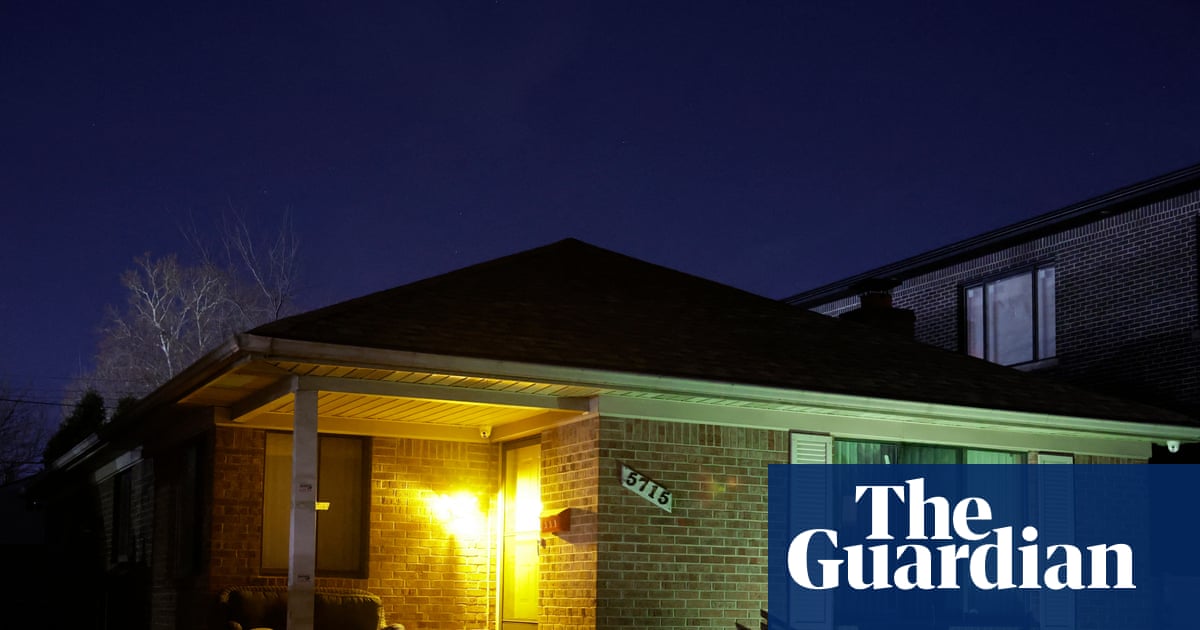
An attempted vehicle attack at Temple Israel in West Bloomfield, Michigan was thwarted Thursday when on-site security killed the 41-year-old driver; no fatalities inside but 140 children were present at the early childhood center and ~30 law enforcement officers were treated for smoke inhalation. Authorities identified the suspect as Ayman Mohamad Ghazali, a naturalized U.S. citizen who reportedly lost four family members in a 5 March Israeli airstrike in Mashgharah, Lebanon, linking the incident to recent US/Israeli strikes and renewed escalation in the region. Implication for portfolios: heightened local security concerns and risk-off investor sentiment could modestly support defense/security exposure and risk premium on geopolitical-sensitive assets, but direct market impact is limited absent broader regional escalation.
This incident will produce concentrated, binary budget reallocation in the coming weeks: high-footprint religious and education campuses will accelerate capital spending on physical hardening (bollards, ballistic glazing, perimeter vetting) and recurring operational spend (armed guards, monitoring). For institutions with >1,000 members the incremental capex is likely to be in the low six-figures and recurring security OPEX could rise 20–50% year-over-year for the next 6–12 months, creating an outsized revenue pop for niche security contractors and guard vendors versus broader facilities suppliers.
At the macro/geopolitical layer, domestic-inspired violence tied to overseas conflict increases the probability of episodic flight-to-quality flows and short-lived volatility spikes rather than a sustained risk-premium on defense equities — absent a formal widening of state-on-state hostilities. The real market lever is congressional emergency authorizations and homeland security grant programs: a single $1–3bn tranche for community-protection grants would be an immediate earnings catalyst for contractors that execute federal facilities/ID/access-control work over 3–9 months.
Investor positioning should therefore favor idiosyncratic, revenue-visible plays in physical security and select defense exposure via option structures that cap downside. The consensus risk-off knee‑jerk (Treasury bid, modest defensive rotation) is likely to last days-to-weeks; durable repositioning only follows if there are repeated attacks or a clear legislative funding response. Monitor DHS grant language and House appropriations activity as the primary catalytic readouts over the next 30–90 days.
AI-powered research, real-time alerts, and portfolio analytics for institutional investors.
Request DemoOverall Sentiment
strongly negative
Sentiment Score
-0.70
Ticker Sentiment
