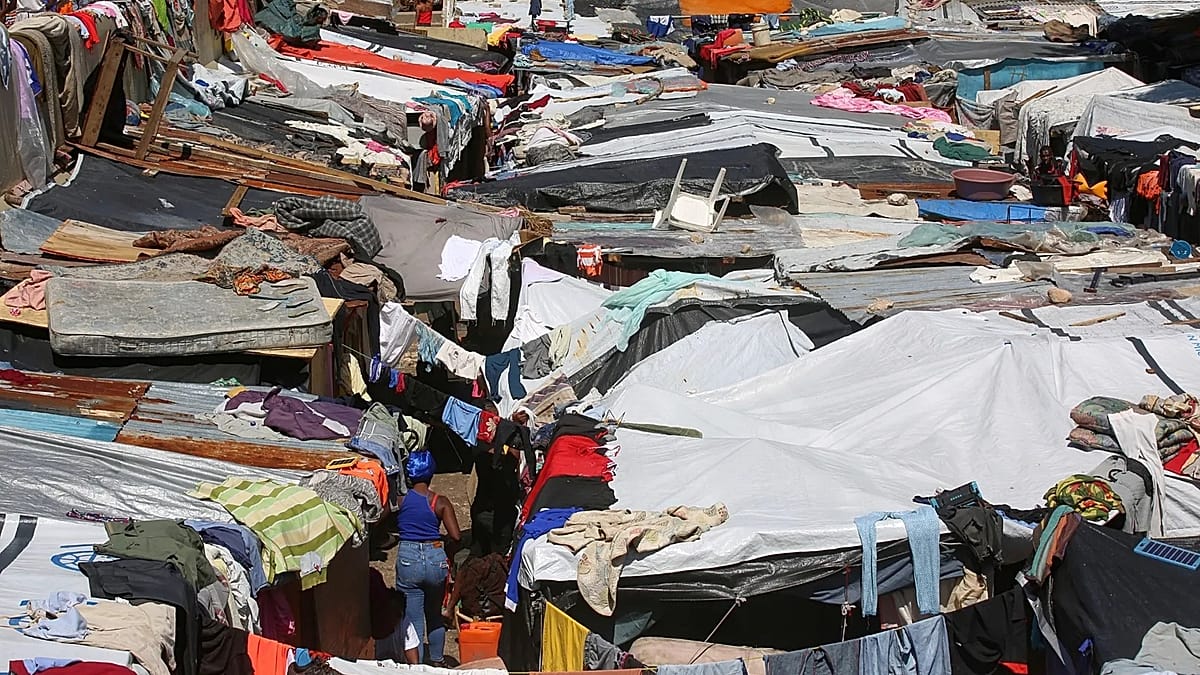
Haiti’s gang violence has displaced 1.5 million people and left 2,300 dead and 100 kidnapped so far this year, underscoring a deepening security and humanitarian crisis. UN Secretary General António Guterres visited Port-au-Prince to back the new UN-approved gang-suppression force and press for political stabilization ahead of elections. The article highlights severe disruption to the economy, education system, and aid delivery, with no near-term resolution in sight.
The investable read-through is not about Haiti as an isolated crisis; it is about the widening gap between headline diplomacy and operational capacity. That gap tends to benefit vendors with “mission creep” exposure only if funding is actually appropriated and executed, while hurting anyone dependent on a functioning local economy: logistics, consumer staples distribution, telecom uptime, and formal-sector payrolls all face persistent demand destruction when displacement becomes structural. The second-order effect is that even modest security gains can unlock a disproportionately large rebound in intra-city commerce because Port-au-Prince is operating from a severely depressed base.
The key catalyst window is 1-6 months, not days: the new force’s credibility will be judged on whether it can secure a few transport corridors and public buildings, not on broad territorial restoration. If it fails to do that quickly, the likely outcome is a new equilibrium of fragmented control, which usually prolongs aid dependency, depresses tax collection, and raises sovereign and insurance-risk premiums for anything linked to Haiti’s trade lanes. The most important tail risk is political: a security plateau without elections can harden transitional rule, which often increases the probability of protest cycles and factional fragmentation rather than stabilizing institutions.
Consensus is likely overestimating how much a security deployment alone can improve conditions and underestimating the lag between violence reduction and economic normalization. Even if gangs lose ground, displacement, property loss, and school disruption create a long-lived scarring effect that suppresses labor supply and household formation for years. The contrarian opportunity is that any credible corridor security or elections timetable could spark an abrupt, violent mean reversion in local activity from a very low base — but only if the force is visibly resourced and politically protected, which remains the bottleneck.
AI-powered research, real-time alerts, and portfolio analytics for institutional investors.
Request DemoOverall Sentiment
strongly negative
Sentiment Score
-0.72
