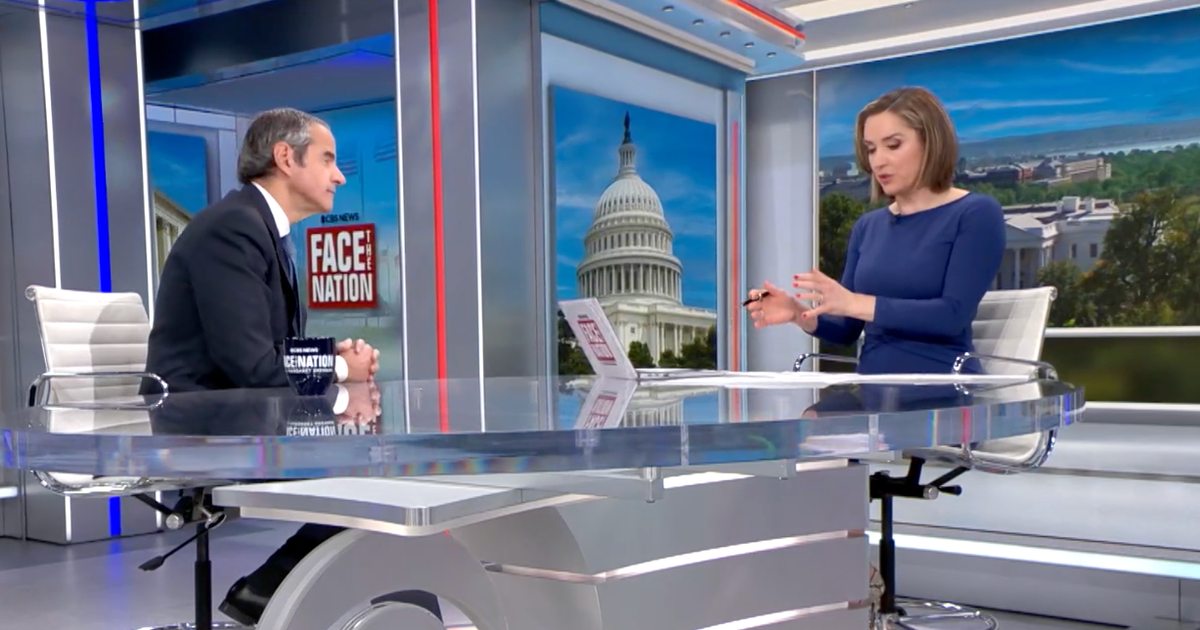
IAEA Director-General Rafael Grossi warns major issues will likely persist after the war, noting Iran had ~972 lbs of 60%-enriched uranium before strikes and that ~92.5 lbs at 90% is theoretically enough for one weapon. He said US strikes degraded the program but much material and technical know‑how remain, recovery of 60% UF6 cylinders would be "very challenging," and centrifuge capability can be reconstructed. Implication: elevated, protracted geopolitical risk with potential upward pressure on defense and energy-related assets and increased market volatility.
The headline risk around Iran’s nuclear program is now a persistent geopolitical premium rather than a binary event: even a successful kinetic campaign leaves expertise and key industrial inputs intact, meaning reconstitution of enrichment capability is plausibly a matter of months-to-few-years depending on sanctions leakage and covert procurement. Expect a multi-stage market reaction — an immediate jump in tactical defense and ISR demand, followed by a medium-term shift in specialty industrial supply chains (high-strength alloys, vacuum systems, frequency control electronics) that are harder to substitute and subject to export controls.
Because a direct seizure of HEU carries high escalation cost and complex handling requirements, markets should price an elevated probability of protracted containment/deterrence rather than quick neutralization. That dynamic favors companies exposed to long-duration government contracts (sustainment, logistics, downblending services) and creates convexity in uranium/enrichment-related equities if diplomatic downblending fails; conversely, sectors sensitive to Gulf shipping and insurance rates will see episodic downside on escalation news.
Key catalysts to watch on tight timelines: (1) any credible diplomatic downblending agreement (days–weeks) which would collapse risk premia; (2) successful covert rebuild indicators (6–18 months) that would re-rate uranium/enrichment exposures; and (3) attempted kinetic recovery of material — a low-probability, high-impact event that would spike oil/shipping insurance and defense equities. The consensus underestimates the lag between destroyed hardware and industrial reconstitution, and therefore may be under-allocating to specialty industrial suppliers and LEU/downblend service providers while overpricing immediate resolution in energy markets.
AI-powered research, real-time alerts, and portfolio analytics for institutional investors.
Request DemoOverall Sentiment
strongly negative
Sentiment Score
-0.65
