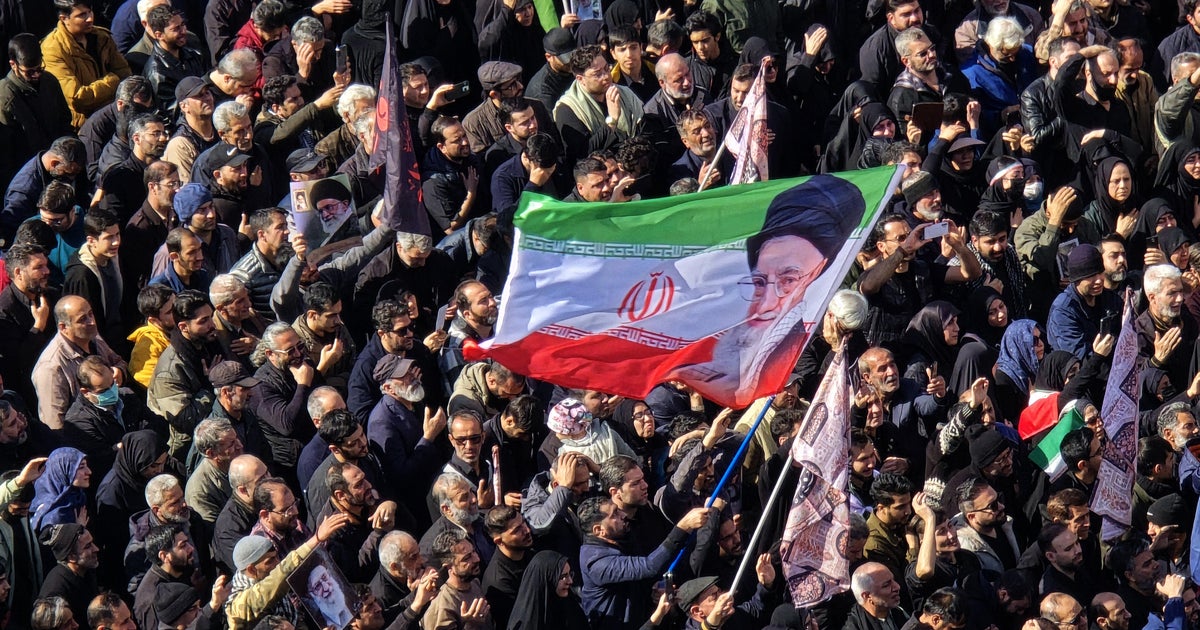
A sustained U.S.-Israeli strike campaign killed Iran’s Supreme Leader Ayatollah Ali Khamenei and roughly 40 senior officials, prompting Iran to name an interim Leadership Council including President Masoud Pezeshkian and two senior jurists while launching retaliatory missile and drone strikes across the region. Iranian state media reported at least 200 killed domestically; Israel says it destroyed about half of Iran’s missile stockpiles and prevented production of some 1,500 missiles. The strikes have generated broad regional escalation risk, emergency diplomatic moves (including an IAEA board meeting at Russia’s request), and immediate security actions affecting U.S. personnel in Gulf states — factors likely to drive near-term market volatility, particularly across defense, emerging‑market assets and energy-sensitive instruments.
Market structure: Near-term winners are US defense contractors (LMT, RTX, GD), oil & gas majors (XOM, CVX, XLE) and traditional safe-havens (GLD, TLT) as risk-off and oil-supply disruption premia reprice. Losers are EM sovereigns, regional airlines/cruise/tourism and exporters exposed to Middle East routes; expect EM FX to weaken and CDS spreads to widen 100–300bps in stressed names. Supply/demand mechanics point to a plausible 2–4 mbpd shortfall scenario if Strait of Hormuz disruptions persist, which would push Brent into $90–130 range until shipping/insurance normalizes.
Risk assessment: Tail risks include full regional escalation, cyberattacks on financial plumbing, or closure of major shipping lanes; these are low probability but could spike oil >$150 and equity vol >+150% intraday. Immediate (days): volatility and USD/Treasury rallies; short-term (weeks–months): energy and defense outperformance, EM credit widening; long-term (quarters–years): sustained defense budgets (+5–15% real) and rerouting/reshoring capex. Hidden dependencies: insurance costs, container freight rerouting, and secondary sanctions chains that can blunt or amplify commodity flows.
Trade implications: Hedge immediately (48–72h) with 0.5–1% portfolio in VIX 30–60d calls and 2–3% in GLD/IAU; establish medium-term 3–5% exposure to XLE or XOM/CVX for oil upside, and 2–3% to LMT/RTX/GD for defense budget re-rating. Use defined-risk option structures: 3-month 10–15% OTM call spreads on XOM/CVX and 30–60d VIX calls; short EEM 1–3 month put spreads or buy EMBI CDS proxies if EM stress exceeds +100bps. Entry: hedge now; add risk-on if Brent sustains >$95 for 3 trading days; exit trim when VIX drops 30% from peak or Brent falls >15% off highs.
Contrarian angles: Consensus may over-index to long-duration Treasuries; if oil-driven inflation persists, real yields and break-evens could rise, pressuring long bonds — avoid blanket duration extension beyond 6–12 months. Historical parallels (1990/2003) show oil spikes are often front-loaded and mean-revert within 3–9 months; therefore favor short-term options and pair trades (long energy, short travel) over outright long-only commodity exposure. Watch for underpriced second-order winners: small-cap defense suppliers and logistics insurers — consider selective small (micro) allocations rather than large cap overcrowding.
AI-powered research, real-time alerts, and portfolio analytics for institutional investors.
Request TrialOverall Sentiment
strongly negative
Sentiment Score
-0.75
