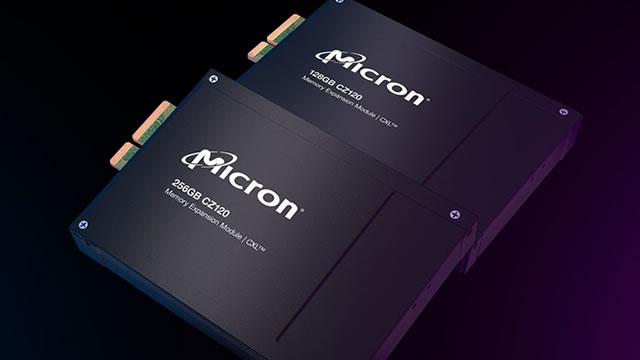
Micron is set to benefit from tight DRAM and NAND conditions lasting at least post-2028, supported by surging AI inference workloads. Strategic agreements now cover 20% of DRAM and 33% of NAND volume, helping stabilize pricing and supporting projected gross margins above 60% by 2030. While Chinese competitors are gaining share, the article says they lag technology by 2-5 years and their supply is constrained domestically, limiting near-term competitive risk.
This is less a classic chip-cycle call than a valuation reset toward a more annuity-like earnings stream. If a larger share of output is locked under long-duration customer terms, the market should discount lower downside volatility and a higher terminal multiple than a purely spot-priced memory business, especially if AI inference keeps pulling demand forward in a way that is harder to unwind quickly.
Second-order, the real winners are not just the supplier but the AI infrastructure stack that can absorb higher memory cost without destroying returns on capital. That pressure lands on hyperscaler capex efficiency, server OEM margins, and eventually device upgrade cycles if DRAM stays structurally tight; the pain shows up in BOM inflation before it shows up in revenue misses. The China angle is probably overstated as an immediate global pricing threat if domestic output remains trapped, but it can cap upside in Asia while preserving global tightness.
The key risk is timing: the bullish setup matters most over 1-3 quarters as the market re-rates gross margin durability, while the 6-18 month thesis depends on whether AI inference growth remains step-function enough to outrun capacity additions. Consensus may be missing that the biggest positive is lower earnings dispersion, not just higher peak margins; if gross margins disappoint relative to the >60% path, the multiple can compress even with decent operating results. Falsifiers are faster-than-expected capex from Samsung/SK Hynix, inventory rebuilds that flip to oversupply, or any sign that AI demand is pausing faster than expected.
AI-powered research, real-time alerts, and portfolio analytics for institutional investors.
Request DemoOverall Sentiment
strongly positive
Sentiment Score
0.55
