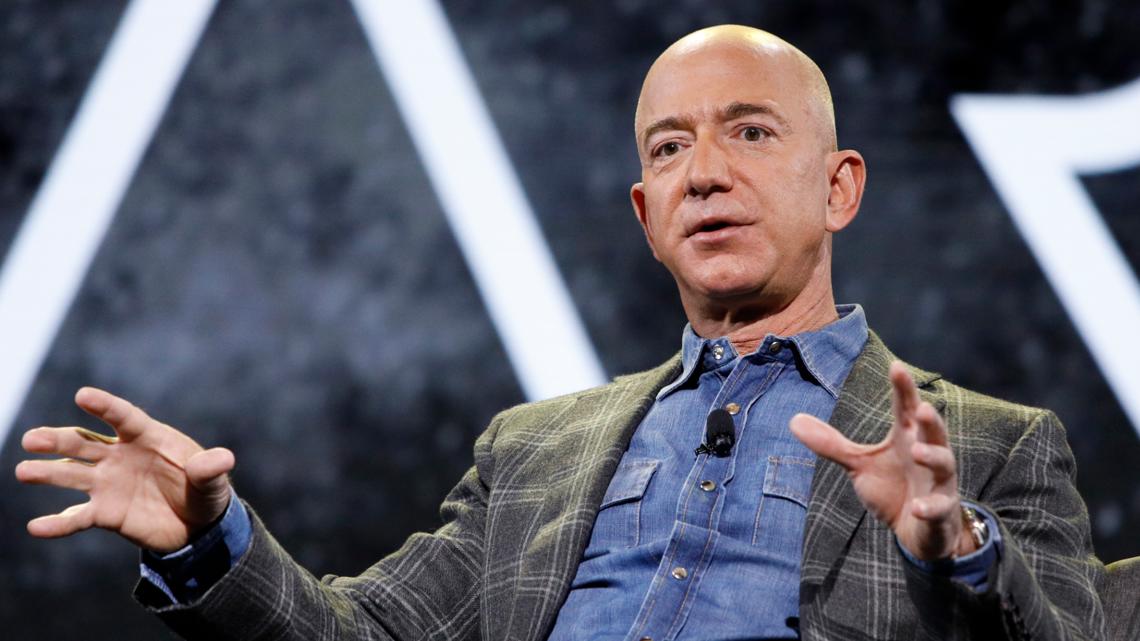
Jeff Bezos called for zero federal income taxes for the bottom half of U.S. earners, arguing the current 3% share of federal tax revenue paid by that group should be reduced to zero. The article frames the comments alongside related proposals from Cory Booker and several states to reduce or eliminate income taxes, including a one-time 5% California billionaire tax estimated to raise $100 billion. The piece is policy-focused and unlikely to have an immediate broad market impact, though it reinforces the ongoing debate over wealth and income taxation.
This is not a direct AMZN operating catalyst; it is a signaling event about the overhang on high-net-worth taxation and the political acceptability of “working-class relief” offsets. The immediate market read-through is modest for AMZN itself, but the second-order effect is that Bezos is helping normalize a policy frame that would be financed by higher taxes on capital and ultra-high-income households rather than wage earners, which is incrementally bearish for late-cycle valuation multiples across luxury, private wealth, and some financial intermediation exposures.
The larger implication is duration: if the policy conversation shifts toward zero-rating lower brackets while preserving revenue, the marginal burden has to move up the income/wealth ladder or onto consumption/sales bases. That creates a bifurcation where mass-market retailers and discount/essential spend names can benefit from incremental disposable income at the bottom, while premium discretionary brands face a relatively slower demand environment if the political momentum broadens to wealth taxes or state-level surtaxes. The clearest beneficiary set is domestic lower- and middle-income consumption, but the earnings effect is likely to be small and delayed unless paired with meaningful state/federal package design.
The contrarian read is that markets may be overestimating the probability of near-term federal action. These proposals are electorally attractive but legislatively difficult, and the more likely near-term outcome is state-level experimentation with mixed results. For equities, the relevant catalyst window is months to years, not days: the trade is less about this comment itself and more about whether it becomes a durable campaign theme into budget negotiations and the next election cycle.
For AMZN specifically, the messaging is mildly supportive at the margin because it reinforces Amazon’s consumer-sensitivity narrative, but it does not change earnings power unless lower-tax policy materially lifts spending at the low end. The better expression is in sectors whose revenue is disproportionately tied to incremental paycheck relief, versus a direct AMZN directional trade.
AI-powered research, real-time alerts, and portfolio analytics for institutional investors.
Request DemoOverall Sentiment
neutral
Sentiment Score
0.05
Ticker Sentiment
