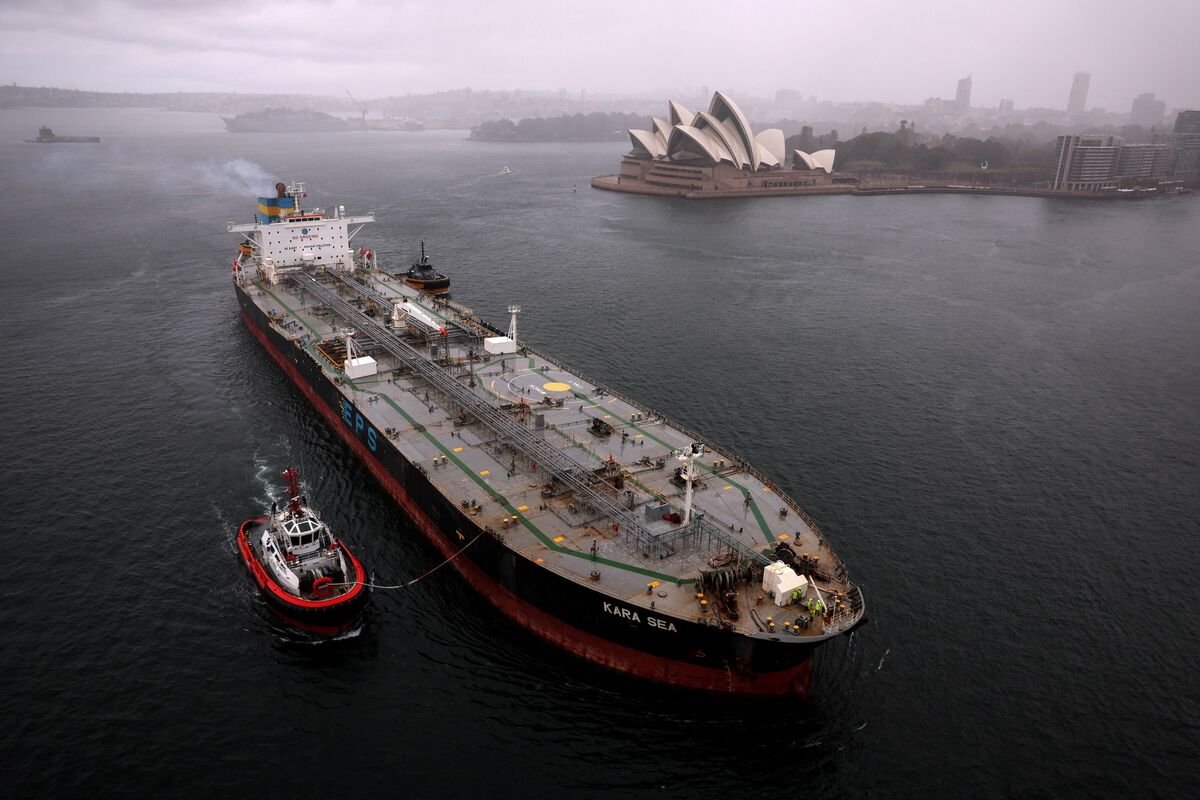
Three tankers have departed from Washington state and Los Angeles since March 30 carrying more than 925,000 barrels of ultra-low sulfur diesel to Australia. The shipments reflect an effort to ease a fuel crisis tied to the Iran war, highlighting disrupted regional supply chains and elevated fuel-market stress. The news is mildly negative for energy-market stability but is primarily a logistical response rather than a broad market shock.
This is a fast but temporary reallocation signal, not a structural supply shock. The market implication is less about headline crude and more about regional product dislocations: US West Coast cracks should stay supported while Australian inland and coastal diesel differentials can normalize faster than outright global distillate pricing. The fact that cargoes are leaving from the USGC-adjacent West Coast also tells you the arbitrage is being cleared by freight and optionality, which tends to tighten prompt regional inventories and lift nearby time spreads before it meaningfully moves flat price.
The second-order winner is any refiner or marketer with flexible export logistics and clean distillate yield; the loser is whoever is forced to source replacement barrels on short notice in a thin market. Expect elevated barge and MR freight on the Pacific route, plus a brief improvement in diesel margins for refiners exposed to West Coast demand capture. Over the next 1-4 weeks, the more important catalyst is whether this becomes a repeating flow pattern; if it does, it implies the domestic US West Coast is structurally long enough to support sustained exports even as Australia pays up for security of supply.
Contrarian take: the market may be overestimating how much this kind of one-off cargo movement can fix Australia’s fuel stress. Shipping a sub-1M barrel tranche buys time, but it does not solve the underlying vulnerability to Middle East-related disruptions, so prompt product prices can stay bid even if headline supply looks “covered.” The sharper trade is to fade any knee-jerk softness in distillate volatility once the boats are booked; the real risk is a rerun of the shortage, not relief from this shipment.
AI-powered research, real-time alerts, and portfolio analytics for institutional investors.
Overall Sentiment
mildly negative
Sentiment Score
-0.15
