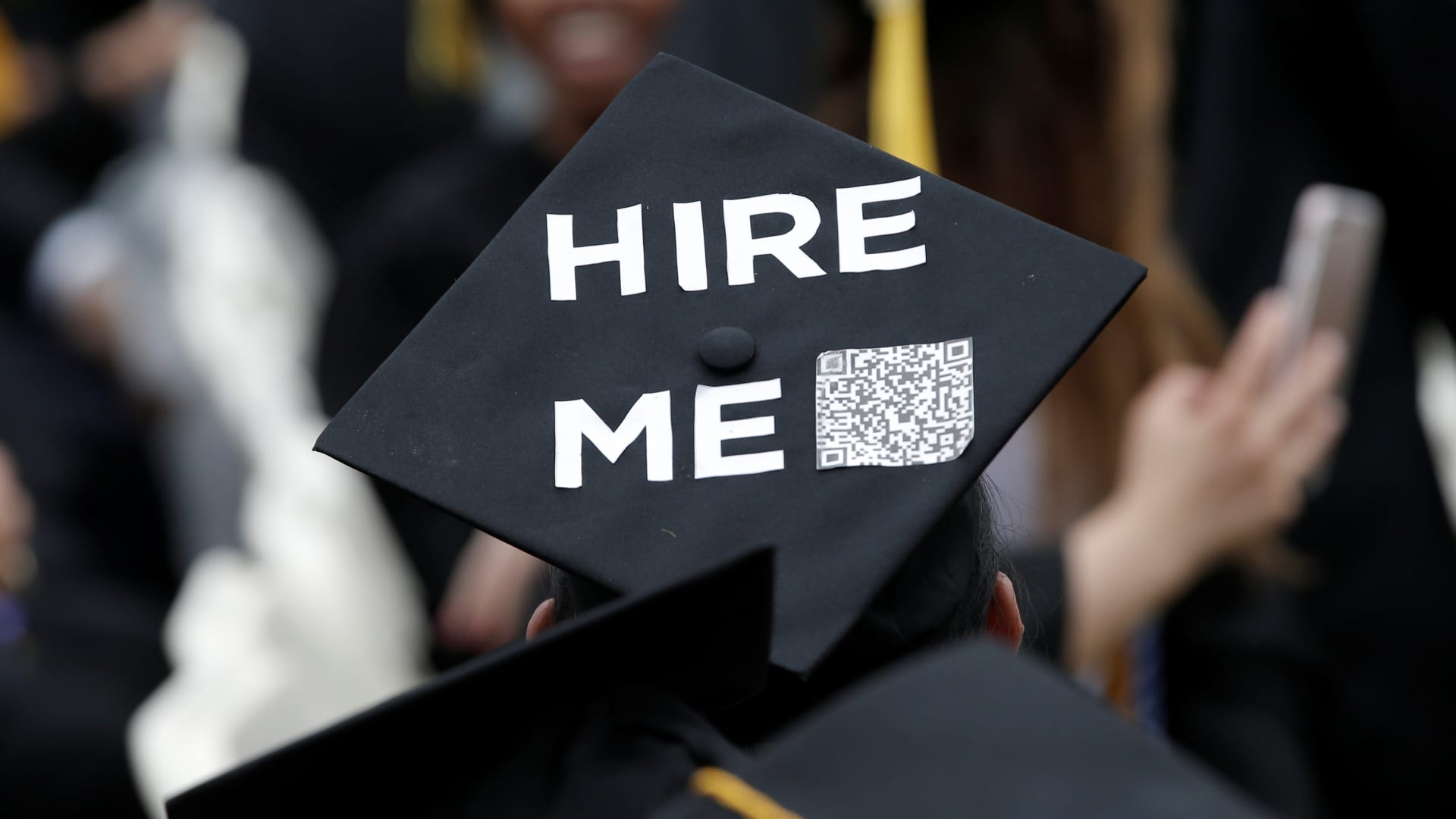
The job market for new college graduates is facing its most challenging period in a decade, primarily driven by the rapid integration of artificial intelligence, which is displacing entry-level white-collar positions, particularly in technology and finance. Entry-level job postings have declined 35% since January 2023, contributing to a 65% year-over-year increase in overall layoffs and resulting in significantly fewer job offers for recent graduates. This trend, exacerbated by broader economic concerns, is intensifying pressure on higher education institutions to adapt curricula and career services amidst rising student debt and declining perceived return on investment, signaling a structural shift in labor market dynamics.
The job market for new college graduates is experiencing its toughest period in a decade, marked by a "strongly negative" sentiment and significant structural shifts. Entry-level job postings have declined 35% since January 2023, contributing to a 65% year-over-year increase in overall layoffs, reaching levels not seen since 2020. This has resulted in only 30% of 2025 graduates securing full-time work in their fields, a notable decrease from 41% for the Class of 2024.
The rapid integration of artificial intelligence is a primary driver, displacing white-collar positions in technology and finance, which are more susceptible to AI's analytical capabilities. Conversely, blue-collar and nursing jobs are more insulated. This trend, coupled with broader economic concerns, persistent inflation, and reduced consumer spending, has led 51% of employers to rate the job market for seniors as "poor or fair," the highest share since 2020-21.
Higher education institutions face immense pressure to adapt their offerings amid rising student debt and declining perceived return on investment. Colleges like CUNY are responding by integrating career-connected advising and paid internships to improve graduate outcomes, aiming for all graduates to secure a job offer or post-graduate enrollment. However, the inherent slow pace of adaptation in higher education presents a significant challenge in this rapidly evolving labor market.
AI-powered research, real-time alerts, and portfolio analytics for institutional investors.
Overall Sentiment
strongly negative
Sentiment Score
-0.75
Ticker Sentiment
