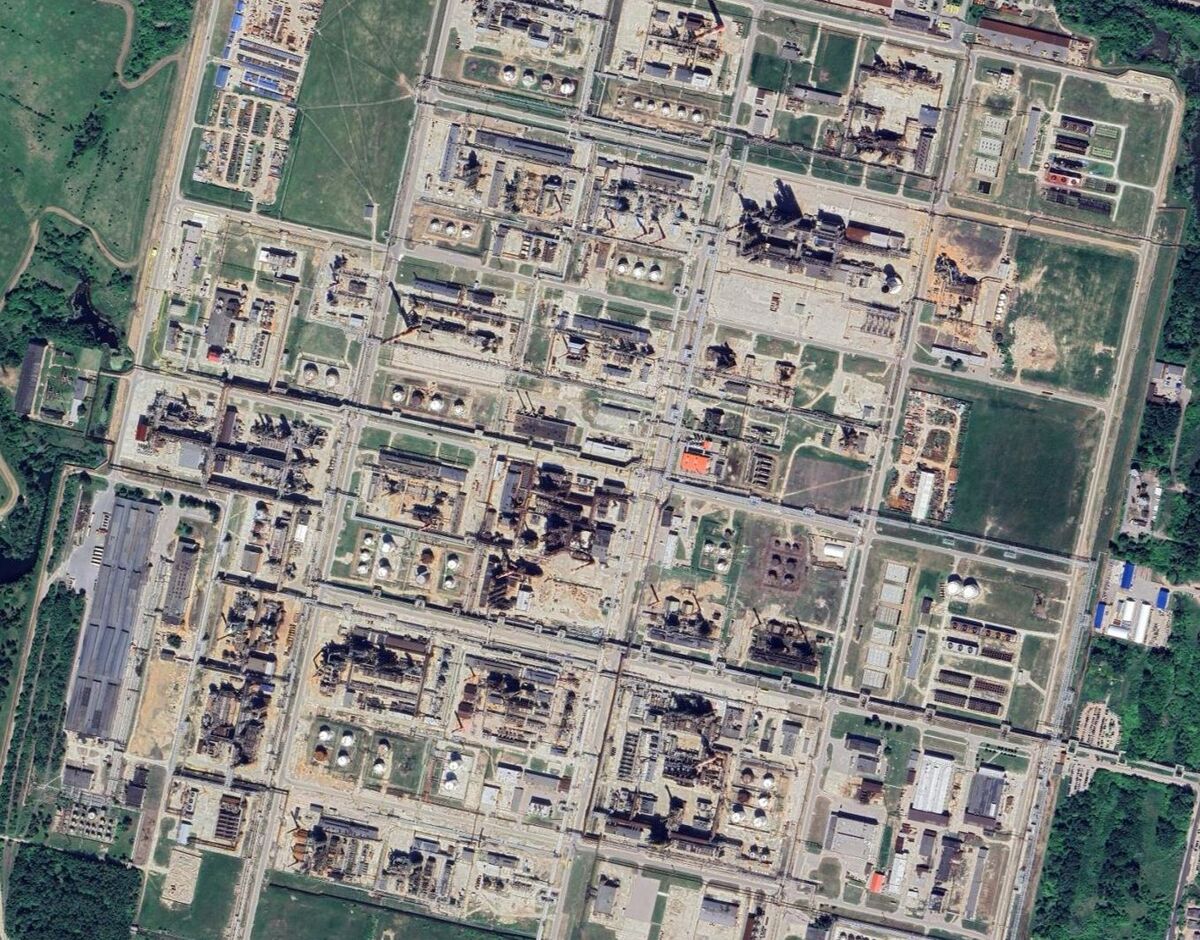
Ukrainian forces say they struck Rosneft PJSC’s Ryazan oil refinery overnight while Russian forces simultaneously launched a large attack on Ukrainian energy infrastructure. The Ryazan complex, roughly 120 miles southeast of Moscow, has a design capacity of about 340,000 barrels per day and has been targeted multiple times in recent months. Damage or operational disruption at this major refining hub could tighten regional fuel supply, elevate near-term oil-market volatility and put pressure on Russian energy-sector equities and logistics flows.
Market structure: The Ryazan hit removes ~0.34 million barrels/day (mb/d) of Russian refining throughput potential in the near term, tightening refined-product supply where global refinery margins are already fragile. Expect immediate upward pressure on Brent/ULSD/RBOB of roughly 3–8% and crack-spread expansion of $5–$15/bbl over days–weeks if outages persist, benefiting integrated majors and refiners with feedstock access while hurting airlines, road-transport logistics and Russian export capacity.
Risk assessment: Tail risks include escalation that disrupts crude exports (low-probability, high-impact: Brent > $100/bbl) and Western sanctions/insurance blacklisting that halt Russian export flows for months; conversely rapid repair in 4–8 weeks could produce a sharp mean-reversion. Near-term (0–14 days) volatility spike is highest; medium-term (1–6 months) margins depend on repairs and seasonal demand; long-term (6–24 months) raises capex and insurance costs for Russian refining and may re-route global refined flows.
Trade implications: Favor short-dated directional energy option plays and select refiners with logistics optionality. Defensive moves: buy protection on Russian sovereign/corporate exposure and underweight EM debt; tactically short airline exposure via ETF puts. Cross-asset: expect RUB weakness (trade USD/RUB long), wider Russian bond spreads and safe-haven rally in USTs if geopolitical escalation occurs.
Contrarian angles: Markets may over-price permanent Russian capacity loss — many refinery outages are repairable in 6–12 weeks, creating a mean-reversion trade after initial spike. Also higher refined margins can benefit non-Russian refiners and fuel storage plays; consider buying refiners on >10% pullbacks post-spike rather than chasing immediate highs.
AI-powered research, real-time alerts, and portfolio analytics for institutional investors.
Request DemoOverall Sentiment
strongly negative
Sentiment Score
-0.60
