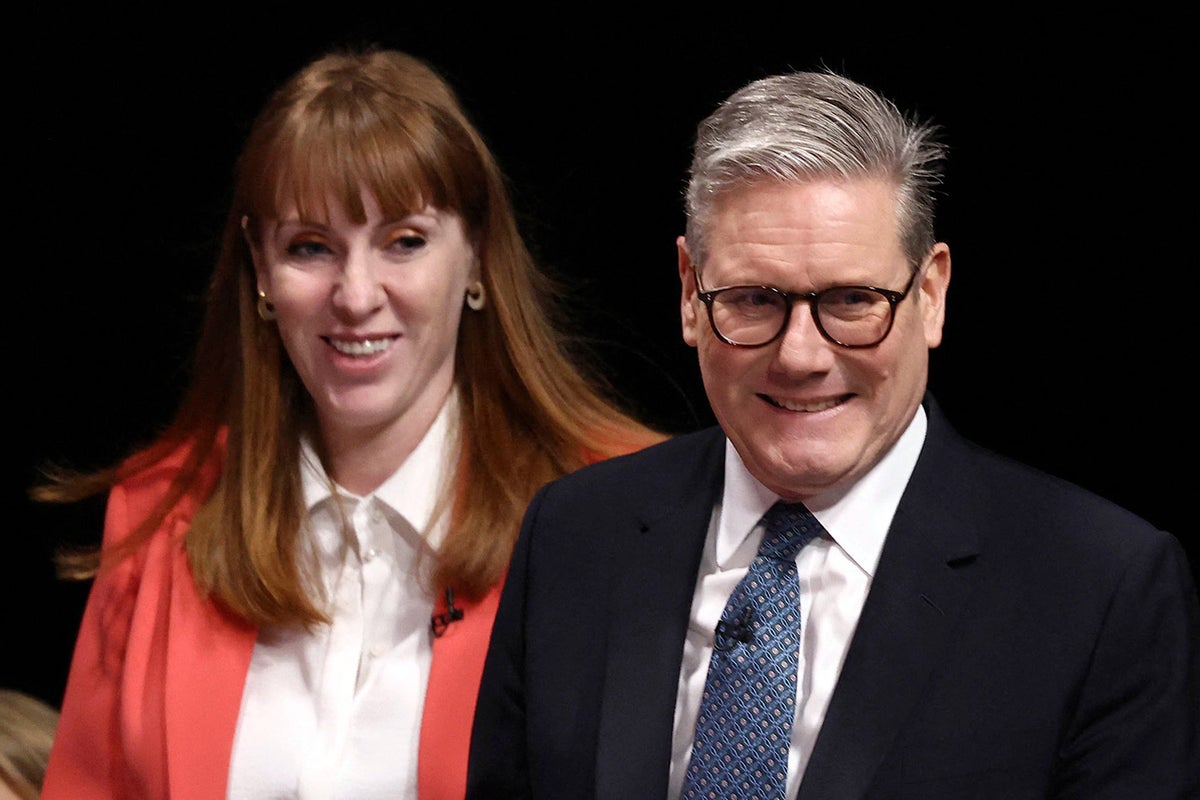
Angela Rayner warned Labour’s current strategy is 'not working' and said this may be the party’s 'last chance' to win back voters, intensifying pressure on Keir Starmer amid leadership speculation. She called for a change in economic direction, attacked a 'toxic culture of cronyism' in No 10, and said blocking Andy Burnham’s return to Westminster was a mistake. The piece signals rising political instability within Labour, but it is unlikely to have direct market impact beyond UK political-risk sentiment.
The immediate market read is not on UK macro but on governance premia: a leadership wobble this visible tends to widen the discount on domestic-facing UK assets because it raises the odds of policy drift, delayed fiscal decision-making, and a more concessionary stance to internal party factions. The second-order effect is a higher volatility regime for UK duration and sterling around political headlines, even if the underlying economic data are unchanged, because investors will price a lower probability of coherent medium-term budget consolidation.
For equities, the likely losers are UK domestic cyclicals and policy-sensitive sectors that need stable Whitehall execution—housebuilders, retail banks, infrastructure contractors, and regulated utilities. The risk is not just an election-style swing; it is bureaucratic paralysis: if party management becomes the dominant story, departments slow-walk approvals and capital allocation decisions, which can compress multiples on UK midcaps for months rather than days. By contrast, globally diversified UK large caps with non-UK earnings should be relatively insulated and may outperform on a relative basis if domestic sentiment weakens.
The contrarian point is that visible infighting can be market-positive if it forces a faster pivot toward a more credible fiscal and growth agenda. If the leadership contest coalesces around a figure perceived as more market-friendly or more competent on public spending discipline, the initial negative headline impulse could reverse quickly in gilts and sterling. The key catalyst window is the next 1-4 weeks: if the challenge fizzles, the market may fade the noise; if it becomes a formal contest, expect a step-up in UK political risk premia and a stronger underperformance of domestic equities versus FTSE multinationals.
AI-powered research, real-time alerts, and portfolio analytics for institutional investors.
Request DemoOverall Sentiment
mildly negative
Sentiment Score
-0.30
