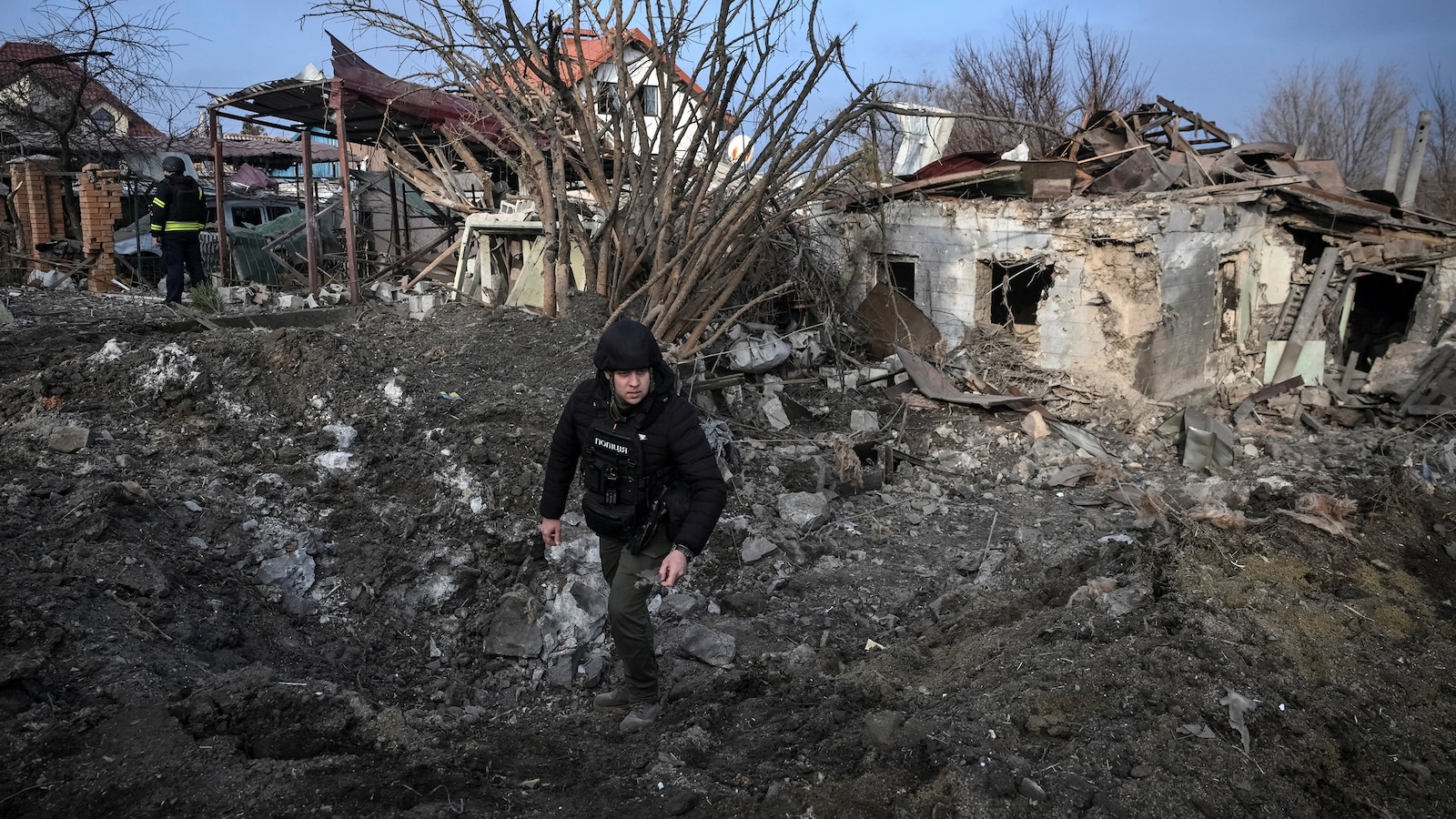
U.S. negotiators met with Russian envoys in Miami and proposed a potential new peace-talk format involving Ukraine, the U.S., Russia and possibly European representatives; Russia's envoy Kirill Dmitriev described discussions as "constructive" and said talks would continue into Sunday. Ukrainian officials said contacts will resume soon, but President Putin signaled no willingness to compromise on his prior demands — including Ukraine's permanent exclusion from NATO and Russian territorial claims — while continuing to claim military momentum. Hostilities persisted during talks: Ukraine reported 97 Russian drones overnight (75 shot down/suppressed, 19 impacts across eight locations) while Russia reported downing at least three Ukrainian drones.
Market structure: Renewed talks that remain inconclusive maintain a risk premium skewed toward defense, energy exporters (oil/gas, wheat), and sovereign/EM safe-haven assets. Expect US defense primes (LMT, NOC, GD) to continue outperforming broad markets by a few percentage points over 1–3 months if strike intensity stays above ~20 incidents/day; oil/gas volatility should remain elevated with episodic $3–8/bbl swings on headlines. Financials and European cyclicals carry asymmetric downside if strikes into infrastructure continue or sanctions widen.
Risk assessment: Tail risks include rapid escalation (Western military aid conversion or expanded sanctions) that could push oil +10–25% and spike natural gas prices in Europe, or conversely a credible ceasefire that collapses the defense risk premium by 10–20% in days. Immediate (0–7 days) risk is headline-driven volatility; short-term (weeks–months) is commodity and FX swings; long-term (quarters) is persistent rerating of defense and energy capex. Hidden dependencies: Russian capital controls, grain export corridors, and winter gas storage levels — each can amplify shocks.
Trade implications: Favor tactical longs in defense and energy and systematic hedges in EM/commodity exposure while using options to cap drawdowns. Prefer short-dated event-driven option structures (30–90 days) around announced negotiation milestones; scale positions with strike/volume tied to measured attack frequency (e.g., add exposure if >25 strike events/day averaged over 7 days).
Contrarian angles: Markets often price an imminent peace when talks are publicized — that relief trade is often short-lived. If Putin’s public stance remains maximalist, the market underestimates a protracted low-intensity conflict that supports multi-quarter demand for defense spending and energy diversification. Conversely, a surprisingly credible roadmap would create a fast unwind risk for defense longs; plan explicit exit triggers rather than directional conviction alone.
AI-powered research, real-time alerts, and portfolio analytics for institutional investors.
Request DemoOverall Sentiment
mixed
Sentiment Score
0.05
