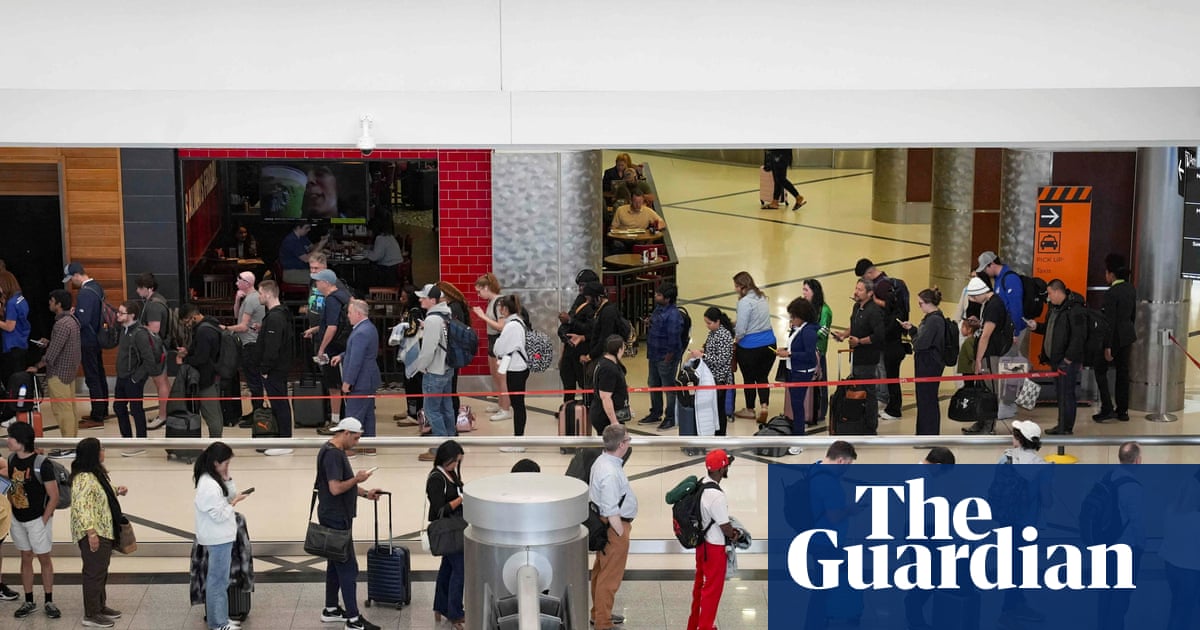
President Trump threatened to deploy ICE agents to U.S. airports on Monday unless Democrats agree to tougher immigration and security measures, raising immediate political and operational risk for air travel. The comments follow Democrats blocking DHS funding for the fifth time since the agency shutdown began in mid-February, risking TSA workers missing a second full paycheck next week. Deployment faces legal uncertainty under USC 1357 and could exacerbate staffing shortages as many TSA agents are calling out sick or leaving, potentially disrupting airport operations and passenger flows.
Immediate market impact will be concentrated in air travel operations and contractor chains rather than long-term demand for flying. Even a 48–72 hour surge in call-outs or checkpoint disruption can cascade into 2–6% capacity loss for major carriers in affected hubs, producing outsized share moves (we think a 8–15% near-term downside is plausible for single carriers exposed to Minneapolis/DFW-style disruptions) because unit revenues are highly levered to schedule integrity.
The policy threat creates a non-obvious procurement arbitrage: DHS is politically incentivized to buy surge capabilities (private screening, biometric clearance, short-term staffing) even as baseline appropriations remain stalled. That benefits mission-services and security-equipment vendors able to stand up contracts quickly (contracts awarded under emergency authorities can bypass usual competition windows), implying a 6–12% re-rating for a narrow group of DHS vendors within 3–12 months if this becomes a pattern.
Key catalysts and path-dependence are binary and time-staggered: operational disruptions and union call-outs can hit within days; emergency contract awards or legal injunctions play out over weeks to months; a DHS funding resolution or a court decision curtailing ICE authority would reverse the setup. The largest tail risks are broader protests or municipal bans escalating into multi-airport disruption, which would push a travel shock into the 2–3 month window and materially widen credit spreads for entities financing airport operations.
AI-powered research, real-time alerts, and portfolio analytics for institutional investors.
Request DemoOverall Sentiment
mildly negative
Sentiment Score
-0.25
