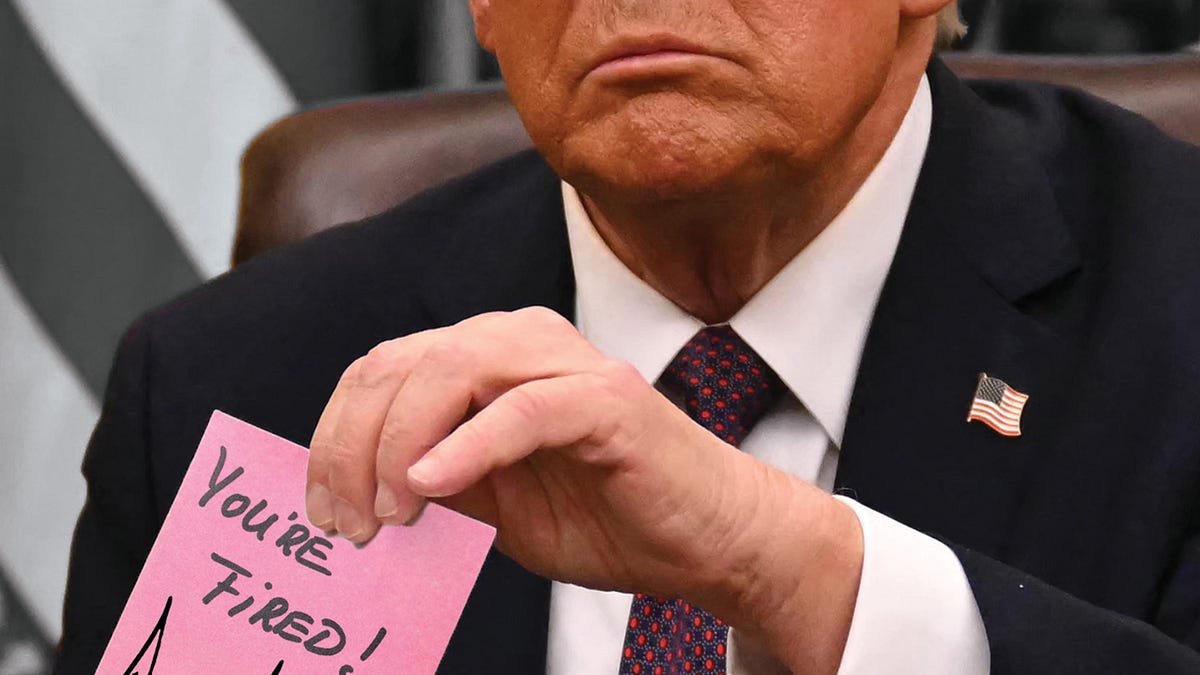
The article centers on Trump’s Iran war rhetoric, mid-cycle redistricting battles in Virginia and other states, and the broader fallout from administration governance issues, including cabinet firings and the Kash Patel defamation suit. It also flags energy-market implications from the Strait of Hormuz disruption, with oil and gas price risk offset by a push toward domestic clean energy that could increase dependence on China for critical minerals. The tone is critical of the administration and highlights political and geopolitical instability rather than a single company-specific catalyst.
The market implication is not the headline geopolitical noise; it is the regime shift in policy credibility. A prolonged Middle East conflict raises the odds of a near-term energy shock, but the more durable second-order effect is that governments accelerate domestic power and strategic-mineral substitution, which structurally benefits grid equipment, nuclear services, and battery supply chains while extending the premium on anything that improves energy security. The catch is that this transition deepens dependence on China for critical inputs, so the “clean energy winners” are likely to be upstream constrained, not the obvious end-market names.
On the domestic-politics side, the redistricting fight is a slow-burn catalyst for 2026 House control, but the bigger trading takeaway is that legislative volatility increases the probability of policy whiplash on spending, permitting, and procurement. That helps defense primes and hurts companies whose growth thesis depends on stable federal grant or regulatory continuity. Scientific research funding cuts are especially important as a lagging indicator: they compress the future pipeline for biotech innovation, medical devices, and university spinoffs with a 12-24 month lead time before revenue shows up.
The contrarian point is that the market may be underpricing how much of this is performative rather than durable. Loud executive rhetoric does not automatically translate into lasting fiscal or industrial policy, and some of the most dramatic moves could unwind if courts, Congress, or commodity prices force de-escalation. The right framing is not “buy chaos,” but “buy optionality on volatility and scarcity, sell stories that require stable institutions.”
AI-powered research, real-time alerts, and portfolio analytics for institutional investors.
Request TrialOverall Sentiment
mildly negative
Sentiment Score
-0.15
