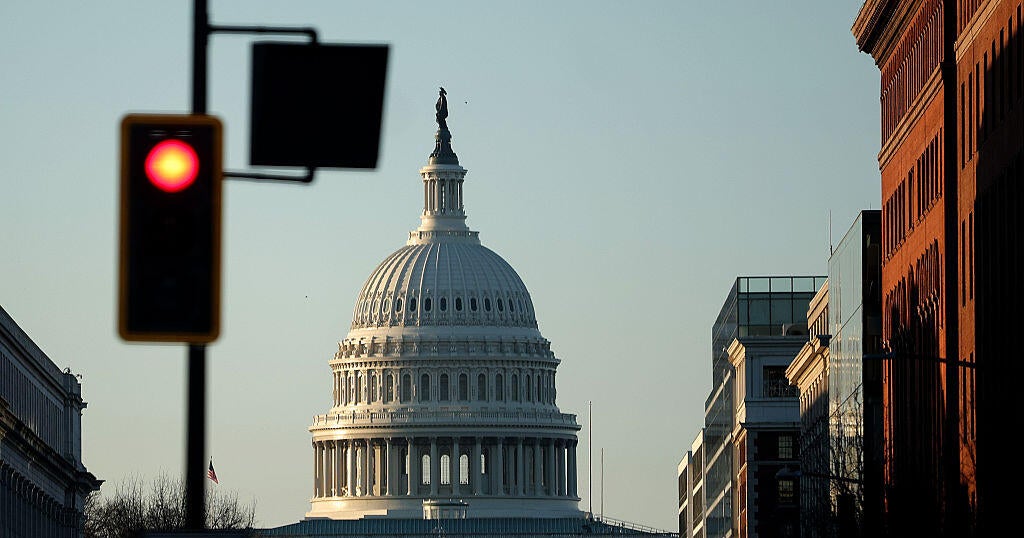
DHS Secretary Kristi Noem testified before the Senate Judiciary Committee amid a partial DHS funding shutdown that began Feb. 14 and intense scrutiny following two fatal Minneapolis shootings by federal immigration agents. Senators pressed Noem on oversight issues — including a classified TSA testing report — and she cited department metrics (an 8,000% increase in death threats against ICE officers and a more than 1,300% rise in assaults); Democrats are refusing to fund DHS without immigration enforcement reforms while House Republicans push a standalone funding measure. Lawmakers warn the lapse is straining TSA, Secret Service, FEMA and the Coast Guard and could hinder security preparations for events such as the World Cup, and the newly escalated conflict with Iran has added urgency to resolving the impasse, leaving near-term operational and policy risk for travel, security and DHS-dependent sectors.
Market structure: Short-term winners are defense and homeland-security services contractors (RTX, LHX, LDOS, BAH) and private detention/security operators (GEO, CXW) because political pressure and a partial DHS shutdown raise the probability of stop-gap spending, contingency contracts, and a defense/homeland reallocation; losers are travel-related incumbents (AAL, UAL, DAL) and TSA-dependent airport services if screening or staffing degrades. Competitive dynamics favor larger diversified defense primes with classified-program access (Lockheed, Raytheon) and systems integrators who can win urgent FEMA/TSA/Coast Guard task orders; small pure-play travel suppliers will see pricing power compress if demand falls >5–10% during escalation.
Risk assessment: Tail risks include a prolonged DHS funding lapse >30–60 days synchronized with Middle East escalation, triggering emergency appropriations that reprice defense contractors (+10–25% re-rating risk) and cause 5–15% downside to airline regional cashflows; a political ouster or major IG findings could force contract cancellations or tighter oversight for DHS vendors. Hidden dependencies: many DHS-supported services are delivered via GSA schedules and short-term task orders — revenue can shift within 2–8 weeks, so near-term bookings matter more than FY guidance. Key catalysts: House DHS funding vote this week, Senate 60‑vote threshold, and any Iran escalation causing oil moves >5% are primary triggers for re-rating.
Trade implications: Favor 2–3% active overweight to large defense primes and systems integrators via call-spread option structures (3-month, 5–10% OTM) to cap cost; underweight/short 1–2% exposure to legacy US airlines (AAL, UAL) via puts or CDS if cash burn accelerates. Relative-value: long LDOS/short AAL (services exposure vs discretionary travel) for 1–3 months; commodities/bonds: hedge with 1% allocation to long oil exposure (WTI/Brent) if geopolitical risk rises >5% and increase US Treasuries duration defensively if equities correct >5%.
Contrarian angles: Consensus assumes temporary disruption; absent a sustained shutdown or legislative reform, defense upside may be priced too aggressively — avoid overpaying for cyclicals and prefer contractors with >50% classified/recurring revenue (NOC, LHX) over one-off DHS vendors. Reaction may be overdone in small-cap security stocks that lack backlog — favor liquid large-caps and structured option entry to capture asymmetric upside while limiting drawdown if funding is restored within 2–4 weeks. Historical parallels: 2014/2015 DHS funding fights produced short-lived dislocations but permanent reallocation when emergency budgets passed; use that cadence as a 2–8 week horizon for mean reversion trades.
AI-powered research, real-time alerts, and portfolio analytics for institutional investors.
Request TrialOverall Sentiment
moderately negative
Sentiment Score
-0.25
