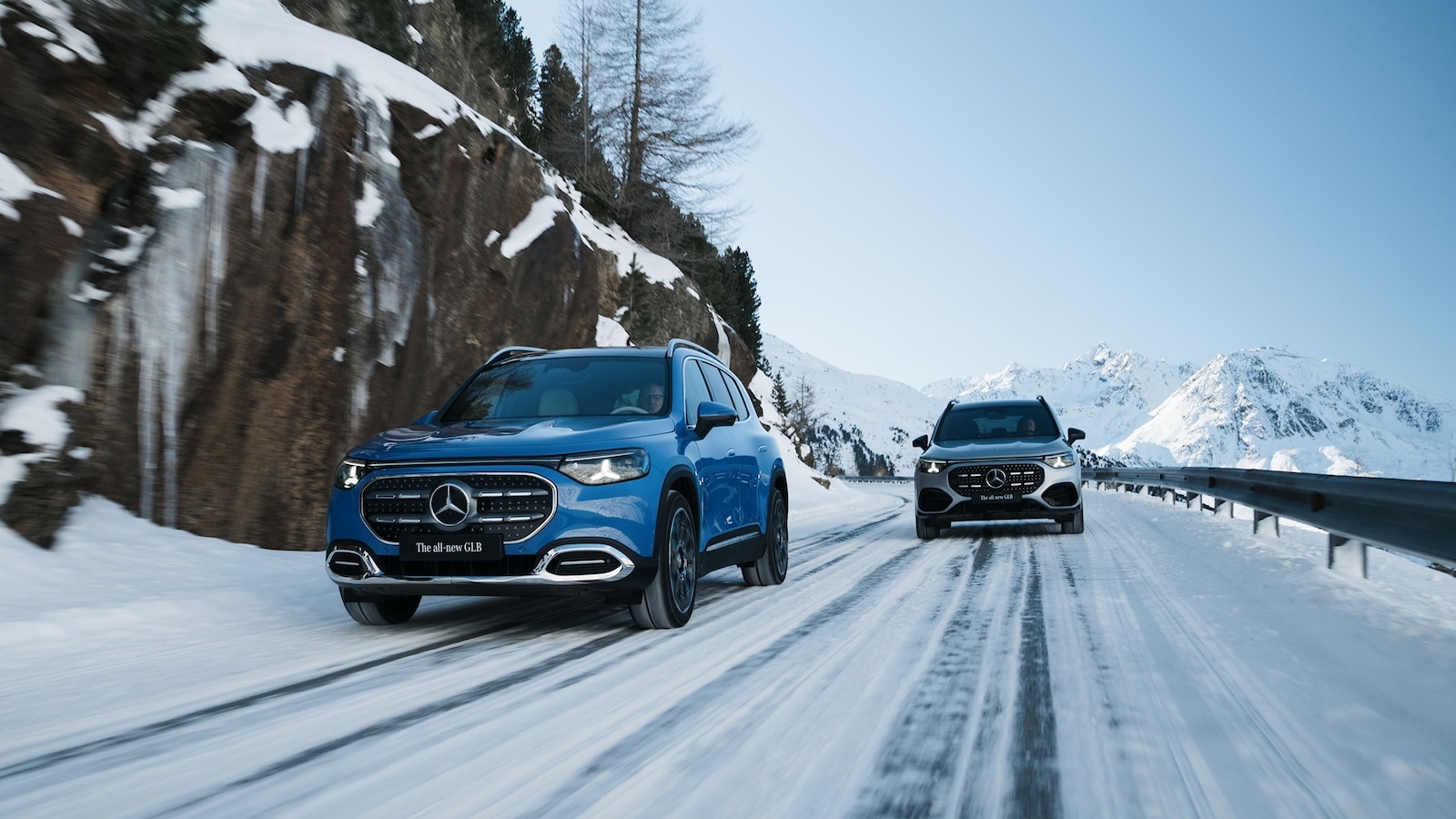
Major automakers are rolling out a broad slate of 2026-2027 models that emphasize electrification, fast charging and premium tech at competitive price points: Mercedes-Benz updates CLA and GLB (CLA EV 374‑mile range, 800V architecture and up to 320 kW DC charging; GLB 250+ at 268 hp and 350 4MATIC at 349 hp), BMW iX3 ($60k, ~400-mile range, 400 kW peak charging, 463 hp), Kia K4 Hatchback ($24,890 entry, GT-Line Turbo $28,790), revamped Telluride hybrid (~329 hp combined, est. ~600-mile range, likely ~$40k), Subaru Outback (starts $34,995) and a rebooted Chevy Bolt (below $30k, ~255 miles range, NACS port). These launches sharpen product segmentation, could pressure margins through tech investment and attract consumer share in EV/ hybrid segments while signalling near-term production and pricing dynamics for automotive suppliers and dealer networks.
Market structure: 2026 launches (Mercedes CLA/GLB, BMW iX3, Kia K4, Chevy Bolt) compress incumbents’ product gaps across price points — luxury (MBG/BMW) now offering 400+ mile ranges and 800V fast charge while mass market (Kia/GM) recaptures affordability sub-$30k. Expect margin pressure at pure-play premium EVs (TSLA) as legacy OEMs convert existing dealer/production scale into volume; I estimate 3–8% share reallocation in the US EV segment over 12–24 months if delivery/performance claims hold.
Risk assessment: tail risks include charging-infrastructure bottlenecks, battery raw-material shocks (Li/Cu/Ni) and delayed production ramp-ups; a major battery fire or recall could wipe 10–25% off an OEM’s near-term EBITDA. Immediate (days) reaction likely muted; 3–9 month window is critical for order books and incentive disclosures; 12–36 months determines market-share and capex reallocation. Hidden dependency: grid upgrades and local permitting will throttle 800V charging adoption absent utility coordination.
Trade implications: favor suppliers of fast-charge and SiC components (WOLF, ON) and charging infra (CHPT) while selectively long legacy OEMs with EV roadmaps (GM, BMW) and underweight/hedge Tesla (TSLA). Use pairs (long BMWYY, short TSLA) to express share shift; use call spreads on CHPT/WOLF to target technology adoption without paying for outright volatility. Rotate modestly from high-valuation EV growth to industrial suppliers over next 6–18 months.
Contrarian angles: consensus underrates execution risk — many new ranges/charge rates are manufacturer claims that often miss real-world throughput; investor enthusiasm may be overdone for headline-range figures. Tesla’s software, Supercharger footprint and cost curve remain durable advantages; shorting TSLA outright is risky — prefer relative shorts versus specific OEM longs. Historical parallel: 2012–2016 EV launches showed feature parity does not equal sales parity until 2–4 model years pass.
AI-powered research, real-time alerts, and portfolio analytics for institutional investors.
Request DemoOverall Sentiment
moderately positive
Sentiment Score
0.45
Ticker Sentiment
