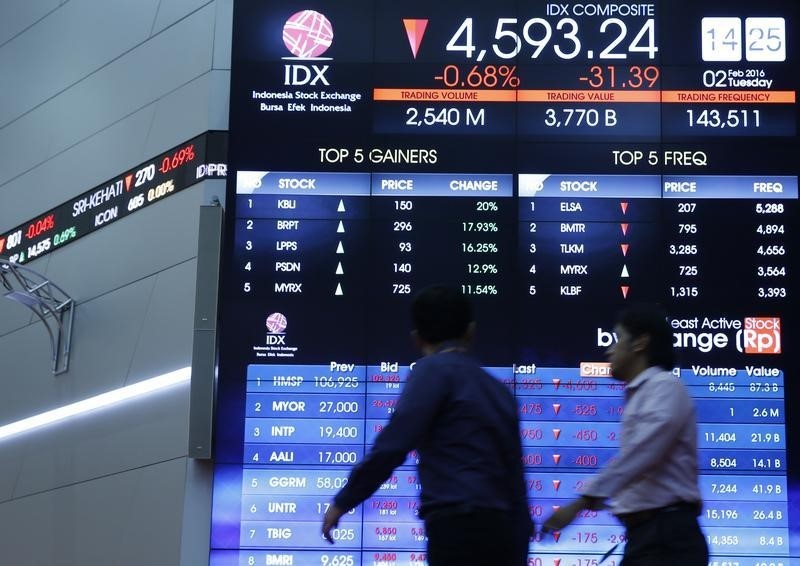
Indonesia's IDX Composite rose 0.76% as advancing stocks outnumbered decliners 499 to 222, with PT Jasa Berdikari Logistics, PT Ingria Pratama Capitalindo, and Bank Harda Internasional among the top gainers. The article also notes a risk-on backdrop from lower crude and Brent prices, with July crude down 4.35% to $92.40 and August Brent down 3.90% to $96.30, while USD/IDR rose 0.34% to 17,722.90. The market tone was supported by hopes for Iran peace, but the direct market impact is mainly regional and tactical rather than macro निर्णative.
The immediate market message is a classic de-risking unwind: lower energy prices, a softer dollar, and firmer Asian equities imply a bid for cyclical beta and duration-sensitive assets. The first-order winner is anything levered to imported fuel costs and FX stability; the second-order winner is domestic-demand financials and transport-linked names that gain twice over from lower input costs and a potentially less aggressive policy backdrop. In Indonesia specifically, the strongest read-through is not to the headline index, but to sectors with operating leverage to lower freight and power costs, where earnings revisions can outpace the move in the macro tape over the next 1-2 quarters.
The more interesting setup is on the losers’ side: upstream energy, coal logistics, and high-cost commodities names face a near-term margin squeeze if this geopolitical bid-down persists for more than a few sessions. The move in oil is meaningful because it compresses inflation expectations quickly, but the equity market reaction can overshoot on the first day; if peace headlines fade, crude can retrace sharply while stocks that priced in a macro détente give back gains. That makes this a trading market, not a conviction regime change, unless the diplomatic signal is sustained and confirmed by shipping/risk-premium data over several weeks.
The contrarian risk is that the market is extrapolating an Iran de-escalation into a durable disinflation story before supply actually changes. Historically, geopolitically driven oil selloffs tend to mean-revert within days if there is no hard evidence of barrels returning or transport lanes normalizing. Meanwhile, the weaker dollar is supportive for EM risk, but if this is just a temporary risk-on squeeze, USD/IDR can snap back and punish crowded carry trades more than equities with domestic balance-sheet strength.
The cleanest expression is to own the beneficiaries with the best operating leverage and short the most exposed cost-side names, but only tactically and with tight risk controls. The asymmetry is better in pairs than outright beta because the headline risk is binary and fast-moving, while the fundamental translation into margins takes weeks. Focus on names where lower fuel or freight costs pass through to EBITDA quickly, and avoid chasing sharp single-name spikes that are already at 52-week extremes.
AI-powered research, real-time alerts, and portfolio analytics for institutional investors.
Request DemoOverall Sentiment
mildly positive
Sentiment Score
0.20
Ticker Sentiment
