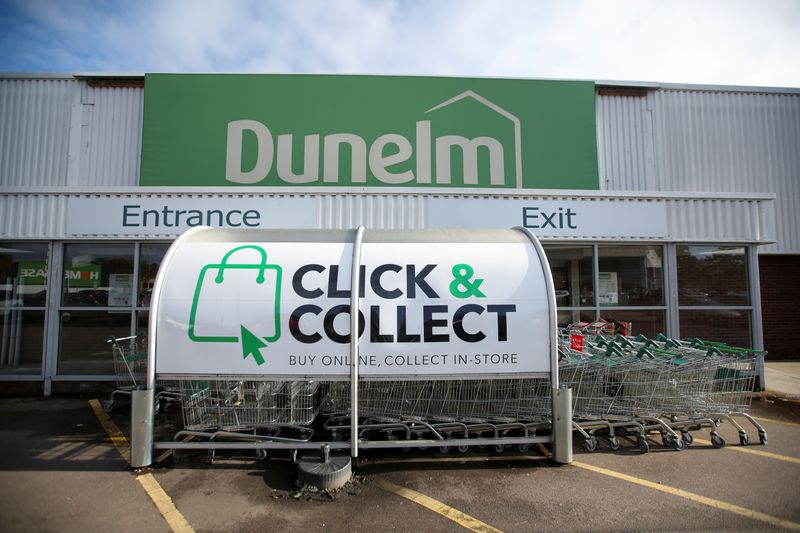
RBC Capital Markets downgraded Dunelm Group to "sector perform" from "outperform," citing valuation concerns after a 20% share price rally and a muted near-term outlook due to softer housing market trends and recent stamp duty changes impacting home-related spending. While acknowledging Dunelm's high-quality business and cash generation, RBC sees limited upside compared to peers like B&M, which trades at a lower multiple and is expected to benefit from sales trends and share buybacks; additionally, Dunelm faces delayed gross margin benefits and cost pressures from wage inflation.
RBC Capital Markets has downgraded Dunelm Group to "sector perform" from "outperform," primarily citing valuation constraints following a share price appreciation of over 20% in the past three months and a subdued near-term outlook. The shares currently trade at approximately 15 times estimated 2025 earnings, a level RBC describes as "towards the middle of its historical range" and reflective of the company's inherent strengths, thereby limiting further upside potential; RBC maintained its price target at 1,175 pence, slightly below the stock's recent close of 1,193 pence. The muted outlook stems from anticipated softer U.K. housing market trends and the impact of recent stamp duty changes, effective April, which are expected to weigh on housing transactions and home-related retail spending through late 2025 and early 2026. This is compounded by weaker U.K. homewares trading observed in May, following stronger seasonal sales in April that potentially pulled demand forward. While RBC acknowledges Dunelm as a high-quality, cash-generative business with strong execution and enhanced expansion potential, they highlight that gross margin benefits from lower freight costs and a stronger pound are not anticipated until the second half of fiscal 2026 due to hedging and freight contract structures, with only around 40 basis points of expansion modeled for that period. Furthermore, Dunelm faces significant cost pressures, notably an estimated £18 million annualized headwind from increases to the National Living Wage and employer National Insurance contributions, predominantly impacting fiscal 2026. Although cash generation remains robust, another special dividend is not expected before February, partly due to recent capital expenditure on two freehold property purchases. The acquisition of Ireland-based Home Focus is viewed as a cautious first step in a broader international strategy, and CEO Nick Wilkinson’s planned retirement introduces a transitional element, though RBC expressed confidence in the handover process. RBC indicated a preference for peers such as B&M, which trades at a lower multiple of roughly nine times estimated 2025 earnings and is expected to benefit from an inflection in LFL sales and a potential share buyback.
AI-powered research, real-time alerts, and portfolio analytics for institutional investors.
Request DemoOverall Sentiment
strongly negative
Sentiment Score
-0.60
Ticker Sentiment
