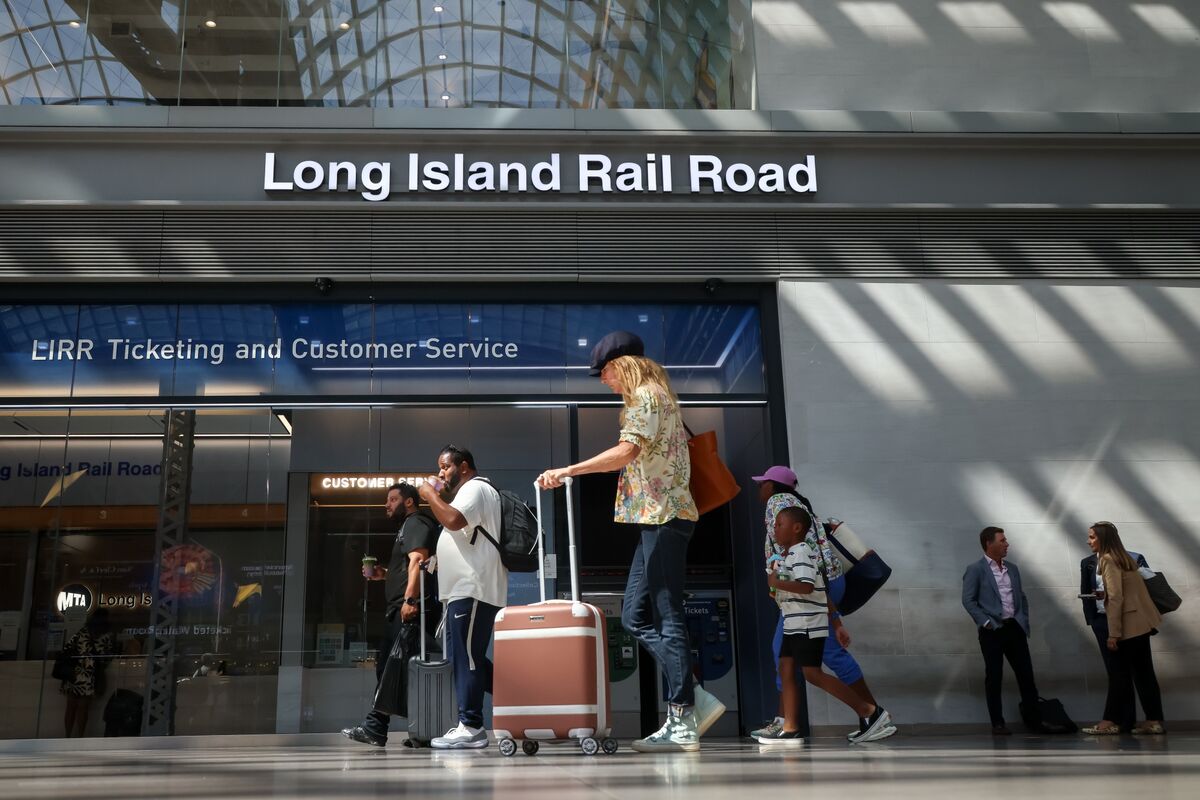
About 3,500 Long Island Rail Road workers are set to walk off the job, forcing a service suspension for the first time in more than 30 years after wage talks failed by a Friday night deadline. The strike hits the nation’s busiest commuter line and creates immediate disruption for transit users, but the direct market impact is likely limited unless the work stoppage is prolonged.
The immediate market impact is less about the railroad itself and more about displacement: commuters will re-route into buses, ferries, rideshare, and private car usage, creating a short-lived demand impulse for local mobility providers and a negative read-through for adjacent urban retailers that depend on predictable foot traffic. The bigger second-order effect is political, not operational — once service disruption becomes visible, settlement pressure usually shifts sharply toward a back-end wage compromise, which means the strike has a high chance of being a days-to-weeks event rather than a structural labor reset.
The key loser is the regional economy’s reliability premium. Even a brief shutdown can damage employer confidence in on-time attendance and force contingency planning costs that persist after service resumes, especially for firms with tight shift schedules or perishable goods exposure in the metro area. Transit disruption also tends to lift last-mile congestion and parking demand, which benefits operators with elastic pricing power but hurts commuters through higher friction costs that are rarely reflected immediately in earnings estimates.
The contrarian angle is that the strike may be over-read as a transport-system stress event when it is more likely a transient bargaining event with limited balance-sheet consequences. Unless there is evidence of broader public-transit labor contagion, the economic damage should stay local and temporary; the real risk is a headline-driven overreaction in anything tagged ‘transportation,’ followed by a reversal once a deal is struck. The event matters most if it broadens into a template for other public-sector labor groups, which would extend wage pressure and service instability into the next 1-2 quarters.
AI-powered research, real-time alerts, and portfolio analytics for institutional investors.
Request DemoOverall Sentiment
moderately negative
Sentiment Score
-0.35
