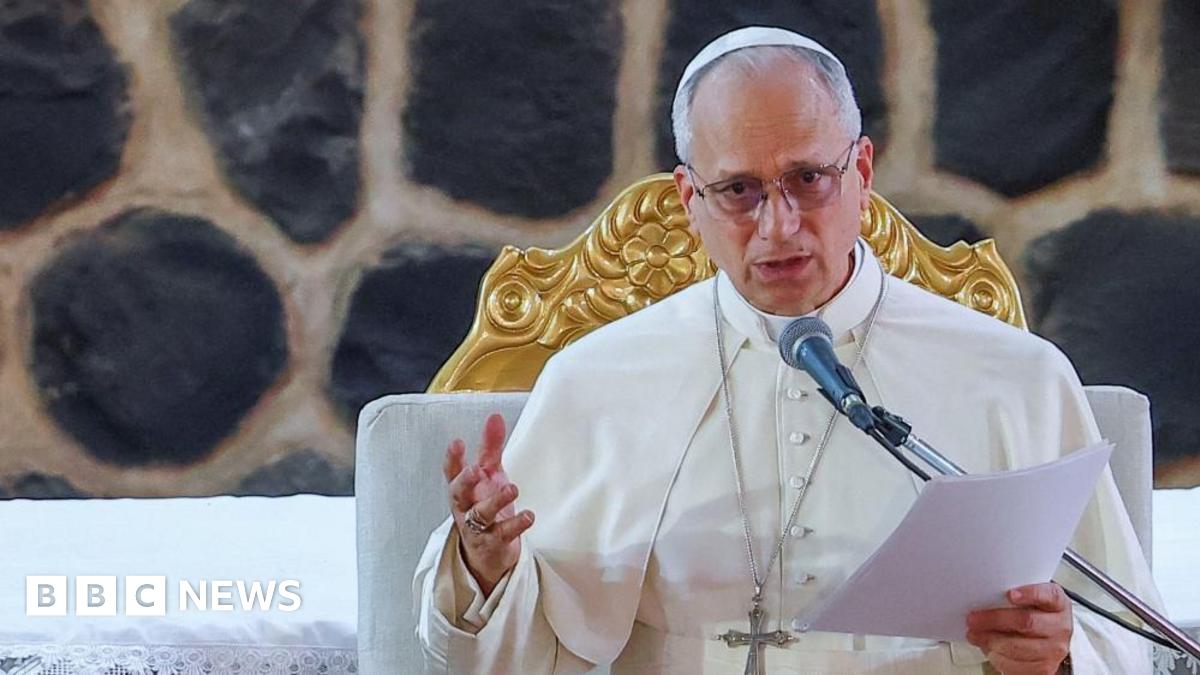
Pope Leo criticized leaders who spend billions on wars, warning that resources are being diverted from healing, education, and reconstruction while a region of Cameroon remains destabilized by insurgency. The comments also follow a public spat with President Trump over US policy toward Iran and the Strait of Hormuz. The article is primarily geopolitical and moral commentary, with limited direct market impact.
This is not a direct market-moving geopolitical event, but it is a useful signal that the “moral narrative” around war spending is hardening in public discourse. That matters because it can gradually shape voter sentiment, especially in Europe and parts of Latin America/Africa where Catholic messaging still has outsized soft-power reach; the second-order effect is slightly higher political friction for defense procurement, aid packages, and offshore military commitments over the next 6-18 months.
The biggest near-term implication is not for defense primes themselves but for the budget mix around them. If public pressure builds around “guns vs. schools,” governments are more likely to protect headline defense commitments while slowing adjacent infrastructure, reconstruction, and humanitarian outlays — a subtle relative loser set for engineering, NGOs, and multilaterals tied to post-conflict rebuilds. That can also support contractors with maintenance, readiness, and munitions exposure versus firms reliant on long-cycle base-building or civilian infrastructure awards.
The contrarian read is that this kind of rhetoric often creates more noise than policy. In practice, insurgency and great-power tension have been durable demand drivers for defense spending, and moral condemnation rarely changes procurement already embedded in multi-year budgets. The market should fade any knee-jerk de-rating in defense if it appears; the real risk is a slow-burn capex reallocation away from domestic infrastructure into security, which is bullish for defense but negative for broader industrials tied to public works.
Catalyst-wise, watch for whether this message gets echoed by European bishops, NGO coalitions, or opposition parties in the next 1-3 months. If it does, the pressure point will be budget negotiations, not equities overnight. If not, this remains a soft-signal event with limited pricing power beyond a modest sentiment drag on defense headlines.
AI-powered research, real-time alerts, and portfolio analytics for institutional investors.
Request DemoOverall Sentiment
mildly negative
Sentiment Score
-0.20
