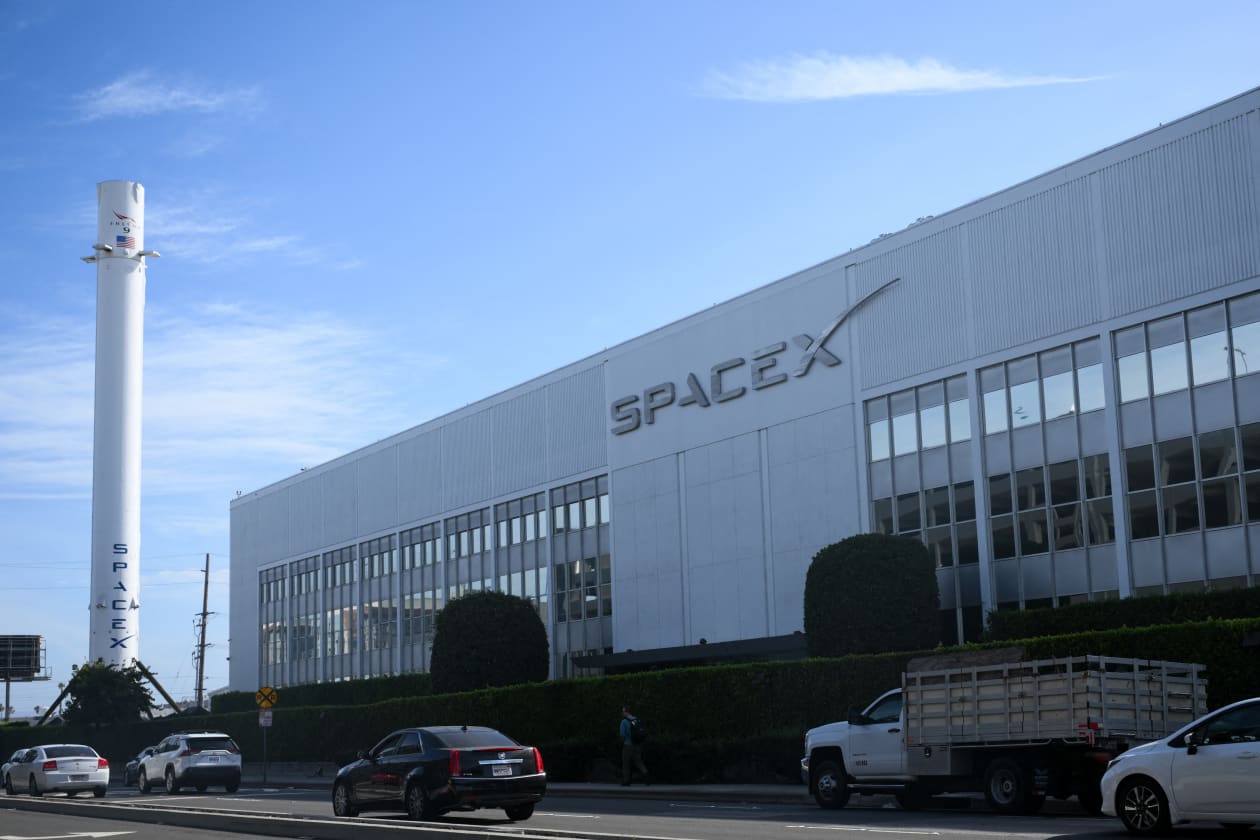
SpaceX is set to go public on Friday at $135 per share, implying a market capitalization of nearly $1.75 trillion. Tom Lee says investors are raising cash to buy SpaceX shares, temporarily pressuring other equities ahead of the IPO. The expected post-IPO reversal suggests the current dip in tech stocks is flow-driven rather than fundamental.
This is less a fundamental rotation and more a temporary liquidity event: when a marquee private listing becomes a near-term destination for capital, the marginal buyer of public growth equities disappears for a few sessions to a few weeks. The clearest second-order effect is not that tech demand has deteriorated, but that portfolio managers are funding a new object of desire by trimming liquid winners first, which mechanically pressures momentum names and high-beta Nasdaq exposures. That kind of flow-driven air pocket often reverses quickly once the deal clears and the market can re-lever into the same names that were sold to fund subscriptions.
The more interesting beneficiary is not the issuer itself, but the market infrastructure around it. NDAQ can see a short-lived uplift in headline relevance and trading activity if the listing drives elevated IPO volume, options turnover, and index-eligibility chatter; the broader exchange complex tends to benefit from volatility and issuance, even if single-day sentiment around tech is choppy. The competitive dynamic is that every large private-market debut becomes a shadow competitor to public tech for risk budget, especially in an environment where allocators are willing to cut liquid public exposures rather than cash holdings.
The contrarian view is that this may be overread as a “tech dip” when it is really a one-off portfolio construction event. If the stock opens strongly and then stabilizes, investors who sold public tech to fund allocations may have to buy back exposure within days, creating a squeeze in the very names that were hit. The risk case is not the IPO itself, but a broader confidence shock if the deal underprices, trades poorly, or triggers a wider reset in private-market comps; that would extend the drawdown from days into weeks and hurt all late-stage growth more persistently.
AI-powered research, real-time alerts, and portfolio analytics for institutional investors.
Overall Sentiment
neutral
Sentiment Score
0.05
Ticker Sentiment
