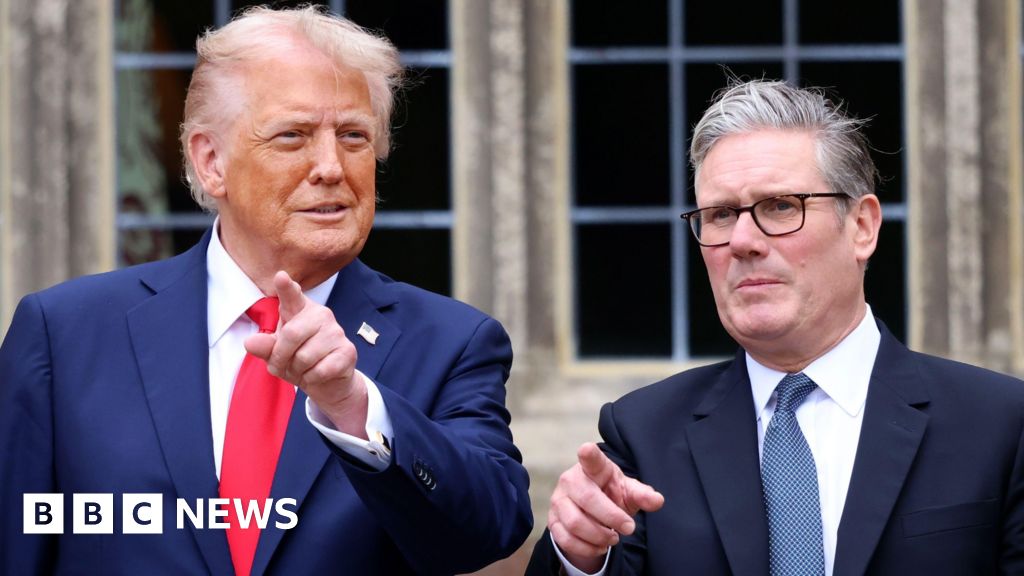
Prime Minister Keir Starmer is considering whether to join US President Donald Trump's proposed 'Board of Peace for Gaza', part of a 20-point US plan intended to temporarily oversee Gaza's administration and reconstruction and populated by world leaders; UK officials say no formal invitation has been received and diplomats are seeking clarity from the State Department. Tony Blair is linked to a separate executive board alongside Trump advisers, but the announcement of membership and operational details remain unclear, so the story has political and geopolitical significance without immediate economic data or likely market-moving implications absent further developments.
Market structure: A US-led Gaza reconstruction board increases demand for large international engineering, logistics and security contractors and for basic materials (steel, cement, copper) over 1–36 months; winners are US-listed contractors (KBR, J, FLR) and steelmakers (NUE), losers are regional smaller contractors excluded by political selection and insurers facing elevated reconstruction claims. Pricing power will favor firms with prime-contractor status and US political access; expect tender sizes in the $5–30bn range over 1–3 years, concentrating margin expansion in select large-cap contractors.
Risk assessment: Tail scenarios include political blowback (UK domestic backlash vs Starmer, or Middle Eastern states withdrawing cooperation) and program collapse if Hamas/Israel hostilities resume; low-probability but high-impact outcomes could swing commodity and FX prices 5–15% in days. Near-term (days–weeks) volatility will be headline-driven around any formal invitation/announcement; medium-term (3–12 months) depends on procurement timelines and sanctions/contractor eligibility rules.
Trade implications: Direct plays favor 12–24 month exposure to KBR (KBR) and Jacobs (J) and materials like Nucor (NUE) via equity or call spreads; employ 6–12 month directional option structures to limit downside while capturing upside from contract awards. FX and bond moves likely modest; tactically size GBP/USD directional positions (0.5–1% NAV) around formal UK political developments, and use EM/Geopolitical put hedges for rapid risk-off.
Contrarian view: Consensus assumes US firms will capture most spend; overlooked risks are political exclusion, competitive bid pressure from European/Middle Eastern consortia, and reputational/contractual constraints that cap margins. If board formation stalls or is diluted, contractors may be overvalued; conversely, markets may underprice secondary winners (logistics, reconstruction insurers) where 15–25% re-rating is possible if contracts concentrate quickly.
AI-powered research, real-time alerts, and portfolio analytics for institutional investors.
Request DemoOverall Sentiment
neutral
Sentiment Score
0.00
