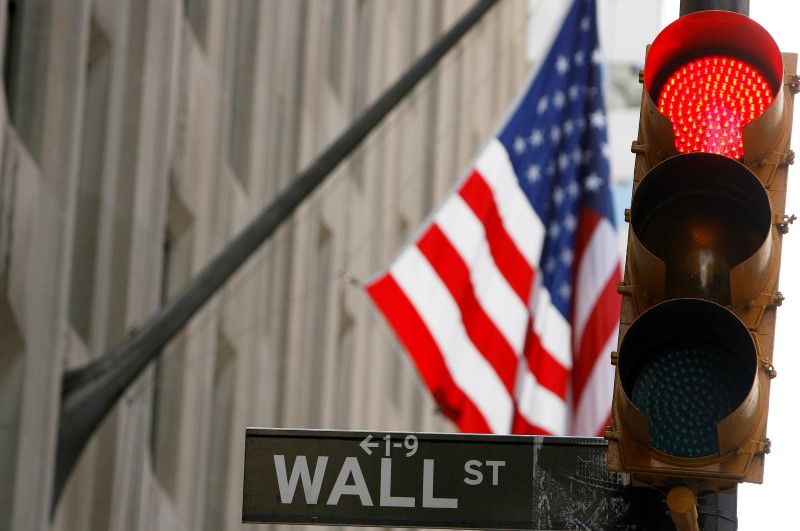
U.S. stock futures fell 0.7%-0.8% after Iran ceasefire talks collapsed and Washington prepared a blockade in the Strait of Hormuz, while Brent crude moved back above $100 a barrel. March U.S. CPI showed a sharp energy-driven inflation increase, heightening concerns that sticky inflation could keep the Federal Reserve on hold. The article also flags a heavy week of Q1 earnings, including Goldman Sachs on Monday and JPMorgan, Wells Fargo, and Citigroup on Tuesday.
The immediate market read-through is not just “higher oil = lower equities”; it is a compression of margins across the entire discretionary and transport stack, with the steepest second-order hit likely showing up in semis, airlines, parcel/logistics, and small-cap cyclicals over the next 2-6 weeks. If the energy impulse persists into the next CPI print, the Fed’s reaction function becomes the dominant macro variable: even a modest re-acceleration in headline inflation can keep real yields pinned, which is a classic valuation headwind for long-duration growth and a tailwind for cash-rich defensives. The fact that futures are only down modestly relative to the geopolitical headline suggests markets are still underpricing the probability of a prolonged supply shock rather than a one-day risk event. The more important asymmetry is that oil-driven inflation is a tax on demand, not just a headline problem. That means earnings risk compounds into Q2/Q3 via weaker unit volumes, inventory markdowns, and higher working-capital needs, especially for retailers, autos, and travel. Banks are not the obvious direct short here, but a sustained energy shock can flatten loan growth, worsen credit sentiment in lower-income consumers, and force more conservative guidance even if near-term trading revenue benefits from volatility. TSM is the cleanest idiosyncratic long in this set because it benefits from the chip cycle without being directly exposed to the macro inflation shock; however, even that relative strength can fade if rates back up and semis get de-rated in sympathy with the broader risk-off tape. The contrarian point is that a short, sharp oil spike often overshoots the eventual realized supply disruption, so the best expression may be through options rather than outright equity beta: capture the inflation/risk-off impulse without assuming the blockade story remains fully intact for months. The key catalyst horizon is days for index downside and weeks for earnings revisions; the reversal trigger would be any credible de-escalation or evidence that the blockade is functionally narrower than feared.
AI-powered research, real-time alerts, and portfolio analytics for institutional investors.
Request DemoOverall Sentiment
strongly negative
Sentiment Score
-0.70
Ticker Sentiment
