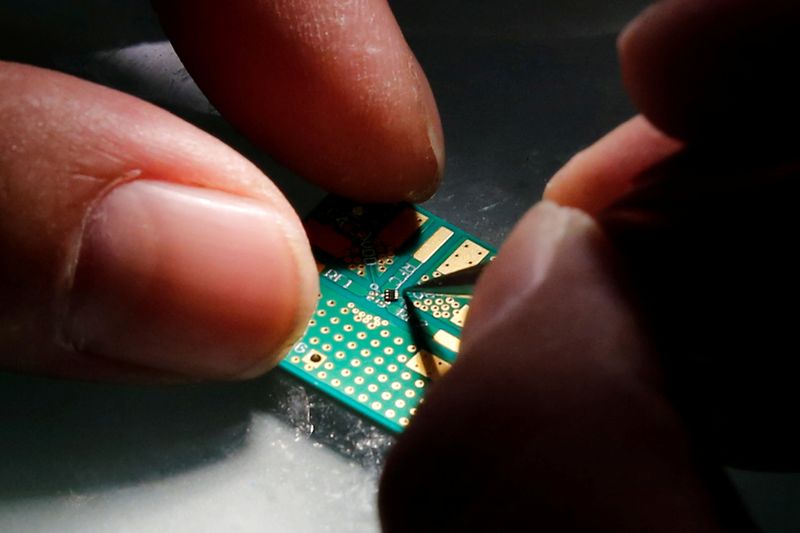
Hua Hong Group/Huali Microelectronics has reportedly developed 7nm manufacturing technology and begun test production at a Shanghai plant, potentially making it the second Chinese fab able to produce 7nm chips after SMIC. Hong Kong-listed Hua Hong shares jumped 5.3% to HK$92.65 and the Shanghai-listed stock rose 2.1% to 121.65 yuan on the report. Initial test capacity is expected to reach a few thousand wafers per month by year-end; Huawei collaborated on the technology and Biren Technology is using the line for prototype GPU testing. The development supports Beijing's push to reduce foreign reliance even as the U.S. eased some export controls that allowed Nvidia to resume certain AI chip sales to China.
Domestic foundry progress in China is changing bargaining power along the AI supply chain: local fabless designers and system integrators gain negotiating leverage with foundries and that will compress gross margins for high-end importers in China over the next 6–18 months. The more important second-order effect is market segmentation — software stacks, validation flows and firmware locks will be the choke points that determine whether new domestic silicon becomes a genuine substitute or just a lower‑cost parallel ecosystem.
Technically, early domestic nodes will compete on cost and access, not on absolute transistor efficiency; expect multi‑patterning and workarounds to raise per‑die process cost and slow yield parity, so initial production will service capacity-seeking customers and prototypes rather than volume hyperscaler GPU demand. That implies the global tightness in the most advanced GPU market remains intact for years, while adjacent categories (edge inference, AI accelerators for domestic apps) will see faster price elasticity and adoption.
Key catalysts are yield announcements, customer design wins, and any change in export control policy; these are binary and operate on different horizons — design-win confirmations are visible within 3–9 months, while policy shifts or true parity take 24–48 months. Tail risks include a rapid tightening of export controls that knocks out critical tool/material access (weeks to months) or an unexpectedly fast yield ramp that meaningfully loosens global supply (6–18 months), each flipping the competitive and pricing outlook.
Consensus is underweighting the speed at which local supply will alter procurement strategies for Chinese cloud and OEM buyers, but overestimating how quickly that will knock down the global high‑end GPU margin pool. Tactical allocations that capture the near‑term server cycle while hedging multi‑year competitive displacement offer the best asymmetric payoff.
AI-powered research, real-time alerts, and portfolio analytics for institutional investors.
Request DemoOverall Sentiment
moderately positive
Sentiment Score
0.35
Ticker Sentiment
