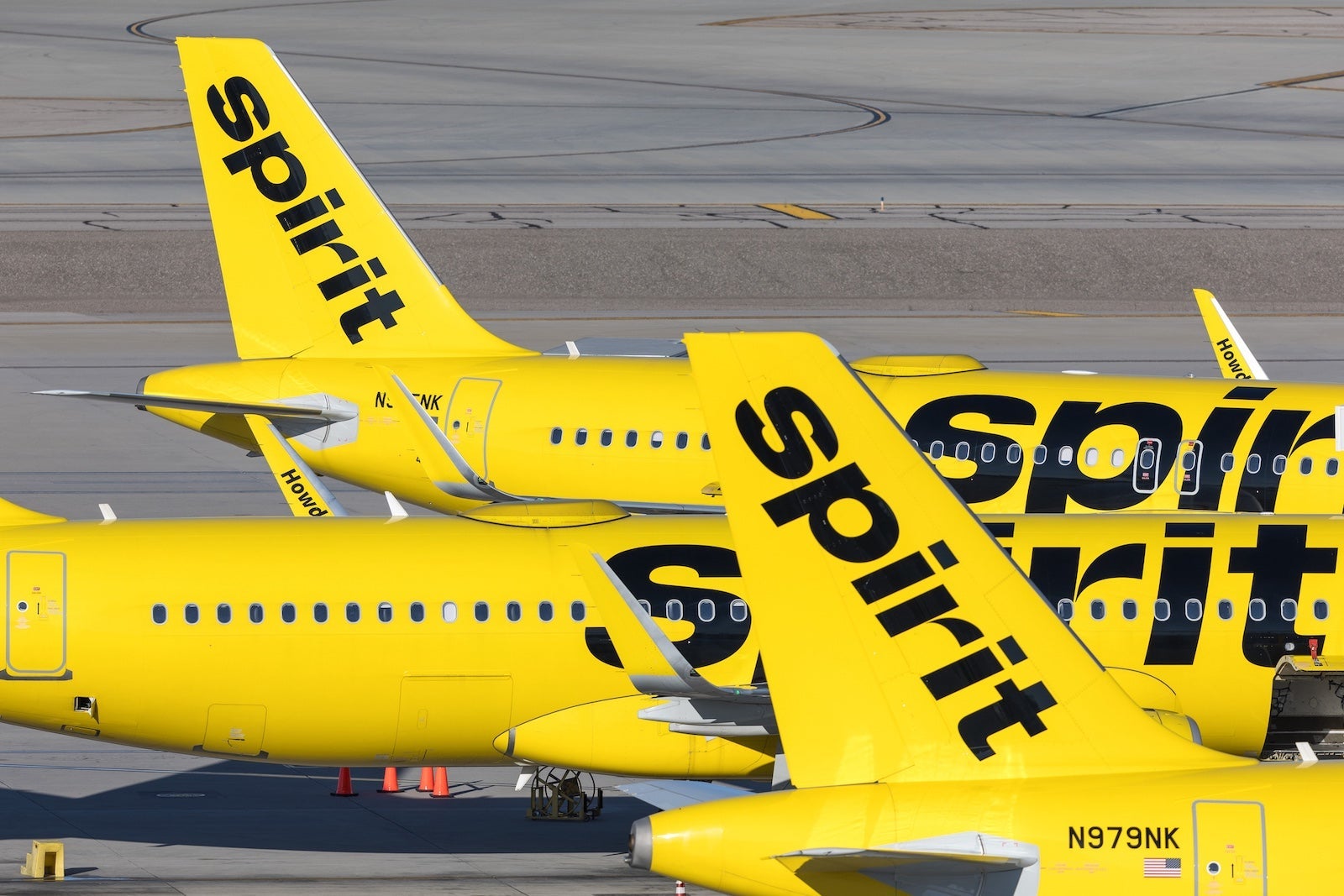
Spirit Airlines grounded all flights, leaving customers and employees stranded and prompting major rivals to roll out rescue fares, discounted tickets, and job support. American, Delta, United, Southwest, JetBlue, and Frontier all announced temporary fare caps or targeted offers, with some routes capped at $99-$400 depending on carrier and distance. JetBlue also added 11 new destinations from Fort Lauderdale while Frontier offered up to 50% off base fares on bookings made by May 10 for travel through Nov. 19.
The immediate read-through is not a broad demand shock but a temporary, high-margin yield event for the largest domestic carriers. Capacity that had been trapped behind Spirit’s ultra-low fare umbrella is being re-priced into a much tighter competitive set, which should support unit revenues on overlapping leisure routes over the next 1-6 months. The faster response likely comes from UAL and DAL, which can use airport-specific pricing power and schedule flexibility to defend premium coastal and hub traffic, while AAL has a cleaner opportunity to monetize overlap in Florida and select Sun Belt markets.
The second-order winner is LUV only if it can convert stranded Spirit customers into sticky loyalty members; otherwise the rescue-fare gesture is more brand than earnings. The real structural beneficiary is Frontier, because it inherits the most direct ULCC demand substitution and can capture price-sensitive travelers who will now compare every Spirit route against a live alternative. That said, the net industry effect is mildly bullish for yields but not for volumes: some demand will simply be deferred or lost as rescue fares still sit well above Spirit’s historical price points, and a subset of leisure passengers may trade down to driving or staycation behavior.
The key risk is that this becomes a short-lived sentiment trade if other carriers flood the same routes with incremental capacity and promotional fares. The longer-duration threat is regulatory and antitrust scrutiny if incumbents are seen using Spirit’s exit to re-establish pricing discipline in formerly contested markets, which could cap the upside to margin recovery. If fuel stays benign, the bigger P&L driver over the next quarter is likely not top-line volume but improved fare realization and lower promo intensity.
Consensus is likely underestimating how quickly Spirit’s collapse can ripple into loyalty economics and ancillary revenue share. A distressed customer acquisition event gives legacy carriers a low-cost chance to lock in future repeat travelers, but only if they convert them before the next booking cycle. That makes the opportunity more about customer migration and less about one-week rescue traffic.
AI-powered research, real-time alerts, and portfolio analytics for institutional investors.
Request DemoOverall Sentiment
mildly negative
Sentiment Score
-0.15
Ticker Sentiment
