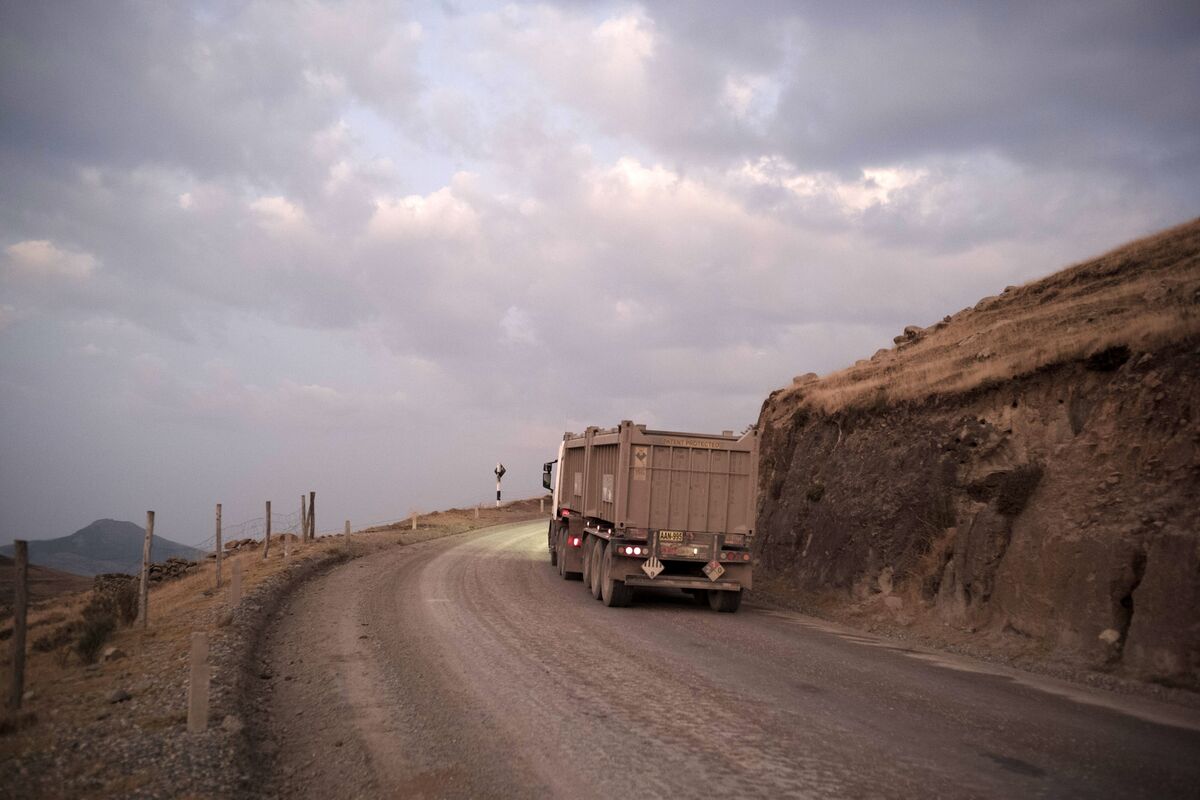
Copper startup Quilla Resources is in talks with advisers about a Toronto listing as it considers an IPO next year. The company, led by veteran miner Victor Gobitz, has restarted the idled Chapi mine in southern Peru and is weighing further expansion in the country. The news is directionally positive for growth prospects, but remains early-stage and preliminary.
This is less a pure IPO story than a signal that the capital stack for new copper supply is reopening. If a restarted Peruvian asset can be taken public, it becomes a template for financing brownfield restarts and small-scale expansions that are faster and cheaper than greenfield development — exactly the kind of supply response copper needs, but with a lag measured in years, not quarters. The first-order beneficiary is not just the operator; it is the ecosystem of engineers, contractors, equipment suppliers, and local services that typically re-rate when a dormant asset is monetized. The second-order effect is on regional competitive dynamics in Peru and Chile: every credible restart puts pressure on higher-cost producers to protect market share, but it also tightens the battle for scarce permitting, labor, and processing capacity. If equity markets reward this IPO path, it lowers the cost of capital for other subscale Latin American miners and could catalyze a wave of listings, but that also raises execution risk because public-market investors tend to punish operational slippage quickly. In copper, the market often extrapolates supply announcements too aggressively; the actual impact on concentrate output tends to arrive well after sentiment has already moved. The key risk is that this remains a financing story until it is a production story. Peru-specific political, community, and water/permitting issues can delay expansion by 6-18 months, and any accident or grade disappointment at the restarted mine would likely compress valuation multiple expansion fast. On the flip side, if copper prices stay firm and the restart hits guidance, the IPO could reprice not only the company but also comparable small-cap miners on the Toronto exchange within 1-2 quarters. The contrarian take is that the market may be underestimating the signaling value of a successful restart in a capital-constrained sector: one credible transaction can unlock a lot of dormant supply, but it also exposes which projects are financeable versus merely discussable. That makes this more interesting as a relative-value catalyst than as a standalone commodity thesis.
AI-powered research, real-time alerts, and portfolio analytics for institutional investors.
Request DemoOverall Sentiment
neutral
Sentiment Score
0.15
