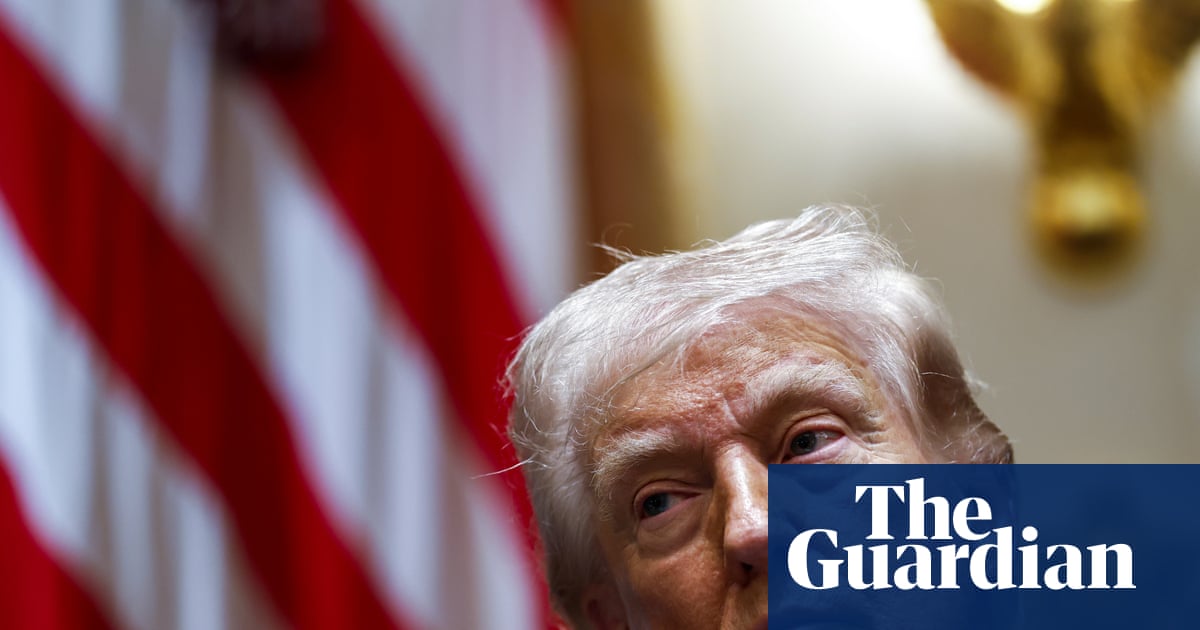
Trump is hosting his 12th cabinet meeting of the term as negotiations to end the nearly three-month war with Iran reach a critical stage, though signals remain conflicting and the U.S. struck Iranian targets on Monday. The meeting was moved from Camp David back to the White House due to heavy rain forecasts, and is expected to include foreign policy updates as well as domestic policy messaging. The article points to elevated geopolitical and political uncertainty rather than a clear breakthrough.
The market is likely underpricing how much a fragile, politically managed ceasefire process can compress risk premia across defense, energy, and “safe haven” macro trades in the next 1-3 sessions. The key second-order effect is not the headline peace probability itself, but the regime of volatility: when diplomacy is noisy and kinetic strikes continue, positioning can swing violently between de-escalation and escalation, punishing crowded consensus bets on both sides. The administration’s messaging suggests the negotiation is being used as a domestic optics tool as much as a foreign policy endpoint, which raises the odds of headline reversals. That matters because any perceived concession can trigger a short-lived hawkish backlash, while any escalation that broadens the conflict would reprice oil, defense, and airline exposures in hours rather than weeks. The most vulnerable names are those with direct fuel sensitivity or high beta to consumer confidence, since war-driven pessimism can hit margins and demand at the same time. The contrarian setup is that markets may be treating the situation as binary when it is more likely to be a staged sequence: partial strikes, conditional talks, and intermittent “deal close” rhetoric that keeps uncertainty elevated for months. That favors options structures over outright direction and argues for selling volatility in assets that have already repriced the most on the latest headlines, while keeping upside protection in energy and defense. For the article’s media angle, the negative read-through to NYT is modest but real: if the administration successfully frames any agreement as a victory, legacy media criticism becomes easier to dismiss, which can depress engagement-driven upside around political conflict coverage. The larger move, however, is cross-asset: any credible pause in hostilities would likely pressure crude first, then defense contractors, then the broader inflation hedge complex.
AI-powered research, real-time alerts, and portfolio analytics for institutional investors.
Request DemoOverall Sentiment
neutral
Sentiment Score
-0.10
Ticker Sentiment
