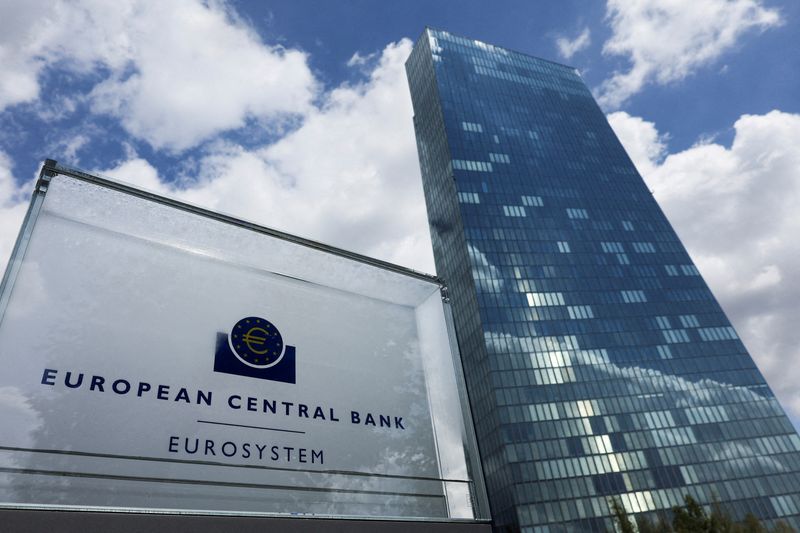
ECB policymaker Alvaro Santos Pereira said the central bank must stay focused on inflation risks and may need to act sooner rather than later if broader price pressures become entrenched. He emphasized reviewing incoming euro zone data and updated staff projections before the next policy decision, while warning against an inflationary spiral and second-round effects. The comments reinforce a hawkish ECB stance as markets assess the impact of higher energy prices and geopolitical tensions.
The key market takeaway is not just a more hawkish ECB tone, but a rising probability that policy stays restrictive even if growth softens. That combination is usually bad for duration-sensitive assets: front-end European yields can reprice higher on the first sign that inflation persistence is broadening, while the long end may stay comparatively anchored if growth expectations deteriorate. In practice, this favors a flatter curve and keeps pressure on rate-dependent sectors such as banks with large mortgage books, real estate, and highly levered cyclicals.
The second-order risk is that energy-driven inflation becomes a margin squeeze rather than a clean nominal-growth uplift. European consumer staples, discretionary, and industrials face the worst setup because they absorb higher input costs before they can pass them through, especially if wage growth is slow to catch up. That creates a lagged earnings downgrade cycle over the next 1-2 reporting seasons even if headline CPI stabilizes; the market often overprices the disinflation relief and underprices the subsequent profit reset.
A more interesting read-through is to sovereign spreads and capital allocation inside Europe. If the ECB leans hawkish into weaker data, financial conditions tighten unevenly across the periphery, which can revive ECB credibility concerns and increase volatility in Italian and Spanish duration. That is a better expression than a simple outright rates short because the central bank can remain hawkish for longer than growth-sensitive markets can absorb, but it is much harder to force a full policy mistake when inflation expectations are still vulnerable to energy shocks.
The contrarian view is that the market may be too focused on the headline hawkishness and not enough on the probability that a tight policy stance accelerates demand destruction, which would ultimately cap inflation faster than the ECB wants. If incoming data roll over, the rhetoric could flip quickly from inflation vigilance to growth stabilization, making any aggressive short-duration trade vulnerable to a sharp reversal.
AI-powered research, real-time alerts, and portfolio analytics for institutional investors.
Request TrialOverall Sentiment
mildly negative
Sentiment Score
-0.15
