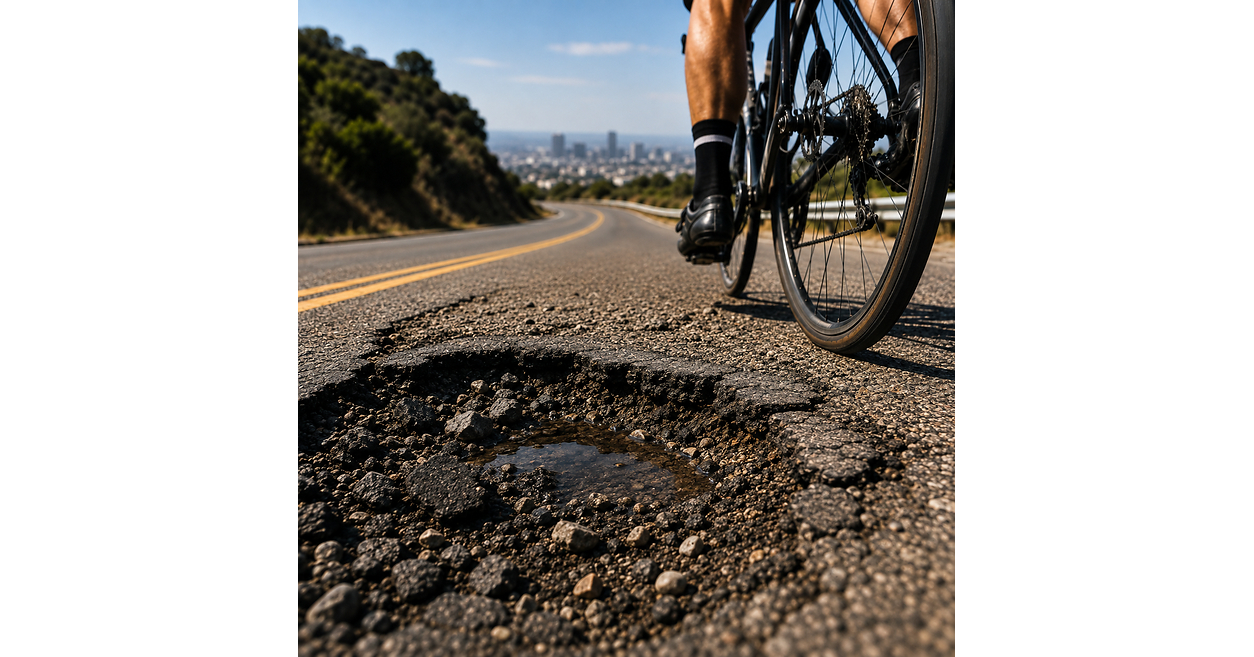
The article outlines California legal procedure for bicycle crashes caused by dangerous conditions on public property, emphasizing that victims generally must file an administrative claim within 6 months under the Government Claims Act. It also describes evidentiary requirements under California Government Code section 835 (dangerous condition, causation, reasonably foreseeable risk, and notice) and common defenses such as design immunity and comparative fault. No financial figures are provided, and the impact is limited to legal-information context rather than markets.
This is a legal-awareness piece, not a market-moving catalyst. The only investable implication is a very small, delayed uptick in administrative friction for California public-entity risk pools if more injured cyclists file timely claims, but that is a nuisance-cost item rather than a severity driver. The bigger economic beneficiary is the plaintiffs’ bar and, indirectly, vendors that monetize claims intake, documentation, and case management; there is no obvious public equity with enough direct revenue sensitivity to warrant action.
From a risk perspective, the article reinforces that public-entity defenses remain strong: short filing windows, notice requirements, comparative fault, and design immunity all cap conversion rates. That means any surge in claim volumes should mostly be absorbed by municipal self-insurance or reinsurance layers with long tail payment timing, not by immediate loss ratios. Over 1-3 months, the most likely observable effect is higher legal-ad spend and more inbound demand for contingency firms; over 6-18 months, only a broader liability-claims acceleration would matter, which would need corroboration in court filings or insurer commentary.
Contrarian view: the consensus may overestimate the payout odds for cyclists’ roadway-defect cases. The article itself highlights the hardest hurdles for plaintiffs, so the economic impact is more about awareness than liability expansion. If anything, a rising backlog of claims with weak notice evidence could favor defendants, as cities and counties can triage and deny aggressively before reserve setting changes materially.
AI-powered research, real-time alerts, and portfolio analytics for institutional investors.
Request DemoOverall Sentiment
neutral
Sentiment Score
-0.05
Ticker Sentiment
