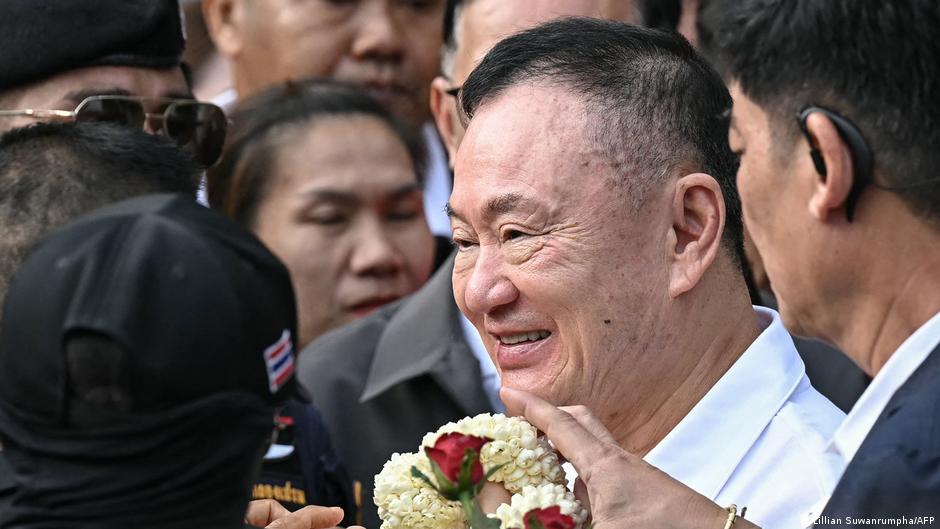
Thailand's former Prime Minister Thaksin Shinawatra was released on parole after serving part of a one-year prison term tied to past corruption convictions, with a four-month probation period and electronic monitoring. The move is politically notable given his long rivalry with Thailand's military-royalist establishment and his family's continued presence in government. Market impact is limited, though the story may matter for Thailand's political backdrop and policy continuity.
The near-term market implication is not Thaksin’s personal freedom but the durability of Thailand’s coalition bargain. His release removes an obvious flashpoint for street mobilization, which slightly lowers tail risk for domestic cyclicals and banks over the next few weeks; however, it also reintroduces a high-variance political actor with the ability to destabilize the current equilibrium if he signals a return to active dealmaking. The most important second-order effect is that Pheu Thai’s bargaining power likely rises even without formal control, because Thaksin remains the party’s strongest vote-mobilization asset and a back-channel intermediary with the business elite.
For equities, the asymmetry is in “policy continuity vs. policy whiplash.” If the coalition holds, markets should view this as a mild positive for short-dated Thai risk assets because it reduces immediate government-collapse odds and keeps fiscal spending, tourism support, and credit conditions on track into the next budget cycle. But if Thaksin becomes publicly active again, the risk is not just headline volatility; it is that conservative institutions may preemptively tighten the space for Pheu Thai’s remaining influence, creating a negative feedback loop that pressures consumer, retail, and regulated sectors over a 3-6 month horizon.
The contrarian angle is that consensus may overstate the probability of a dramatic comeback narrative. Thaksin’s utility is now less electoral than tactical: a controlled release lets both sides claim de-escalation, which can actually improve coalition stability rather than threaten it. The real vulnerability is not political theater but governance drift—if policy becomes more transactional and less coherent, foreign investors may require a higher risk premium even without a crisis, especially in banks, infrastructure, and domestically leveraged names.
Catalyst watch: any public appearance, policy comment, or visible coordination with Pheu Thai in the next 30-60 days could reopen the regime-risk trade. Conversely, if he stays visibly retired through the probation window, the market will likely fade the event and re-rate Thailand on macro rather than politics.
AI-powered research, real-time alerts, and portfolio analytics for institutional investors.
Request DemoOverall Sentiment
neutral
Sentiment Score
0.00
