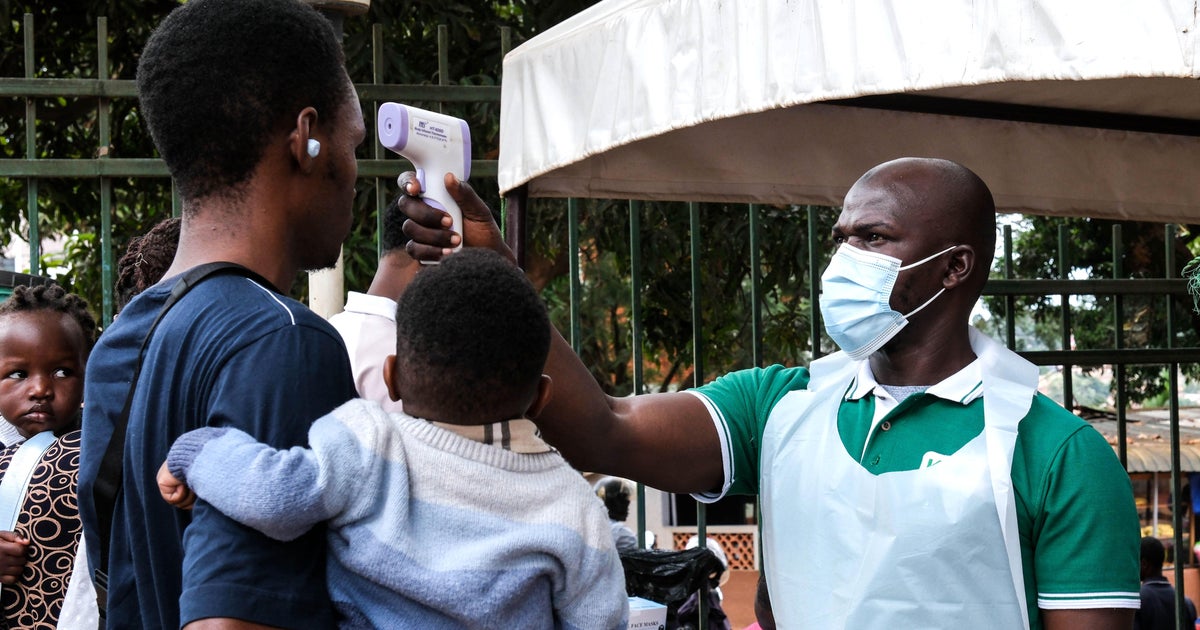
The WHO declared the Ebola outbreak in Central Africa a public health emergency as the virus spreads rapidly in the Democratic Republic of Congo. North Texas health officials and hospitals are said to be better prepared than in 2014, with screening, isolation, testing, and triage protocols already in place ahead of FIFA events. The article is mainly a public health update with limited direct market impact outside healthcare preparedness and travel-risk monitoring.
The direct market read-through is not a broad “pandemic trade,” but a modest shift in the odds distribution for emergency-preparedness spending, biosurveillance procurement, and hospital isolation capacity. The more important second-order effect is reputational: the Dallas 2014 experience likely lowers the threshold for rapid containment response in major U.S. metros, which reduces tail risk for domestic transmission but raises near-term spending on protocols, training, and testing workflows. That tends to favor vendors selling into public health, lab diagnostics, and infection-control infrastructure rather than frontline therapeutic names.
The article also implies a timing asymmetry. The Congo outbreak is a near-term global-health headline risk, but unless transmission escapes regional containment, the equity impact is mostly episodic and sentiment-driven over days to weeks. The real catalyst window is the weeks leading into large international events and travel surges, where airports, city health departments, and hospitals tend to accelerate precautionary purchases; that can pull forward revenue for screening and specimen logistics even when case counts outside Africa remain low.
The contrarian view is that the market often overprices headline pandemics and underprices the durable, non-cyclical budget lines that follow them. If this remains geographically contained, biotech therapeutics and broad hospital names are likely to see little fundamental benefit, while specialized diagnostics and telehealth triage platforms get the better relative multiple expansion. The bigger risk is not the virus itself but policy overreaction: if U.S. cities tighten screening or isolation guidance, you can get temporary strain on ER throughput and elective volumes without a matching spike in reimbursements.
AI-powered research, real-time alerts, and portfolio analytics for institutional investors.
Request DemoOverall Sentiment
neutral
Sentiment Score
-0.10
