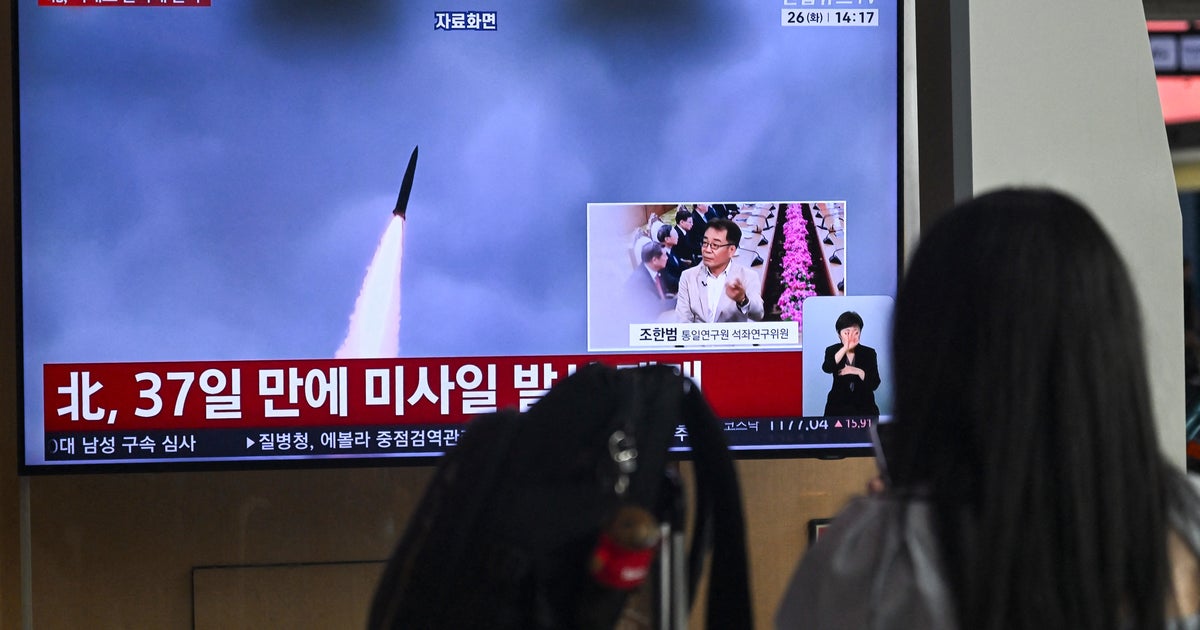
North Korea fired a short-range ballistic missile and other projectiles toward the sea, with the missile traveling about 80 kilometers from Jongju, marking its first launch since April 19. The demonstration heightens geopolitical tension on the Korean peninsula and reinforces defense-readiness concerns for South Korea and the U.S. alliance. South Korea responded by emphasizing stronger military capabilities, including AI, drones, and a nuclear-powered submarine.
This is less about immediate kinetic escalation than about a steady normalization of North Korea as a live-risk premium embedded into Northeast Asian assets. The market issue is not the missile itself; it is the coordination problem it creates for Seoul, Tokyo, and Washington just as South Korea is leaning into a broader rearmament narrative. That tends to benefit domestic defense procurement, sensors, drones, counter-UAS, and submarine-adjacent industrial names more than headline defense primes, because procurement urgency shifts toward shorter-cycle, software-heavy, and asymmetric capabilities.
The second-order effect is on Japan and Korea-specific capital allocation. Any increase in perceived peninsula instability raises the hurdle rate for cyclical Korean exporters and can compress valuation multiples for banks, consumer discretionary, and semis if foreign investors interpret this as a persistent risk discount rather than a one-off headline. The more important medium-term catalyst is South Korea’s push for greater self-reliance: if that translates into budget authority for AI, drones, ISR, and maritime deterrence, the beneficiaries will be the firms positioned for incremental domestic demand rather than pure export exposure.
The contrarian point is that these events often create a buy-the-dip setup in regional equities after a brief risk-off shock, especially if there is no follow-through within 24-72 hours. North Korea has historically used launch cycles to extract attention, not necessarily to alter the strategic balance, so the trade only works if investors believe this episode accelerates procurement timelines or raises the probability of a broader U.S.-ROK capability buildout. Without that, the geopolitical premium fades quickly and the real underappreciated risk is overpaying for defense optionality after sentiment has already shifted.
AI-powered research, real-time alerts, and portfolio analytics for institutional investors.
Request DemoOverall Sentiment
mildly negative
Sentiment Score
-0.25
