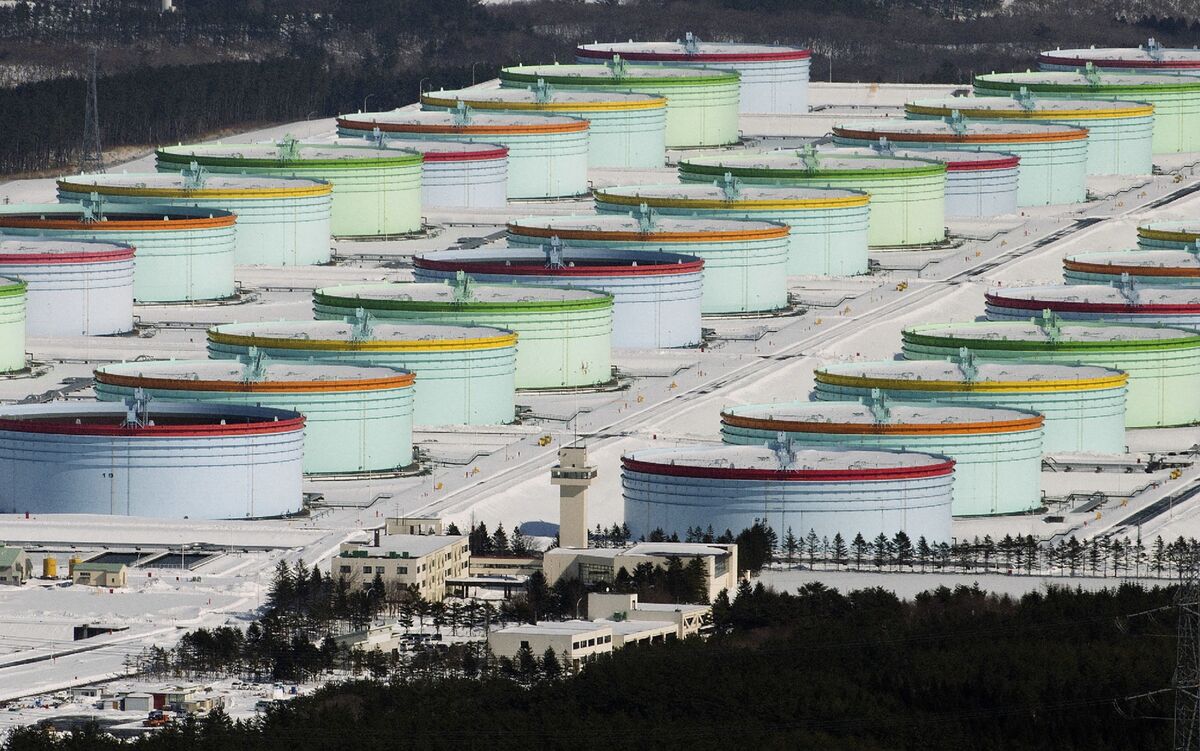
Japan began releasing oil from its strategic reserves and will lower the amount refiners must hold from March 16 to April 15 under a temporary formula. The action is a direct response to Middle East war risks to supply flows; it should ease near-term domestic supply pressure but highlights heightened geopolitical tail risk that can support higher oil prices.
This policy shock will primarily act as a short-duration liquidity event concentrated in the Asian crude/product complex, not a structural supply change. Expect the marginal impact to show up first in physical differentials (Dubai/TOCOM, Singapore fuel oil, gasoil cracks) where 1–3 month supply gluts typically shave $0.5–$3.0/bbl from spot differentials and compress nearby product cracks by $1–$3/tonne within 2–6 weeks.
Secondary transmission mechanisms are non-obvious but immediate: reduced short-haul crude liftings lower demand for LR/Suezmax cargoes inside Asia, which can depress time-charter rates 10–30% before global tonnage rebalances. At the same time refiners that can flex runs and export product cargoes will have the optionality to capture regional cracks, creating dispersion between complex refiners (upside optionality) and pure tanker/transport owners (downside).
Tail risks and reversion paths are symmetric and event-driven. A major escalation in Middle East production disruption or a coordinated OPEC+ re-cut would flip the move within days; conversely, re-imposition of pre-policy constraints or seasonal refinery turnarounds in April could create a sharp snap-back. For portfolios, treat the window as a 2–8 week tactical trade with clear stop levels tied to Brent/Asia crack moves rather than long-duration directional energy exposure.
AI-powered research, real-time alerts, and portfolio analytics for institutional investors.
Overall Sentiment
neutral
Sentiment Score
0.00
