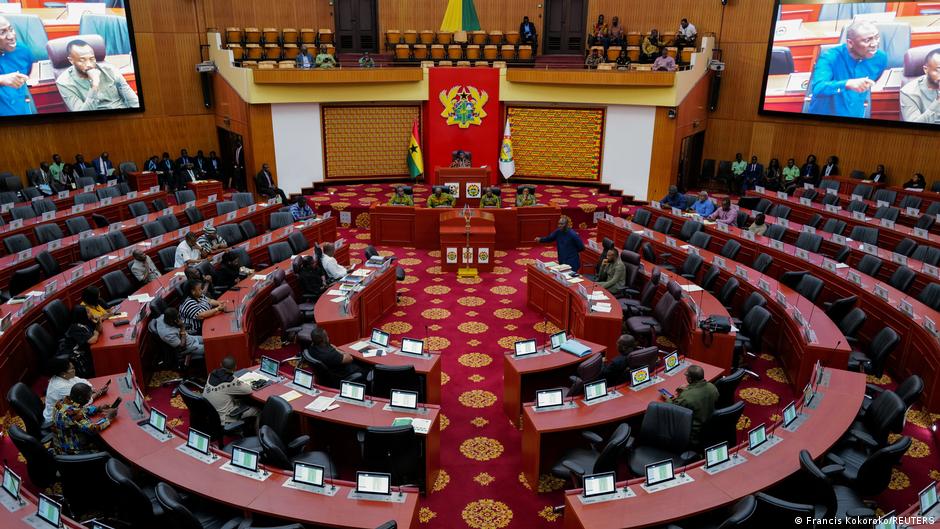
Ghana's Parliament passed a bill that would impose up to 10 years in prison for promoting, sponsoring, or advocating LGBTQ+ activities, plus 3-year prison terms for homosexual acts. The law includes exemptions for legal, media, and healthcare professionals, but human rights groups have condemned it and warned of discrimination risks. The measure could also revive investor concerns after Ghana's finance ministry previously said the earlier version could jeopardize billions of dollars in international financing.
The immediate market read-through is not on direct beneficiaries but on Ghana’s external funding stack. The bigger second-order risk is that this reinforces a policy signal that can widen sovereign risk premia via multilateral conditionality, NGO-led ESG exclusions, and donor caution; those effects usually show up first in longer-dated Eurobonds, then in the local banking system through higher sovereign concentration risk and funding costs. For frontier allocators, the issue is less ideology than convertibility and liquidity: once a country starts to look politically non-cooperative to Western capital pools, refinancing spreads can gap before headline macro data deteriorate.
The most exposed segments are domestically oriented financials, telcos, and utilities that depend on stable access to foreign currency and external financing. Even if there are no near-term sanctions, the law raises the probability of slower disbursement timing, tougher ESG screens, and delayed project finance decisions over the next 3-12 months. That creates a hidden earnings headwind through higher cost of capital rather than through immediate demand destruction.
The contrarian point is that the first-order selloff may be overdone if investors assume automatic sanctions. In practice, multilateral institutions often separate governance pressure from operational support, so the trade is likely a slow-burn repricing rather than an abrupt funding freeze. That favors expressing the view through duration-sensitive instruments and relative trades, not outright macro shorts, unless there is a follow-on catalyst such as aid suspension, legal challenge, or street unrest.
Watch for three catalysts: presidential assent, public-sector pushback from finance officials, and any statement from the IMF/World Bank or major bilateral donors. If external financing language turns cautious, frontier benchmark ETFs and Ghana-linked sovereign paper can reprice quickly over days; if not, the impact likely bleeds into spreads over months. The tail risk is reputational contagion to other African credits with similar legislative agendas, which could lift the whole frontier risk bucket even if Ghana itself avoids immediate penalties.
AI-powered research, real-time alerts, and portfolio analytics for institutional investors.
Request DemoOverall Sentiment
moderately negative
Sentiment Score
-0.25
