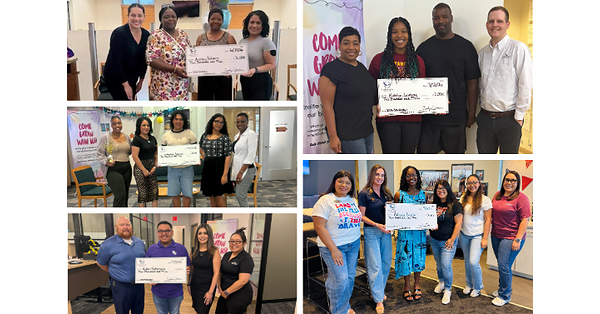
Neighborhood CU Foundation awarded five $2,000 scholarships for its 2026 program, totaling $10,000, to students based on essays/videos about planning for the long-term impact of student loans. The article is a local community/financial-literacy initiative with no disclosed financial results or market-moving developments for Neighborhood Credit Union.
This is effectively a branding and community-relations expense, not a capital event. At this scale, the scholarship outlay is too small to move net interest margin, fee income, or credit metrics, so there is no direct read-through to the issuer’s financials or to the regional banking complex. The only modest benefit is softer: incremental goodwill can help retain low-cost deposits and improve local member acquisition over time, but that is a slow-burn franchise effect, not a near-term earnings driver.
The more interesting second-order angle is behavioral: institutions that repeatedly emphasize financial literacy may slightly improve underwriting outcomes in younger cohorts, but that shows up over years, not quarters. For public markets, the clearest structural implication remains on private student lending names such as SLM: persistent awareness of debt burdens reinforces the incentive to defer borrowing, choose cheaper schools, or fund via grants/work, which is a headwind to originations if the backdrop weakens.
Contrarian view: the market often assigns too much signal to these kinds of corporate-philanthropy releases. They are usually telling us more about a company’s reputation management than its economics, and any presumed uplift in loyalty is likely already embedded in local franchise value. The only falsifier worth watching is actual operating data: if deposit growth, loan growth, or credit quality improves in the next 2-3 quarters, then the community-investment strategy is paying off; otherwise it is noise.
AI-powered research, real-time alerts, and portfolio analytics for institutional investors.
Request DemoOverall Sentiment
neutral
Sentiment Score
0.05
