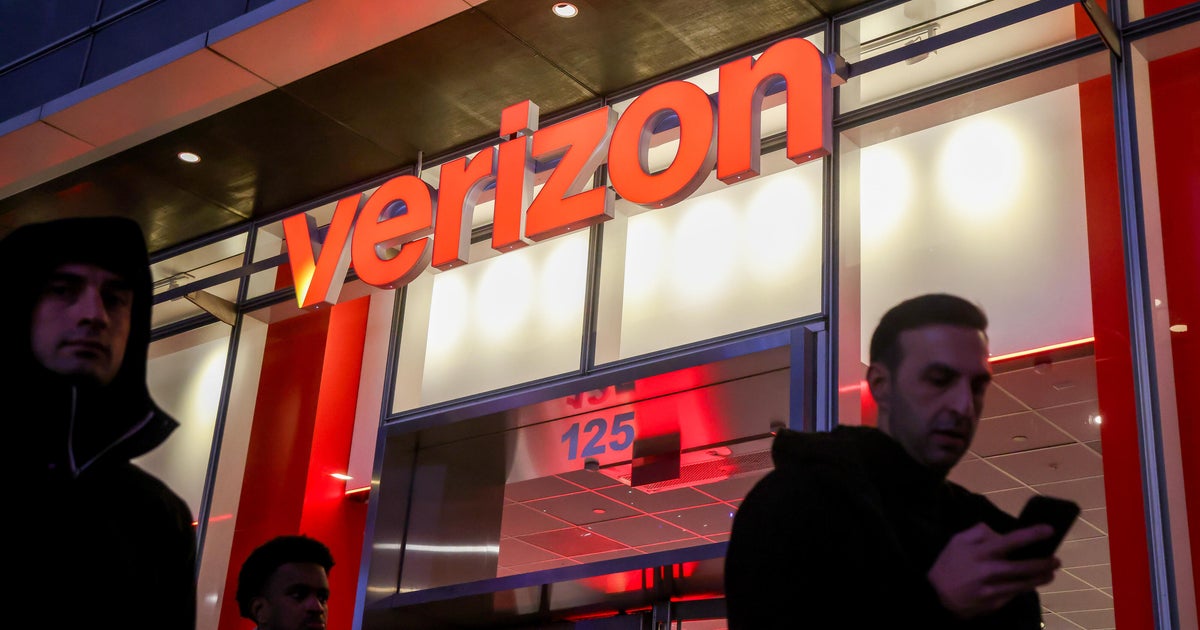
Verizon acknowledged a widespread mobile network outage that disrupted calls and online transactions and said it will issue a $20 account credit to affected customers redeemable via the myVerizon app; the company said this typically covers multiple days of service and will contact business customers directly. Downdetector logged as many as 180,000 reports at the peak, the outage is reportedly resolved but its cause remains unclear, and customers experiencing issues were advised to restart devices—an operational incident with limited direct financial impact but some reputational risk.
Market structure: The outage is a reputational hit to Verizon (VZ) more than a direct revenue shock — Downdetector ~180k reports versus ~120M U.S. retail lines implies immediate reported impact ~0.15% of base, so revenue risk from a single-day event is tiny. Short-term winners are competitors (TMUS, T) and aggressive MVNO offers that can run targeted churn campaigns; merchant/payment friction during outages marginally pressures card networks and digital wallets but not systemically.
Risk assessment: Tail risks include an FCC investigation or class action that could generate fines or remediation costs in the $50M–$500M range and/or force additional capex; a repeated multi-region outage could drive sustained postpaid churn of 0.1–0.5% (translating to ~$50M–$250M EBITDA/year for Verizon). Immediate timeline (days): customer anger and $20 credits; short-term (weeks–months): churn, targeted marketing by peers and regulatory inquiries; long-term (quarters+): potential capex increases to harden OSS/BSS, pressure on margins. Hidden dependency: outages often trace to OSS/BSS or third‑party cloud vendors, creating correlated vendor risk across operators.
Trade implications: Expect limited market reaction unless outage recurs or FCC initiates formal action within 30–90 days. Tactical trades favor relative-value: small short VZ bias vs long TMUS/T to capture marketing-driven net-adds; consider buying protective downside (defined-risk puts) on VZ if implied volatility spikes. Infrastructure names (AMT,CCI) and fixed broadband (CMCSA,CHTR) are defensives; minimal direct exposure to a single‑operator wireless outage but may benefit from incremental enterprise spend.
Contrarian angles: Consensus likely overweights PR noise; one-day outages historically (e.g., past wireless outages) produce muted long-term stock moves unless systemic pattern emerges, so a >3% selloff in VZ is a buying opportunity. Conversely, underappreciated is vendor concentration risk — a software/cloud provider issue could affect multiple carriers simultaneously, which would be a multi-operator crisis and warrant rapid de-risking.
AI-powered research, real-time alerts, and portfolio analytics for institutional investors.
Request DemoOverall Sentiment
mildly negative
Sentiment Score
-0.25
