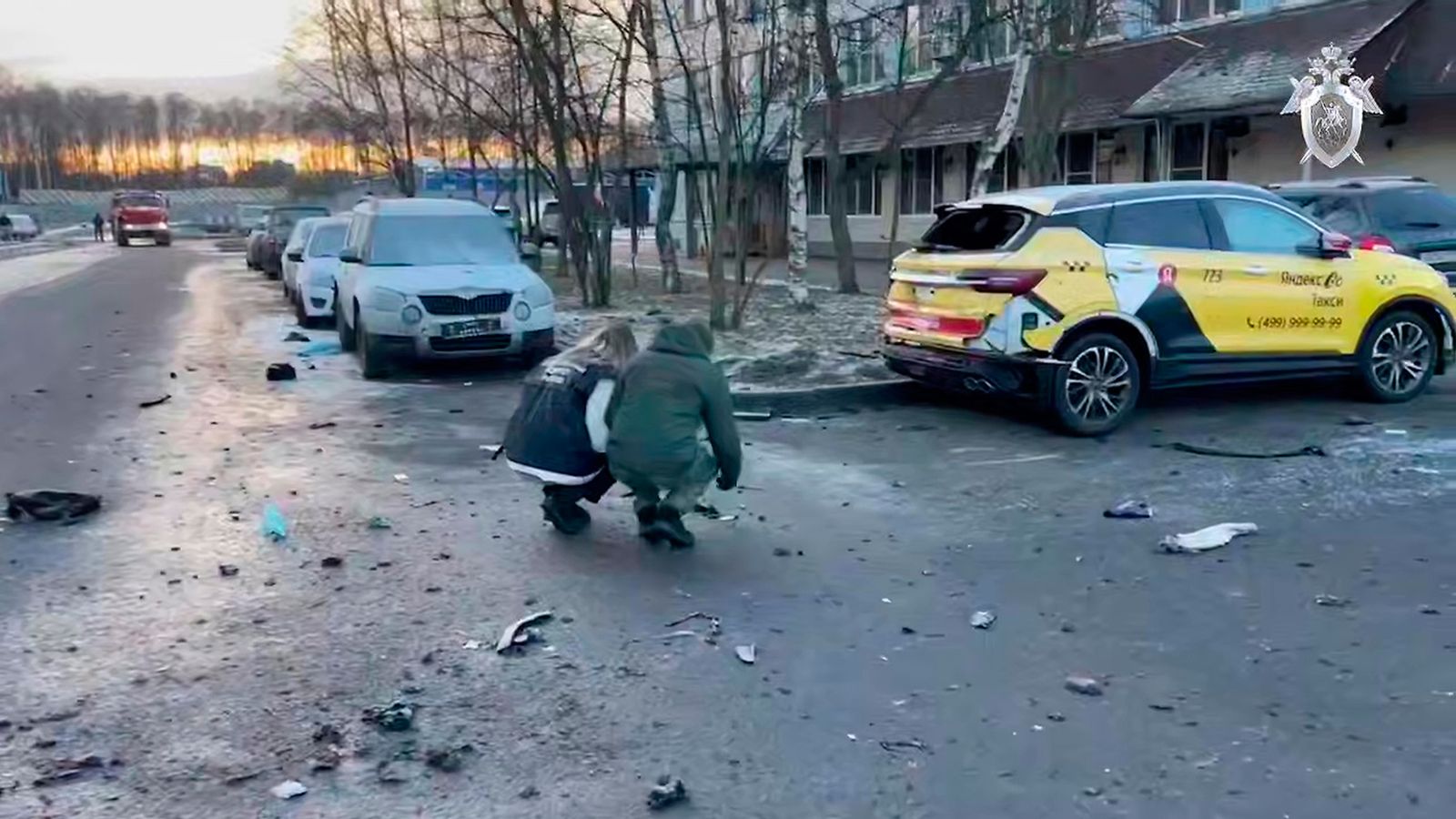
Overnight violence escalated along the Russia-Ukraine front and inside Russia: a Russian strike on a Kharkiv suburb killed one and injured at least 13, a car bombing in Moscow killed three, and both sides reported large-scale drone attacks (Ukraine shot down 60 of 116 Russian drones overnight; Russia said it shot down 195 Ukrainian drones). Kyiv and US delegations finalized a 20-point peace framework and have sent it to Russia, but territorial disputes — notably over occupied Donetsk/Luhansk areas and the Zaporizhzhia nuclear plant — remain unresolved; US proposals include free economic or demilitarized zones and Ukraine insists on a referendum. The developments increase geopolitical risk and near-term operational disruption (fires, airport limits, civilian casualties) with potential implications for regional energy security and market risk premia.
Market structure: Military suppliers (RTX, LMT, NOC) and European defense names (RHM.DE, BA.L) are immediate beneficiaries as governments accelerate procurement; oil & LNG producers (XOM, CVX, SHEL) and commodity proxies (WTI, TTF gas) gain if supply disruptions persist into winter. Losers are Russian assets and regional transport/logistics (airlines, grain exporters), European banks with Eastern exposure, and EM credit where spreads will widen. Cross-asset: expect a classic risk-off move — USD and gold up, European equities underperform, sovereign/IG credit spreads widen, Treasuries rally (yields lower) intra-days on new strikes.
Risk assessment: Tail risks include (1) a major nuclear incident at Zaporizhzhia causing immediate flight-to-safety and a >10% gold/oil spike, (2) NATO entanglement or major sanctions rollouts that freeze Russian energy flows sending WTI >$100/bbl. Time horizons: days = volatility spikes and headline-driven price moves; weeks–months = re-rating of defense contractors and commodity inventories; quarters+ = potential structural reallocation of EU energy policy and capex. Hidden dependency: political détente (rapid Russian engagement with the 20‑point plan) could erase risk premia in 48–72 hours, reversing trades.
Trade implications: Volatility is the tradeable lever — buy limited-duration call spreads on oil (3-month) and long-dated calls on top defense names (6–12 months) rather than outright equity exposure to control downside. Use pairs to neutralize market beta (long RTX vs short SPY or short vulnerable European cyclicals). Increase gold/real‑rate hedges if 10y real yields drop >20bps.
Contrarian view: Consensus prices in perpetual escalation; market underweights the risk of a negotiated ceasefire driven by US-led diplomacy — if Russia responds positively within 7–14 days, energy and defense names could retrace 15–30%. Historical parallel: 2014 Crimea shock produced a 12–18 month defense rerate but a <30% transient oil drawdown when sanctions stabilized. Unintended consequence: a short, intense crisis may permanently accelerate Western defense budgets, creating multi-year alpha for select suppliers.
AI-powered research, real-time alerts, and portfolio analytics for institutional investors.
Request DemoOverall Sentiment
strongly negative
Sentiment Score
-0.68
