
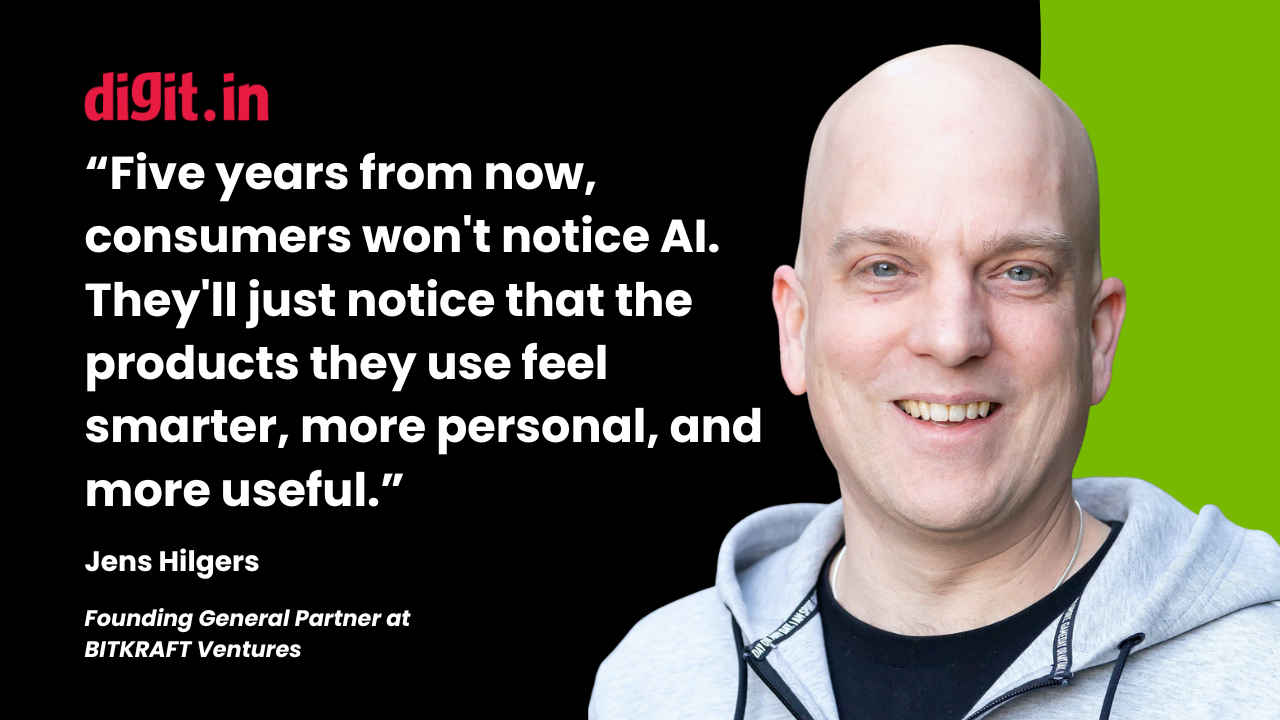
BITKRAFT’s Jens Hilgers argues the winning consumer AI products will hide AI as infrastructure rather than market it as the core feature. The report frames the key opportunity as combining AI personalisation with game-design mechanics such as streaks, rewards, and adaptive difficulty to improve engagement at scale. The article is largely conceptual and unlikely to move markets, but it reinforces a positive long-term view on embedded AI in consumer apps.
The market is likely underappreciating the shift from “AI as a product category” to “AI as a conversion engine.” That matters because consumer software winners will increasingly be judged by outcome quality and retention economics, not model novelty, which compresses the shelf life of standalone AI wrappers and raises the value of distribution-first incumbents with habit loops already embedded. In practice, this favors businesses that can weaponize personalization without forcing users to adopt a new interface paradigm.
For DUOL, the second-order effect is that AI becomes a margin lever and engagement multiplier simultaneously. If personalization lowers churn by even low-single digits while automating more of the tutoring workflow, the company gets an unusually attractive mix of higher LTV and expanding gross margin over the next 4-8 quarters. The key risk is that this benefit is already partially reflected in the multiple; the stock only re-rates further if AI meaningfully expands addressable engagement rather than merely preserving current usage.
The contrarian read is that the biggest losers may not be AI-native startups, but adjacent consumer apps that treat AI as a feature badge instead of a retention system. Those businesses will face faster commoditization because users can substitute among similar chat-style interfaces with minimal switching cost. Over 12-24 months, the market should increasingly reward invisible AI embedded in habit-forming products and punish anything that looks like a thin layer over a foundation model.
Catalyst timing is important: near term, sentiment will likely trade on product launches and retention metrics rather than pure AI narrative. The reversal signal would be evidence that personalization is raising engagement but not monetization, or that AI-driven feature creep is increasing cost without improving user outcomes. If that happens, the “AI leverage” story becomes a multiple trap rather than a growth driver.
AI-powered research, real-time alerts, and portfolio analytics for institutional investors.
Request TrialOverall Sentiment
mildly positive
Sentiment Score
0.15
Ticker Sentiment
